
Emergency Response SEO for Roofers
Prepare the pages, the profile, and the indexing pipeline before a storm so the roofing company already ranks when emergency searches spike in the hours after severe weather.

Free Storm-Readiness SEO Audit
Most roofing sites build emergency pages after the storm, when ranking is already too late. Get a free audit of your emergency pages, profile, and indexing setup before the next weather event.
What Is Emergency Response SEO for Roofers?
Emergency response SEO is the seasonal practice of preparing roofing pages, the profile, and the indexing pipeline before severe weather so the company already ranks the moment urgent searches spike. Search authority cannot be built after a storm, so the work happens in advance.
A Demand Spike, Not a Slow Build
Emergency roofing demand arrives in hours, not months. The page that ranks during the spike is the one that was already prepared and indexed before the weather event.
Seasonal Preparation Work
This page is about timing and readiness: building and indexing pages, warming the profile, and lining up the publishing pipeline ahead of storm season.
Distinct From the Intent Page
The homeowner-facing emergency page lives in search intent. Here we cover preparing for the seasonal spike.
Why Does Emergency Demand Reward Preparation?
Preparation wins because emergency roofing searches climb sharply within hours of a storm, and there is no time to earn ranking authority once the spike begins. The company that prepared in advance captures the calls.
The Demand Window Is Short
- Industry reporting describes emergency query volume rising several times over within hours of severe weather making landfall.
- The strongest conversion window often falls inside the first 24 to 48 hours after the event.
- A page published during that window has little time to index and rank before the spike fades.
The Searcher Calls the First Result
- An emergency searcher with water entering the home is not comparing options at length.
- The listing that ranks and loads first earns the call, so position has to be held before the storm.
- Local map-pack visibility supports the same moment. See local SEO for roofers.
When Should Roofers Prepare Emergency Pages?
Build and index emergency pages weeks before the local storm season opens, not in the hours after a weather event. Ranking takes time, so the calendar drives the timing of the work.
Pre-Season: Build and Index
Publish emergency pages and confirm indexing well before the season opens, so the page holds a ranking when demand arrives.
During the Event: Activate
When the storm hits, refresh profile posts and headlines to reference the current weather, and turn on call tracking to watch demand in real time.
After the Event: Extend
Insurance-claim searches extend the revenue window past the first spike. See insurance claim content.
Ready Before the Storm, Not After
A roofing page published the day a storm hits has little time to index and rank before the spike passes. We build and index the emergency pages in advance so your listing is already there.
Call Now For PricingOr call +1 272-207-3231
How to Build an Emergency Page Before the Season
Prepare the emergency page in a fixed order: pick the urgent query, write the page, confirm fast mobile loading, then submit it for indexing. Each step happens before the storm, not during it.
The Pre-Season Build Steps
- Target the urgent query, such as emergency roof leak repair, for each served city.
- Write the page with click-to-call near the top and a sub-two-second mobile load.
- Submit the page for indexing and confirm it appears in search before the season.
- Hold the page live year-round so authority compounds ahead of the next event.
Why the Order Matters
A page that exists but is not yet indexed cannot rank during the spike. Submitting it for indexing weeks ahead leaves time for the page to enter the results and settle into a position before demand arrives.
How to Activate the Profile During a Storm
When the storm hits, activate the profile by posting storm-specific updates, updating headlines to reference the current weather, and turning on call tracking. The pages were already ranking; this step captures the live demand.
The Live Activation Steps
- Publish a profile post that names the current storm and the emergency services offered.
- Update page headlines to reference the weather event in progress.
- Turn on call tracking so demand can be measured against the hours of the spike.
- Confirm the emergency pages still load fast under the traffic surge.
Activation Is Not Ranking
Activation refreshes signals on pages that already rank. It does not create ranking authority on the day of the storm. The ranking has to exist before the event, which is why the build happens pre-season.
How Does Rapid Indexing Fit Emergency SEO?
Rapid indexing matters because a prepared page still has to be in the index before the spike, and a same-day page only ranks if it indexes in time. The pipeline is built ahead of the season so it is ready to fire.
Confirm Indexing Early
Use the indexing tools to confirm each emergency page is in the search results weeks before the season, not in the hours after a storm.
Warm the Pipeline
Keep the sitemap, internal links, and submission flow ready so a fresh storm-specific page can be picked up quickly when one is needed.
The Dedicated Method
The full indexing approach has its own page. See rapid indexing strategies.
What Belongs on a Prepared Emergency Page?
A prepared emergency page carries a city-specific focus, click-to-call near the top, a fast mobile load, and a clear emergency service description. These elements are set before the season so the page converts the moment it is found.
The On-Page Elements
- A city-specific page for each served area, not one generic emergency page.
- Click-to-call placed near the top so a phone tap reaches the company at once.
- A mobile load under roughly two seconds, since most emergency searches are on a phone.
- A plain description of the emergency service and the response promised.
Set It Once, Then Hold
These elements are built once and held live year-round. The page accumulates authority between events, so when the next storm hits it already ranks and already converts, with no rushed edits required.
The Spike Goes to Whoever Prepared
When emergency searches climb after a storm, the homeowner calls the listing that ranks and loads first. That position is earned in the quiet weeks before the season, not in the rush after the event.
Call Now For PricingOr call +1 272-207-3231
Common Emergency SEO Timing Mistakes
Roofers lose the emergency spike through recurring timing mistakes, each one fixed by moving the work earlier in the calendar. The pattern is the same: building too late to rank.
Timing and Indexing Errors
- Building the emergency page the day the storm hits, with no time left to index and rank.
- Leaving the page unindexed, so it never enters the results during the spike.
- Taking the page down between events, which resets the authority each season.
Page and Profile Errors
- A slow mobile page that loses the searcher before the call button loads.
- One generic emergency page instead of a page per served city.
- A profile left static during the storm, with no post referencing the current weather.
How Does Emergency SEO Fit the Seasonal Calendar?
Emergency response sits inside a wider seasonal calendar, where storm, hail, hurricane, and winter demand each have their own preparation window. The emergency page is the always-ready core that every season leans on.
Each Season Has a Window
- Storm season preparation has its own page. See storm season SEO.
- Winter roof damage demand peaks on a separate schedule. See winter roof damage SEO.
- Weather-triggered pages carry the same timing logic. See weather-triggered landing pages.
The Emergency Core Is Always On
Storm, hail, and hurricane events all drive emergency searches. The prepared emergency page is held live across every season so it is ready whenever any weather event triggers urgent demand.
Proof of Performance
Results from roofing campaigns that rank in local search.
Map Pack Rankings
Ranked in Local Search Within 90 Days
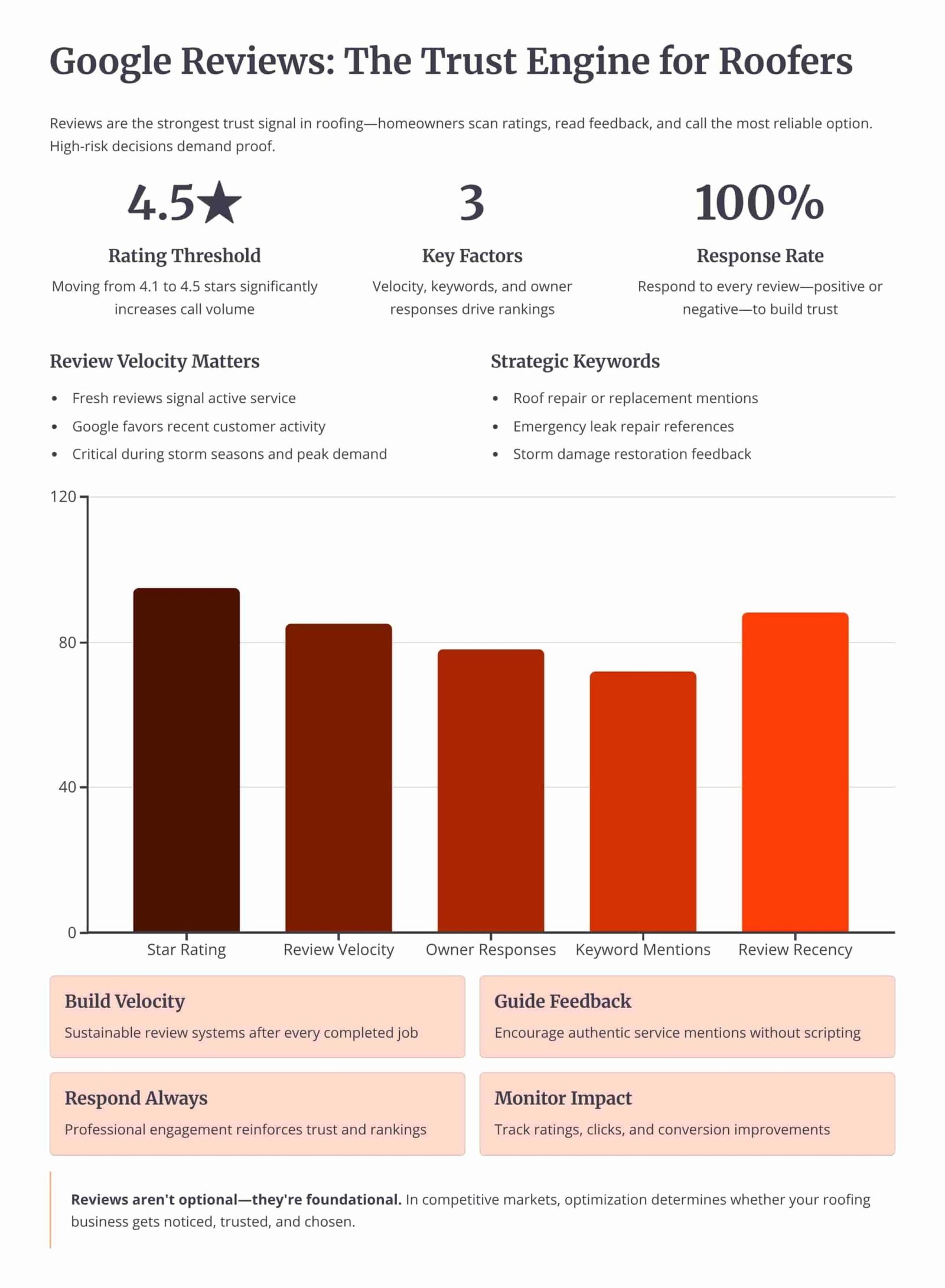
Review Velocity
150+ 5-Star Reviews Generated
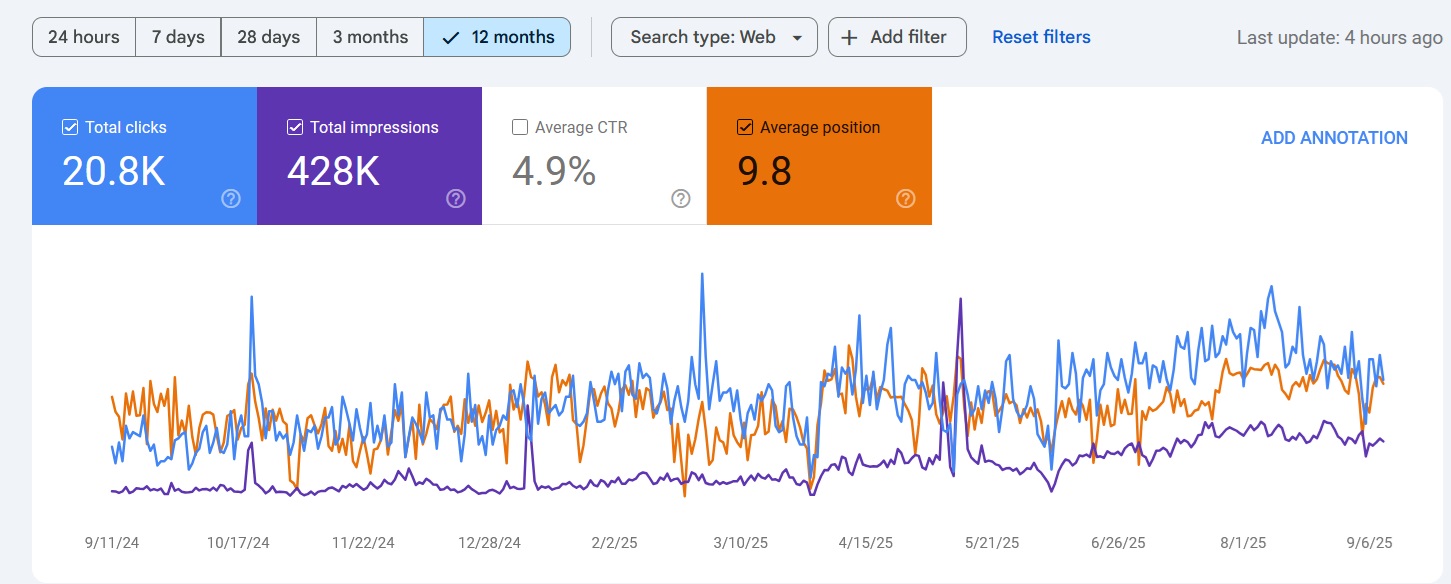
Organic Traffic
300% Increase in Qualified Traffic
The Emergency Response SEO Readiness Checklist
Run each emergency page through this checklist before the season so the listing is ready when urgent demand spikes.
What Roofers Say
The 180-Day Roofing SEO Roadmap
See how we optimize the profile, build the website, and earn local-pack rankings over a 6-month engagement.
Month 1: Profile Audit and Setup
- Category and Field Fixes: Setting the primary category, secondary categories, description, services, and service areas.
- NAP Cleanup: Correcting the name, address, and phone number across the profile, the website, and the directory citations.
Month 2: Reviews and Media
- Review System: Setting up a steady request flow and replying to every review, positive and negative.
- Photo and Post Cadence: Uploading job photos from each completed roof and publishing profile posts twice a month.
Month 4: Citations and Site Support
- Citation Building: Adding consistent listings on the directories that feed prominence for a service area.
- Service-Area Pages: Building city pages on the website that reinforce the profile's service areas.
Month 6: Local-Pack Rankings and Leads
- Map-Pack Position: Reaching the top 3 of the local pack for core roofing queries in the served cities.
- Lead Tracking: Measuring calls and direction requests from the profile against the cost of paid leads.
Owning Search Demand vs Renting It From Lead Platforms
If you pay Angi or Google Ads, you are renting visibility. The moment you stop paying, your pipeline dries up. Ranking the profile and the website for high-intent local searches builds permanent digital equity.
Shared Lead Platforms (Angi, HomeAdvisor)
- The Race to the Bottom: Shared leads force you to slash prices to win against 5 other roofers.
- Low Intent: Half the time they aren't ready to buy, they were just clicking around online.
Local Search SEO (Our Approach)
- 100% exclusive, direct-to-you inbound calls.
- Highest closing rate. They chose YOU from the local pack.
- Compounding ROI. You don't pay per click.
We Identify Search Intent Using Industry-Leading Data Tools




Expertise Built on Data.
Not Guesswork.
I'm Nizam Ud Deen, and I don't build generic websites. I build search intent engines specifically for the roofing industry.
For years, I've watched roofers burn money on agencies that brag about "traffic" while the phones stay silent. Traffic without intent is worthless. My system maps exactly how homeowners search during storms, when comparing prices, and when they're ready to buy, and intercepts them at every stage.
The No-Brainer Roofing SEO Guarantee
We don't guarantee "traffic" or "rankings." We guarantee high-intent leads.
"We guarantee to generate 15 exclusive, inbound replacement or repair leads per month within the first 180 days, driven entirely by high-intent organic search. If we don't hit that metric, we work for free until we do."
Measuring Success: Leads and Revenue
We don't report on vanity metrics. If traffic goes up but revenue stays flat, the strategy failed. We track the pipeline.
Call Tracking
Every keyword mapped to the exact phone call it generated.
Form Fills
Tracking estimate requests from high-intent local landing pages.
Booked Jobs
Connecting CRM data to SEO efforts to prove actual revenue return.
Cost per Lead
Monitoring organic CPL to ensure it beats shared platform costs.
Trusted Across the Roofing SEO Framework
Emergency response sits inside a full roofing SEO framework. Explore the connected silos that support seasonal demand capture.
Frequently Asked Questions
Clear answers about preparing for and capturing the emergency roofing demand spike.
What is emergency response SEO for roofers?
When should I build my emergency roofing pages?
Why can't I just publish a page after the storm?
How fast does emergency roofing demand rise after a storm?
What goes on a prepared emergency roofing page?
Should I make one emergency page or one per city?
What do I do on the profile during a storm?
How does rapid indexing fit emergency SEO?
How is this different from the emergency intent page?
Should I take emergency pages down between storms?
How does insurance-claim content extend the spike?
Why does mobile speed matter so much here?
How does emergency SEO connect to storm and hail pages?
Where does emergency response sit in the seasonal silo?
Get Your Free Storm-Readiness SEO Audit
We'll review your emergency pages, profile, and indexing setup, then compare them to your top 3 local competitors to show where the listing would lose the spike.
What You Get:
- Emergency Page ReviewA check of each city page for click-to-call placement, mobile speed, and indexing status.
- Indexing CheckA list of emergency pages that are live but not yet appearing in search results.
More Deliverables
- Speed CheckWhich emergency pages load too slowly to hold a searcher on mobile during a storm.
- Pre-Season PlanA timeline for building and indexing the pages your service area still needs before the season.
Claim your free storm-readiness SEO audit today. No commitment required.