
Insurance Claim Content for Roofers
Build the insurance claim content that guides homeowners through a storm-damage claim, so your roofing site captures the high-intent searches that surge in the days after a storm.

Free Roofing Claim Content Audit
Most roofing sites have no claim-help page ready when a storm hits, so the searches go to a competitor. Get a free audit with a content plan built to publish before the next storm season.
What Is Roofing Insurance Claim Content?
Roofing insurance claim content is a set of pages and guides that explain to a homeowner how to file a storm-damage roof claim, from spotting damage to the adjuster meeting. As a seasonal play, you prepare this content ahead of storm season so it is already indexed when the claim searches surge.
It Answers the Claim Question
The content walks a homeowner through deductibles, coverage, and the filing steps, the questions they type into search after a storm.
It Is a Seasonal Asset
Claim searches spike after hail and wind events. The page earns those clicks only if it is published and indexed before the weather arrives.
It Feeds High-Intent Leads
A homeowner researching a claim is close to hiring. The homeowner intent pages live in search intent for roofers.
Why Does Claim Content Matter in Storm Season?
Claim content matters because the searches arrive in a short window after a storm, and the roofer with an indexed claim page already in place is the one Google can show. A page published after the storm often indexes too late to catch the spike.
The Demand Window Is Narrow
- Storm-damage and claim searches concentrate into the days and weeks right after severe weather.
- A homeowner with a damaged roof files quickly because most policies set a reporting deadline.
- The content has to exist and be indexed before the storm to catch that traffic.
Preparation Beats Reaction
- A claim page built in the calm months has time to earn links and rank before it is needed.
- A page rushed out after the storm competes from behind while the searches are already live.
- The seasonal calendar for this work sits in storm season SEO.
What Damage Signs Should the Content Teach?
Teach the homeowner to spot the five visible signs of storm damage that support a claim: missing shingles, granule loss, interior leaks, hail dents, and curled or cracked shingles. Naming these helps the reader connect the storm to the damage.
Wind Damage
Missing shingles from wind uplift and curled or cracked shingles signal that high winds lifted and stressed the roof surface.
Hail Damage
Granule loss and hail dents on the surface mark where ice impacts struck. Hail claims need this damage documented alongside storm reports.
Interior Leaks
Water stains and leaks that appear after rain show the storm breached the roof. They link the interior damage back to the weather event.
Turn the Storm Spike Into Phone Calls
When a storm hits your area, homeowners search for claim help within hours. A claim page already ranking captures those searches instead of sending them to a competitor.
Call Now For PricingOr call +1 272-207-3231
What Filing Steps Should the Content Cover?
Lay out the five-step claim process: document the damage, schedule an inspection, meet the adjuster, handle supplement claims, and complete the roof restoration. A clear sequence reassures a homeowner who has never filed before.
The Five Steps in Order
- Document the damage with photos, ideally drone-assisted for a full roof view.
- Schedule a professional inspection that produces insurance-ready records.
- Meet the adjuster with the documentation in hand.
- Handle supplement claims for damage the first estimate missed.
- Complete the roof restoration once the claim is approved.
Why the Sequence Earns the Click
A homeowner searching after a storm wants to know what happens next. A page that names each step in order answers the query directly, which is what a high-intent searcher rewards with a click and a call.
What Should an Inspection Section Explain?
Explain that a professional inspection examines the shingles, gutters, flashing, skylights, and ventilation, using drone footage and high-resolution photos to build insurance-ready documentation. The documentation is what carries the claim.
What the Inspection Covers
- Shingles, for missing pieces, granule loss, and impact marks.
- Gutters and flashing, where storm impact often shows first.
- Skylights and ventilation, the seams a storm tends to breach.
- Drone footage and close photos that an adjuster can verify.
Insurance-Ready Documentation
The phrase means evidence an adjuster can accept without a return visit: dated photos, drone angles, and notes tied to the storm. Content that explains this sets the homeowner up for a smoother claim and positions the roofer as the guide.
Why Do Roof Claims Get Underpaid or Denied?
Claims underperform for four recurring reasons: thin photographic evidence, no contractor at the adjuster meeting, overlooked supplement claims, and missing weather data tying the damage to a storm. Content that names these helps the homeowner avoid them.
Evidence and Representation Gaps
- Insufficient photographic evidence, so the adjuster cannot see the full extent of damage.
- No contractor present at the adjuster meeting to point out what the homeowner cannot reach.
Supplement and Weather Gaps
- Overlooked supplement claims for damage the first estimate did not capture.
- Missing weather data linking the damage to a specific, dated storm event.
Why Cover the Adjuster Meeting in Detail?
Cover the adjuster meeting because it is the moment that decides the payout, and a homeowner who understands it in advance is more likely to call a roofer to attend. The meeting is where documentation either holds up or falls short.
What the Adjuster Decides
- The adjuster inspection sets the payout amount for the claim.
- A roofer at the meeting presents the documentation and references the storm data.
- The roofer advocates for a full replacement where the damage supports it.
- The roofer identifies overlooked damage the homeowner could not see.
Why It Drives the Call
A homeowner who reads that the meeting decides the payout, and that a roofer can attend, has a clear reason to call before the adjuster arrives. The content turns an informational read into a booked appointment.
What Coverage Should the Content Clarify?
Clarify that policies typically cover hail, wind, storms, falling debris, and lightning, while neglect, wear and tear, pre-existing damage, and flooding are typically excluded. Setting this line early manages the homeowner's expectations.
Typically Covered Perils
- Hail and wind, the two storm forces behind most roof claims.
- Storms and falling debris, such as a branch driven into the roof.
- Lightning, where a strike damages the roof structure.
Typically Excluded Causes
- Neglect and wear and tear, which a policy treats as maintenance.
- Pre-existing damage from before the policy or the storm.
- Flooding, which usually sits under a separate policy.
Organic Claim Searches Cost Less Than Ads
A click from a claim page ranking organically costs nothing per visit, against 50 to 150 dollars for paid roofing leads. Build the page before storm season and keep the click instead of buying it.
Call Now For PricingOr call +1 272-207-3231
How Should the Content Explain RCV vs ACV?
Explain the two payout structures plainly: Replacement Cost Value pays the full cost to replace the roof, while Actual Cash Value pays a depreciated amount based on the roof's age. The difference decides what the homeowner pays out of pocket.
Replacement Cost Value (RCV)
An RCV policy pays the full cost to replace the roof, regardless of its age. This structure leaves the homeowner with the smallest gap after the deductible.
Actual Cash Value (ACV)
An ACV policy pays the depreciated value based on the roof's age, which often leaves the homeowner covering a gap. The content should flag this so the reader checks the policy type.
Why Does Timing Belong in the Content?
Build timing into the content because most policies set a reporting window, and a homeowner who acts inside it protects the claim. Urge the reader to report quickly, schedule an inspection, and prevent further damage with temporary protection.
Report Inside the Window
Policies set a deadline to report storm damage. The content should tell the homeowner to file promptly so the claim stays valid.
Schedule the Inspection
An immediate inspection records the damage while it is fresh and clearly tied to the storm. Delay weakens the link to the event.
Prevent Further Damage
Temporary protection, such as a tarp, stops new damage. This sits next to the emergency intent pages in emergency response SEO.
When Should You Publish Claim Content?
Publish claim content in the off-peak months before storm season, so it has time to index and rank before the searches arrive. Then refresh it as a storm approaches and push for fast indexing of any new pages.
Build in the Calm Months
- Write the core claim guide before the season so it can earn links and authority.
- Give the page weeks to index and settle into the rankings, not hours.
- The season-by-season calendar lives in seasonal roofing SEO.
Move Fast When a Storm Hits
- Refresh the claim page with the dated storm reference as the weather lands.
- Submit any new storm page for fast indexing so it catches the live spike.
- The indexing playbook sits in rapid indexing strategies.
How Does Claim Content Handle Hail Specifically?
Hail claims need their own section that documents impact marks, granule displacement, bruising, and dent patterns, then ties them to a dated weather-service report. Hail damage is harder to see, so the documentation has to be precise.
What Hail Documentation Captures
- Impact marks and dent patterns across the roof surface.
- Granule displacement that exposes the mat beneath the shingle.
- Bruising that signals a soft spot from an ice strike.
- A correlation with the weather service's storm report for the date.
Why Hail Gets Its Own Page
Hail searches spike on their own calendar and use their own language. A dedicated page, planned alongside hailstorm SEO, captures that demand more precisely than a general claim page.
What Trust Signals Belong in Claim Content?
Place credible trust signals in the content: licensed and certified status, relationships with major insurers, and verified homeowner reviews. A homeowner deciding whom to trust with a claim looks for proof before they call.
Licensed and Certified
State plainly that the roofers are licensed and certified. A homeowner filing a claim wants a credentialed professional, not an unknown crew.
Insurer Relationships
Note experience working alongside major insurers. It signals the roofer has handled the adjuster process before and knows the documentation.
Verified Reviews
Cite verified homeowner reviews where the page can support them. Review-led trust pairs with the work in trust signals for roofers.
Proof of Performance
Results from roofing campaigns that rank in local search.
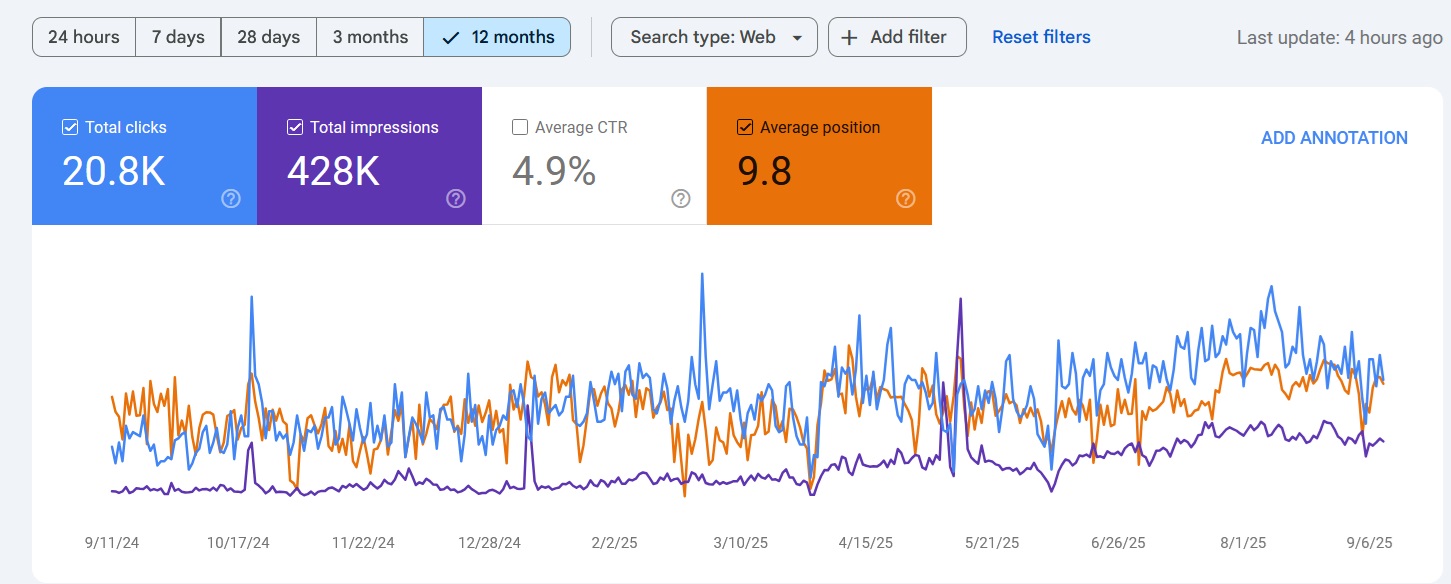
Map Pack Rankings
Ranked in Local Search Within 90 Days
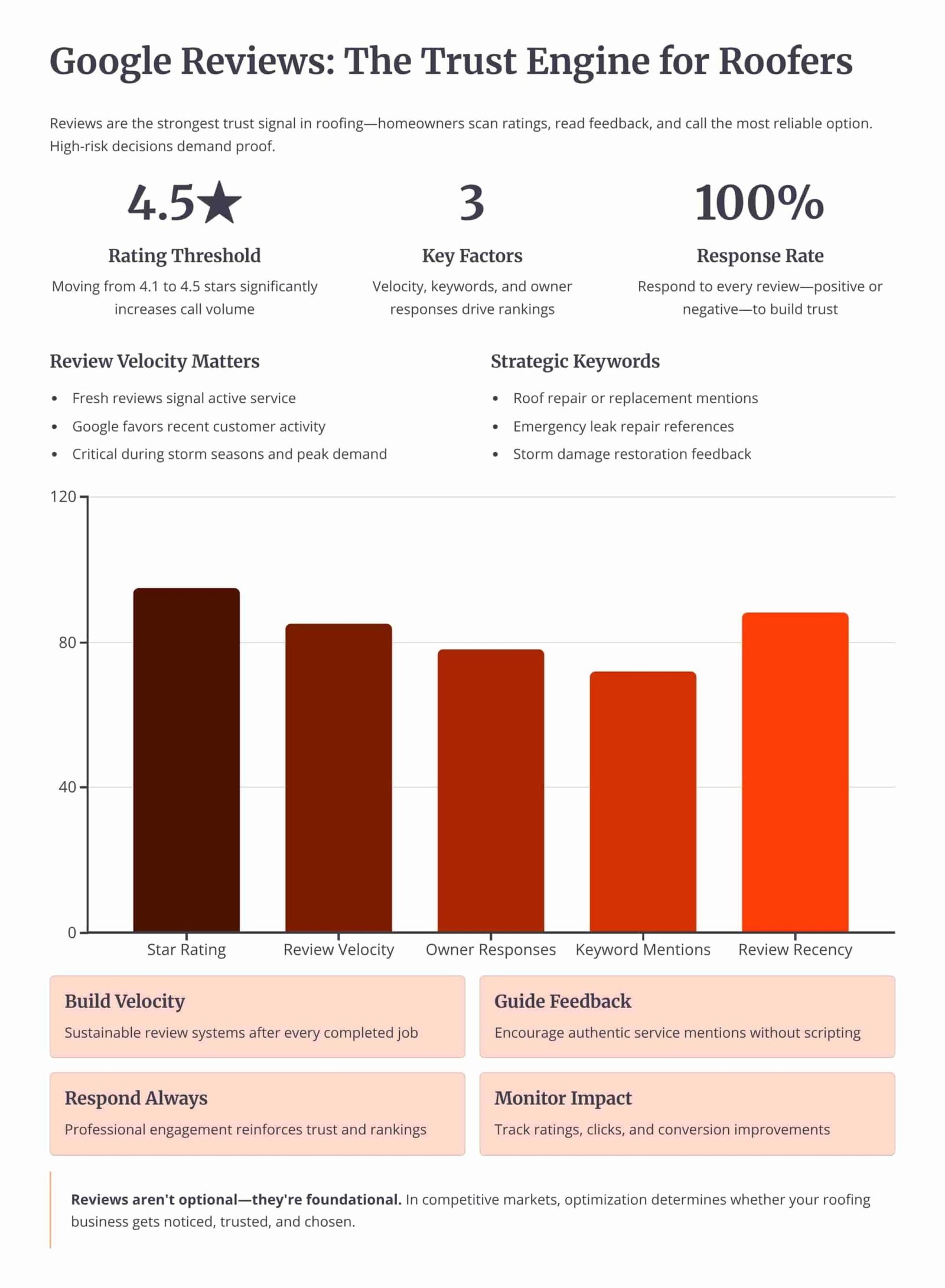
Review Velocity
150+ 5-Star Reviews Generated
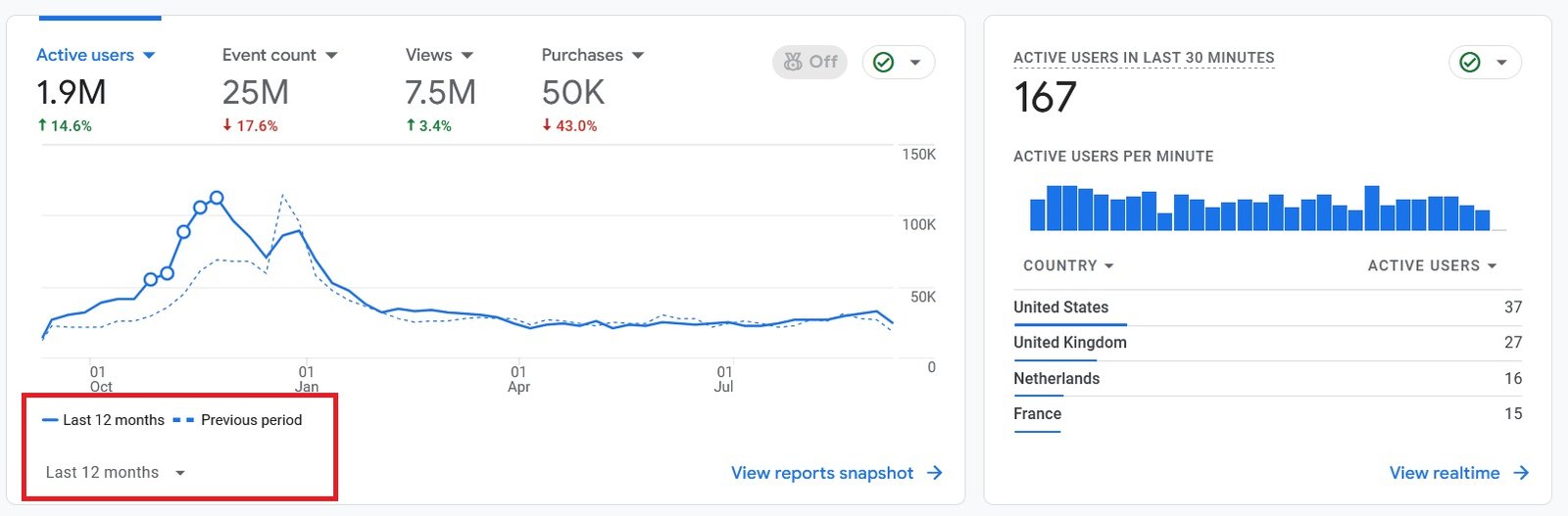
Organic Traffic
300% Increase in Qualified Traffic
What Roofers Say
The 180-Day Roofing SEO Roadmap
See how we optimize the profile, build the website, and earn local-pack rankings over a 6-month engagement.
Month 1: Profile Audit and Setup
- Category and Field Fixes: Setting the primary category, secondary categories, description, services, and service areas.
- NAP Cleanup: Correcting the name, address, and phone number across the profile, the website, and the directory citations.
Month 2: Reviews and Media
- Review System: Setting up a steady request flow and replying to every review, positive and negative.
- Photo and Post Cadence: Uploading job photos from each completed roof and publishing profile posts twice a month.
Month 4: Citations and Site Support
- Citation Building: Adding consistent listings on the directories that feed prominence for a service area.
- Service-Area Pages: Building city pages on the website that reinforce the profile's service areas.
Month 6: Local-Pack Rankings and Leads
- Map-Pack Position: Reaching the top 3 of the local pack for core roofing queries in the served cities.
- Lead Tracking: Measuring calls and direction requests from the profile against the cost of paid leads.
Owning Search Demand vs Renting It From Lead Platforms
If you pay Angi or Google Ads, you are renting visibility. The moment you stop paying, your pipeline dries up. Ranking the profile and the website for high-intent local searches builds permanent digital equity.
Shared Lead Platforms (Angi, HomeAdvisor)
- The Race to the Bottom: Shared leads force you to slash prices to win against 5 other roofers.
- Low Intent: Half the time they aren't ready to buy, they were just clicking around online.
Local Search SEO (Our Approach)
- 100% exclusive, direct-to-you inbound calls.
- Highest closing rate. They chose YOU from the local pack.
- Compounding ROI. You don't pay per click.
We Identify Search Intent Using Industry-Leading Data Tools




Expertise Built on Data.
Not Guesswork.
I'm Nizam Ud Deen, and I don't build generic websites. I build search intent engines specifically for the roofing industry.
For years, I've watched roofers burn money on agencies that brag about "traffic" while the phones stay silent. Traffic without intent is worthless. My system maps exactly how homeowners search during storms, when comparing prices, and when they're ready to buy, and intercepts them at every stage.
The No-Brainer Roofing SEO Guarantee
We don't guarantee "traffic" or "rankings." We guarantee high-intent leads.
"We guarantee to generate 15 exclusive, inbound replacement or repair leads per month within the first 180 days, driven entirely by high-intent organic search. If we don't hit that metric, we work for free until we do."
Measuring Success: Leads and Revenue
We don't report on vanity metrics. If traffic goes up but revenue stays flat, the strategy failed. We track the pipeline.
Call Tracking
Every keyword mapped to the exact phone call it generated.
Form Fills
Tracking estimate requests from high-intent local landing pages.
Booked Jobs
Connecting CRM data to SEO efforts to prove actual revenue return.
Cost per Lead
Monitoring organic CPL to ensure it beats shared platform costs.
The Roofing Claim Content Checklist
Run your claim page through this checklist before storm season to confirm it is ready to capture the demand spike.
Frequently Asked Questions
Clear answers about roofing insurance claim content and the seasonal timing behind it.
What is roofing insurance claim content?
When should I publish claim content?
What damage signs should the content cover?
What are the steps to file a roof claim?
Why do roof insurance claims get denied?
What is the difference between RCV and ACV?
What does roof insurance typically cover?
How long does a roof insurance claim take?
Should a homeowner call a roofer before filing?
Can a denied roof claim be appealed?
How is hail claim content different?
How does claim content fit the seasonal strategy?
How do I get claim pages indexed quickly?
Where does claim content connect to local SEO?
Get Your Free Roofing Claim Content Audit
We'll review your claim and storm pages, check whether they are indexed and ready, and map the content you need in place before the next storm season.
What You Get:
- Claim Content ReviewA check of whether your claim guide answers the homeowner's filing questions.
- Indexing Status CheckWhether your claim and storm pages are indexed and able to rank in time.
More Deliverables
- Seasonal Content PlanA calendar that says what to publish, and when, ahead of storm season.
- Competitor Gap ScanWhich claim searches local competitors already rank for, and where the opening is.
Claim your free roofing claim content audit today. No commitment required.