
Technical SEO for Roofers
Technical SEO is the work that lets search engines crawl, index, and render a roofing website, so the service and city pages can rank at all. This hub maps the discipline and links to every step.

Free Technical SEO Audit
Most roofing sites carry crawl, speed, and indexation issues that suppress rankings without an error message. Get a free technical audit with a fix list ordered by impact.
What Is Technical SEO for Roofers?
Technical SEO for roofers is the work that lets a search engine crawl, index, and render a roofing website so its pages qualify to rank. It covers crawl access, indexation, site speed, structure, and the redirects and canonical tags that consolidate ranking signals.
The Foundation Layer
Content and links cannot rank if a crawler cannot reach the page. Technical SEO clears that path before any other roofing SEO work compounds.
Crawl Then Index
Crawling is a search engine visiting a page; indexing is storing it in the results. A roofing page must pass both before it can appear for a query.
Separate From Local SEO
Technical SEO fixes the website; local SEO ranks the profile. A roofing company works both. See local SEO for roofers.
Why Does Technical SEO Matter for Roofing Companies?
Technical SEO matters because crawl and speed faults suppress rankings silently, with no error message a roofing company would notice. A Roofer Quest analysis estimates roofing sites can lose 40 to 60 percent of potential traffic to fixable technical issues.
Faults Cost Rankings Without a Warning
- A blocked or slow page can drop from results while the page still loads in a browser.
- Duplicate URL versions split ranking signals across copies.
- The decline shows up as lost positions, not as a broken page.
Faults Cost Leads After the Click
- A slow load or a shifting layout pushes a homeowner back to the results.
- A non-clickable phone number or a failed mobile form loses the call.
- The work ties to revenue through the roofing SEO framework, not traffic alone.
The Four Pillars of Roofing Technical SEO
Roofing technical SEO breaks into 4 pillars: crawl and index, speed and Core Web Vitals, site architecture and internal linking, and canonicalization and redirects. Each pillar holds the child guides linked below.
Crawl and Index
Control which roofing pages a search engine reaches and stores, so service and city pages get indexed and thin pages do not dilute the site.
Speed and Core Web Vitals
Largest Contentful Paint, interaction latency, and Cumulative Layout Shift measure load and stability. The gamma source cites that over 70 percent of roofing searches happen on mobile.
Architecture and Internal Linking
A hierarchy from homepage to service pages to city pages, with internal links and clean URLs, routes authority to the pages that convert roofing searches.
Canonicalization and Redirects
Canonical tags point duplicate URL versions to one primary, and clean redirects retire old URLs, so ranking signals consolidate instead of splitting.
The Technical SEO Playbook for Roofers
Work the playbook in order or jump to the guide that matches the issue. Each link opens a step-by-step page for a roofing website.
Crawl & Index
Website Crawlability
Open the crawl paths a search engine needs to reach every roofing page.
Indexation Optimization
Get the service and city pages indexed and keep thin pages out.
XML Sitemaps
Hand a search engine a clean map of the roofing pages worth indexing.
Robots.txt
Direct crawlers away from admin paths without blocking roofing pages.
JavaScript SEO
Make sure script-rendered content on a roofing site reaches the index.
Speed & Mobile
Core Web Vitals
Meet the load, interaction, and stability thresholds Google measures.
Page Speed Optimization
Cut load time so a roofing page holds the homeowner who clicked.
Mobile-First Indexing
Serve the mobile version Google indexes, since most roofing searches are mobile.
CDN Usage
Serve assets from edge locations to lower load time across a service area.
HTTPS & Security
Encrypt the site to protect homeowner form data and meet the secure-site standard.
Structure & Links
Silo Architecture
Group roofing topics into silos so related pages reinforce one theme.
Hub-and-Spoke Model
Link a hub page to its detail pages to map topic coverage for a search engine.
Internal Linking Strategy
Route link authority to the roofing pages that convert searches into calls.
URL Structure
Use clean, readable URLs like /roof-replacement-dallas/ over parameter strings.
Canonical Tags
Point duplicate URL versions to one primary so signals consolidate.
Redirect Management
Map retired roofing URLs to their replacements without chains or loops.
Broken Link Fixes
Find and repair dead internal and outbound links on a roofing site.
Technical SEO Audits
Run a full crawl audit to surface every fault before it costs rankings.
Fix the Foundation Before You Build
Content and links cannot rank on a site a search engine cannot crawl or render. We clear the technical faults first, then the rest of the work compounds.
Call Now For PricingOr call +1 272-207-3231
How Does Crawl and Index Control Work for Roofing Sites?
Crawl and index control works by guiding a search engine to the roofing pages that should rank and away from the low-value URLs that should not. A sitemap lists what matters, robots.txt blocks admin paths, and index directives keep thin pages out.
What Belongs in the Index
- Service pages for repair, replacement, and inspection.
- City pages for each served location.
- The hub and guide pages that map the topic.
What to Keep Out
- Tag archives and parameter URLs that duplicate content.
- Internal search results and admin paths.
- Thin pages that dilute the site's topical signal.
How Do Core Web Vitals Affect Roofing Rankings?
Core Web Vitals affect roofing rankings as a measured signal of load, interaction, and visual stability that Google uses in its page experience assessment. The gamma source cites that over 70 percent of roofing searches happen on mobile, so the mobile score carries the weight.
Largest Contentful Paint
Time until the main content of a roofing page renders. A faster paint keeps the homeowner who clicked from returning to the results.
Interaction Latency
Delay between a tap and a response. A quote button or phone link that responds fast holds the lead on a roofing site.
Cumulative Layout Shift
How far elements move during load. A stable layout stops a homeowner from tapping the wrong control as the page settles.
How Should a Roofing Site Be Structured?
A roofing site is structured as a hierarchy that runs from the homepage to service pages to city pages to conversion points. Internal links and clean URLs route authority down the hierarchy to the pages that turn searches into calls.
The Hierarchy Layers
- Homepage links to the core service categories.
- Service pages link to the matching city pages.
- City pages link to the quote or contact step.
Clean URLs Over Parameters
A readable path like /roof-replacement-dallas/ states the page topic, while a parameter string hides it and risks duplicate URL versions a search engine has to reconcile.
What Do Canonical Tags and Redirects Fix?
Canonical tags and redirects fix the split ranking signals that occur when one roofing page exists at several URLs. A canonical tag names the primary URL; a redirect sends an old URL to its replacement.
Where Duplicates Come From
- HTTP and HTTPS versions of the same page.
- Trailing-slash and non-slash variants.
- Near-identical city pages that overlap.
How Each Tool Resolves It
A canonical tag tells a search engine which version to credit, so the duplicates pass their weight to one URL. A 301 redirect retires an old URL and moves its signals to the new one without a chain.
Proof of Performance
Results from roofing campaigns that rank in local search.
Map Pack Rankings
Ranked in Local Search Within 90 Days
Review Velocity
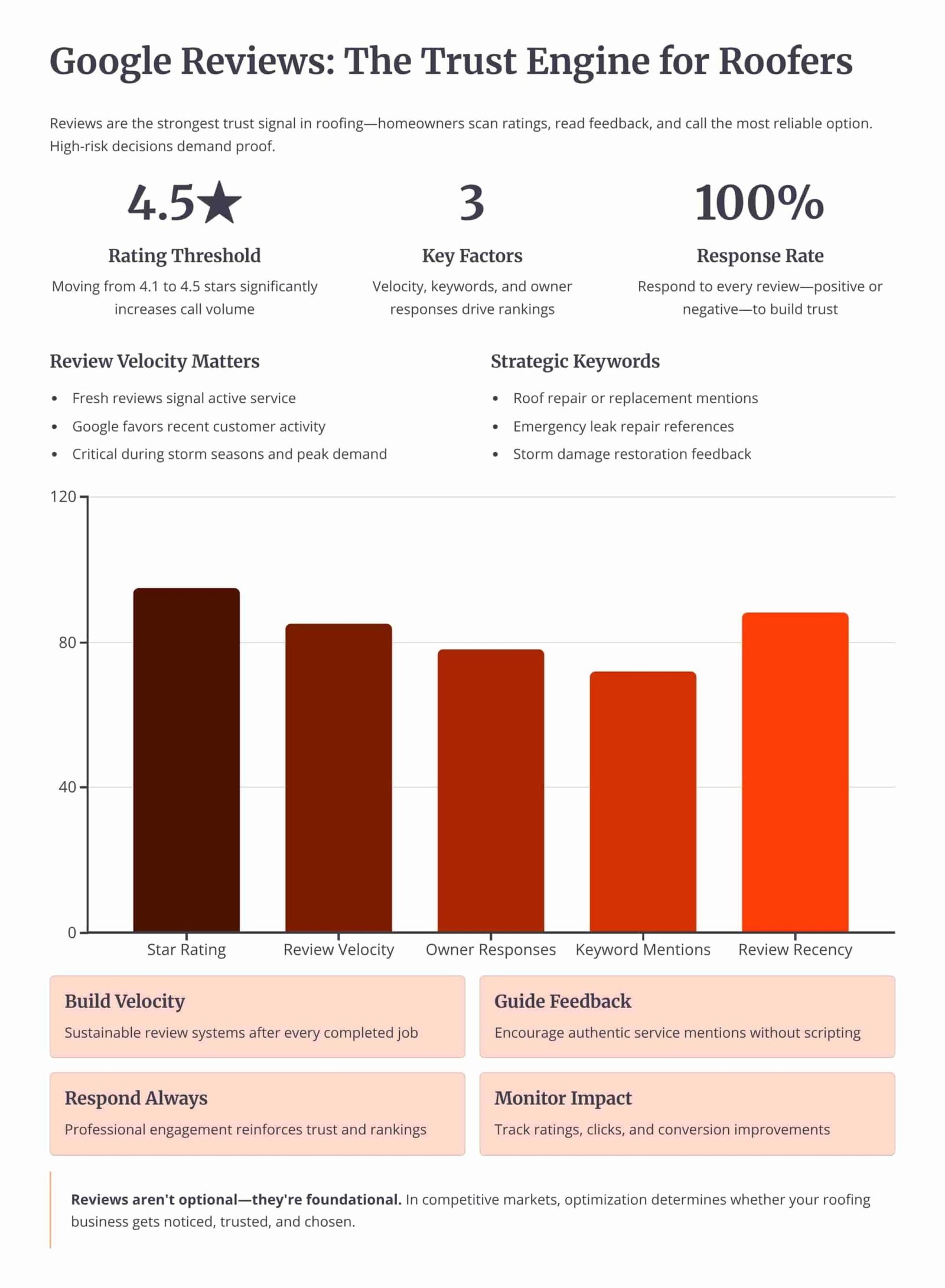
150+ 5-Star Reviews Generated
Organic Traffic
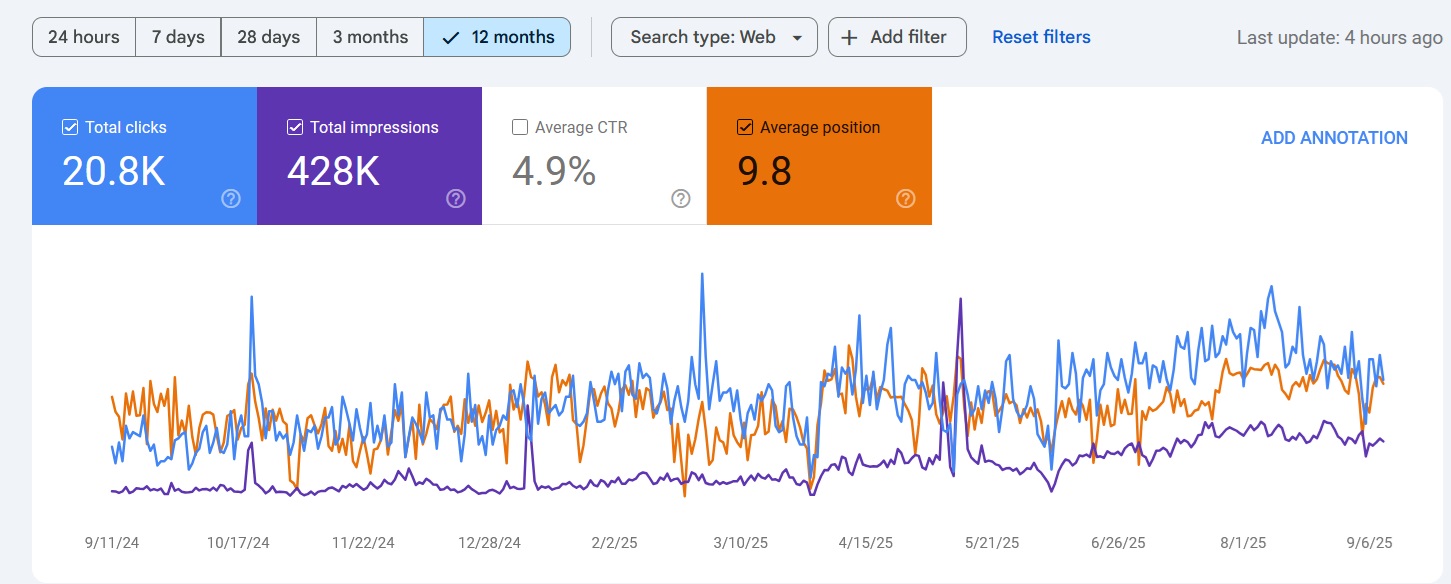
300% Increase in Qualified Traffic
What Roofers Say
The 180-Day Roofing SEO Roadmap
See how we fix the technical foundation, build the website, and earn rankings over a 6-month engagement.
Month 1: Technical Audit and Crawl Fixes
- Crawl and Index Audit: Running a full crawl to find blocked pages, indexation gaps, and duplicate URL versions.
- Sitemap and Robots Fixes: Correcting the XML sitemap and robots.txt so the right roofing pages are reachable.
Month 2: Speed and Core Web Vitals
- Load-Time Work: Compressing images, deferring scripts, and adding a CDN to lower Largest Contentful Paint.
- Layout Stability: Reserving space for images and embeds to remove the layout shift that pushes a visitor away.
Month 4: Architecture and Internal Linking
- Silo and URL Structure: Organizing service and city pages into clean silos with readable URLs.
- Canonical and Redirect Cleanup: Setting canonical tags and mapping old URLs to their replacements.
Month 6: Indexed Pages and Rankings
- Clean Index Coverage: Confirming every service and city page is indexed and free of crawl errors.
- Ranking Movement: Tracking position gains on core roofing queries as the technical fixes compound.
Owning Search Demand vs Renting It From Lead Platforms
If you pay Angi or Google Ads, you are renting visibility. The moment you stop paying, your pipeline dries up. A technically sound website that ranks for high-intent local searches builds permanent digital equity.
Shared Lead Platforms (Angi, HomeAdvisor)
- The Race to the Bottom: Shared leads force you to slash prices to win against 5 other roofers.
- Low Intent: Half the time they aren't ready to buy, they were just clicking around online.
Local Search SEO (Our Approach)
- 100% exclusive, direct-to-you inbound calls.
- Highest closing rate. They chose YOU from the local pack.
- Compounding ROI. You don't pay per click.
We Identify Search Intent Using Industry-Leading Data Tools




Expertise Built on Data.
Not Guesswork.
I'm Nizam Ud Deen, and I don't build generic websites. I build search intent engines specifically for the roofing industry.
For years, I've watched roofers burn money on agencies that brag about "traffic" while the phones stay silent. Traffic without intent is worthless. My system maps exactly how homeowners search during storms, when comparing prices, and when they're ready to buy, and intercepts them at every stage.
The No-Brainer Roofing SEO Guarantee
We don't guarantee "traffic" or "rankings." We guarantee high-intent leads.
"We guarantee to generate 15 exclusive, inbound replacement or repair leads per month within the first 180 days, driven entirely by high-intent organic search. If we don't hit that metric, we work for free until we do."
Measuring Success: Leads and Revenue
We don't report on vanity metrics. If traffic goes up but revenue stays flat, the strategy failed. We track the pipeline.
Call Tracking
Every keyword mapped to the exact phone call it generated.
Form Fills
Tracking estimate requests from high-intent local landing pages.
Booked Jobs
Connecting CRM data to SEO efforts to prove actual revenue return.
Cost per Lead
Monitoring organic CPL to ensure it beats shared platform costs.
The Roofing Technical SEO Checklist
Run the roofing website through this checklist to confirm a search engine can crawl, index, and render every page worth ranking.
Frequently Asked Questions
Clear answers about technical SEO for roofing companies.
What is technical SEO for roofers?
Why does technical SEO matter for a roofing website?
What is the difference between crawling and indexing?
What are Core Web Vitals for a roofing site?
What does an XML sitemap do for a roofing site?
What does robots.txt control on a roofing site?
How does site speed affect roofing leads?
What is mobile-first indexing for roofers?
Why does a roofing site need HTTPS?
What do canonical tags fix on a roofing site?
How should a roofing site handle redirects?
What is a silo structure for a roofing site?
How long does technical SEO take to show results?
Can a roofer do technical SEO without a developer?
Get Your Free Technical SEO Audit
We'll crawl your roofing site and your top 3 local competitors to show you exactly where crawl, speed, and indexation faults cost rankings.
What You Get:
- Crawl and Index ReportA list of blocked pages, indexation gaps, and duplicate URL versions.
- Core Web Vitals ScoreMobile load, interaction, and layout-shift readings for the key pages.
More Deliverables
- Canonical and Redirect CheckA scan for duplicate URLs, redirect chains, and broken links.
- Prioritized Fix ListThe faults ordered by ranking impact so the work starts where it counts.
Claim your free technical SEO audit today. No commitment required.