
CDN Usage for Roofing Websites
Serve a roofing website from servers near each visitor so pages load fast across the service area and hold up when storm traffic spikes.

Free Roofing Website Speed Audit
Most roofing sites load slower than their Core Web Vitals targets. Get a free audit that checks CDN delivery, load times, and a plan to speed up the site.
What Is a CDN for a Roofing Website?
A CDN, or content delivery network, is a group of servers that copy a roofing website's files and serve each visitor from the location nearest to them instead of a single origin server.
Files Cached at the Edge
The CDN stores images, scripts, and stylesheets on edge servers, so a homeowner downloads them from a nearby point instead of one distant host.
Distance Drives Speed
A request that travels a shorter network distance returns faster, which lowers the time a roofing page takes to appear.
A Layer, Not a Host
The CDN sits in front of the existing host. It speeds delivery but does not replace hosting, and it works alongside broader page speed optimization.
Why Does CDN Usage Matter for a Roofing Website?
CDN usage matters because page speed affects both Google rankings and whether a homeowner waits for the site to load during an urgent roofing search.
Speed Is a Ranking Input
- Google uses page experience, including Core Web Vitals, among its ranking signals.
- A CDN cuts the time to first byte and the load time a slow host adds.
- The author reports an average load-time reduction near 47 percent on roofing sites after adding a CDN.
Slow Pages Lose Emergency Leads
- A homeowner searching for emergency roof repair at night abandons a page that stalls.
- The author reports a bounce-rate improvement near 23 percent after CDN setup.
- Each second saved keeps a high-intent visitor on the page long enough to call.
How Does a CDN Work for a Roofing Site?
A CDN works by caching a copy of the roofing site's files on regional servers, then routing each visitor to the closest server instead of the single origin.
Edge Caching
The CDN copies images, CSS, and JavaScript to edge servers spread across regions, so the heavy files sit close to searchers.
Nearest-Server Routing
When a homeowner loads the site, the CDN answers from the closest edge location, which shortens the round trip.
Origin Offload
Cached files skip the origin host, so fewer requests reach it and the site stays responsive during traffic spikes.
How Does CDN Usage Help Roofers Across Multiple Service Areas?
A CDN helps a multi-area roofing company by serving every city in the service territory at a similar speed instead of favoring the visitors closest to one host.
The Geographic Latency Problem
- A single host loads fast near its data center and slower in distant cities.
- Visitors in outer service areas see weaker speed than visitors near the host.
- That gap can cost leads in the very cities a roofing company wants to grow.
Even Speed Across the Territory
- Edge servers place the site close to every city the company serves.
- Google measures speed from several locations, so consistent delivery helps each city page.
- City pages tie into local SEO for roofers across the service area.
How Does a CDN Handle Storm-Season Traffic Spikes?
A CDN handles storm-season spikes by absorbing a sudden surge of requests across its edge servers, so the roofing site stays online when search volume climbs after a hail or wind event.
Search Volume Climbs After a Storm
The author reports that severe-weather events can lift roofing search volume by as much as 500 percent. A site on a single host can slow or fail under that load.
Edge Servers Spread the Load
Cached files served from many edge locations keep response times steady during the surge, so a homeowner reaches a working contact form at the moment intent is highest.
A Faster Site Captures More Calls
When a roofing page loads quickly, a high-intent homeowner stays long enough to call instead of returning to the search results. We set up CDN delivery and the rest of the speed stack for you.
Call Now For PricingOr call +1 272-207-3231
How Does CDN Usage Affect Core Web Vitals?
CDN usage affects Core Web Vitals by delivering images and scripts faster, which improves the loading and stability metrics Google uses in page experience.
Largest Contentful Paint
LCP measures when the main content renders. A CDN serving a hero roof image from a nearby edge can lower that time.
Interaction Readiness
Faster script delivery shortens the wait before a homeowner can tap a call button or start a quote form.
Layout Stability
Quicker image loading helps the page settle sooner. For the full metric set, see Core Web Vitals for roofing sites.
How Does CDN Usage Improve Mobile Roofing Searches?
A CDN improves mobile roofing searches by shortening download time on slower phone connections, where most emergency roofing searches happen.
Phones Carry the Urgent Searches
A homeowner standing under a leak searches on a phone, often on a cellular connection. The author reports a mobile load-time gain near 31 percent after CDN setup.
Faster Delivery Aids Mobile Indexing
Google indexes the mobile version of a site first, so the speed it sees on mobile shapes ranking. See mobile-first indexing for roofing sites.
How Does a CDN Speed Up Roofing Project Galleries?
A CDN speeds up roofing galleries by caching the large before-and-after job photos at the edge, so a portfolio page loads without stalling on heavy images.
Roofing Sites Lean on Visuals
- Project galleries and before-and-after sets carry many large images.
- Uncached, those files pull from one host and slow the page.
- A homeowner judges quality from photos, so the gallery has to load.
Edge Delivery for Heavy Media
The CDN serves each image from the nearest edge, which keeps a photo-heavy portfolio fast. Pairing this with image compression in broader page speed work compounds the gain.
How Does a CDN Affect Crawl Efficiency and Security?
A CDN affects crawl efficiency by returning files faster to Googlebot, and it adds security by filtering traffic before it reaches the origin host.
Faster Responses for the Crawler
- Quicker file delivery lets Googlebot fetch more pages per visit.
- That helps a larger roofing site with many city and service pages.
- Crawl efficiency supports website crawlability for roofing sites.
A Filter in Front of the Host
- Many CDNs absorb traffic floods and block malicious requests at the edge.
- That keeps the contact form reachable during a spike.
- It complements site-level HTTPS security for roofing sites.
How Much Does a CDN Cost a Roofing Company?
A CDN costs roughly 20 to 100 dollars a month for a typical roofing website, according to the author, with free tiers available for low-traffic sites.
Where the Cost Sits
- Pricing scales with traffic and the features a plan includes.
- A small roofing site can start on a low or free tier.
- The author places most roofing sites in the 20 to 100 dollar monthly range.
CDN vs Standard Hosting Alone
Standard hosting serves every visitor from one location. A CDN layered on top adds edge delivery for a modest monthly fee, and the author reports the cost is recovered when a single saved lead is a roof job worth thousands.
How to Set Up a CDN on a Roofing Website
Set up a CDN by measuring a speed baseline, choosing a provider, connecting it to the site, testing delivery, then monitoring performance.
Baseline and Provider
- Run a speed audit to record current load times before any change.
- Pick a CDN provider that fits the traffic and the budget.
- Confirm it supports the platform the roofing site runs on.
Connect, Test, and Monitor
- Point the site through the CDN and set the cache rules for static files.
- Test from several locations to confirm faster delivery and correct content.
- Watch performance over time and adjust caching as the site changes.
Speed Pays Back Faster Than It Costs
A CDN runs a modest monthly fee, while a single roof job runs into the thousands. The author reports the cost is recovered in the first month once saved leads are counted. We handle the setup.
Call Now For PricingOr call +1 272-207-3231
Common CDN Mistakes Roofers Should Avoid
Roofing sites lose CDN benefit through 5 recurring setup mistakes, each one fixable in the CDN dashboard or the site configuration.
Configuration Errors
- Leaving the CDN partly configured, so only some files cache.
- Ignoring cache invalidation, so visitors see outdated pages after an edit.
- Skipping the geographic settings that route by region.
Mobile and Monitoring Errors
- Overlooking mobile delivery, where most roofing searches happen.
- Failing to monitor performance after setup, so regressions go unseen.
- Treating the CDN as a one-time task rather than an ongoing check.
Proof of Performance
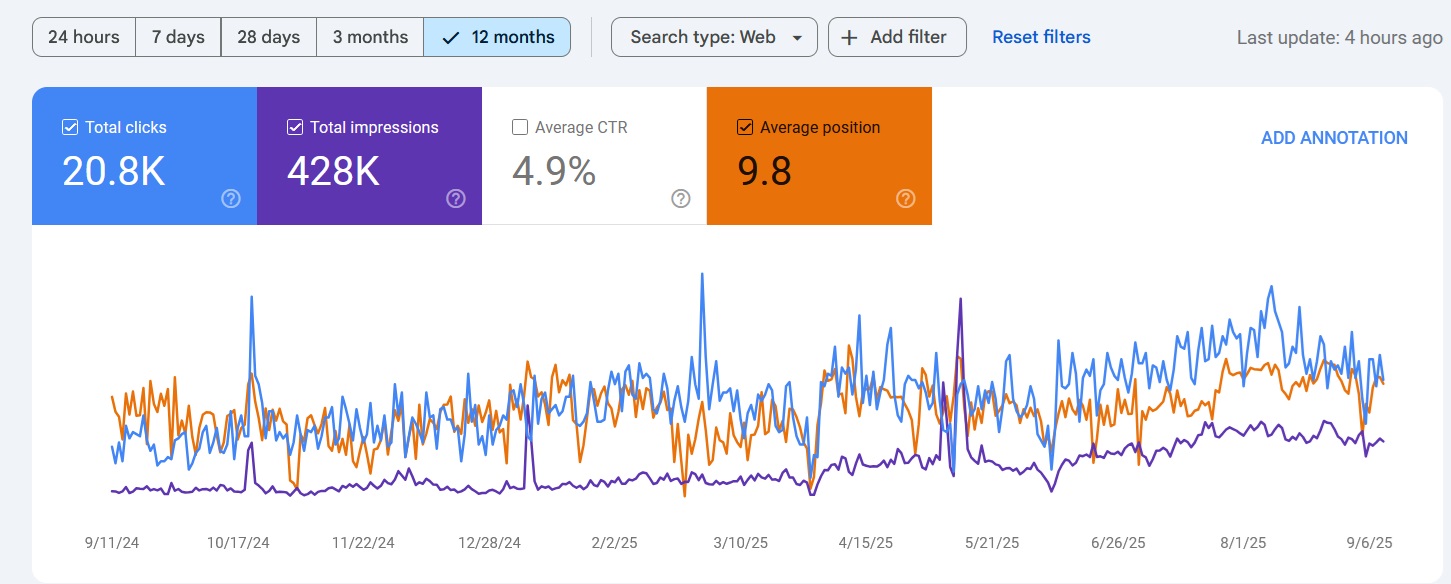
Results from roofing campaigns that rank in local search.
Map Pack Rankings
Ranked in Local Search Within 90 Days
Review Velocity
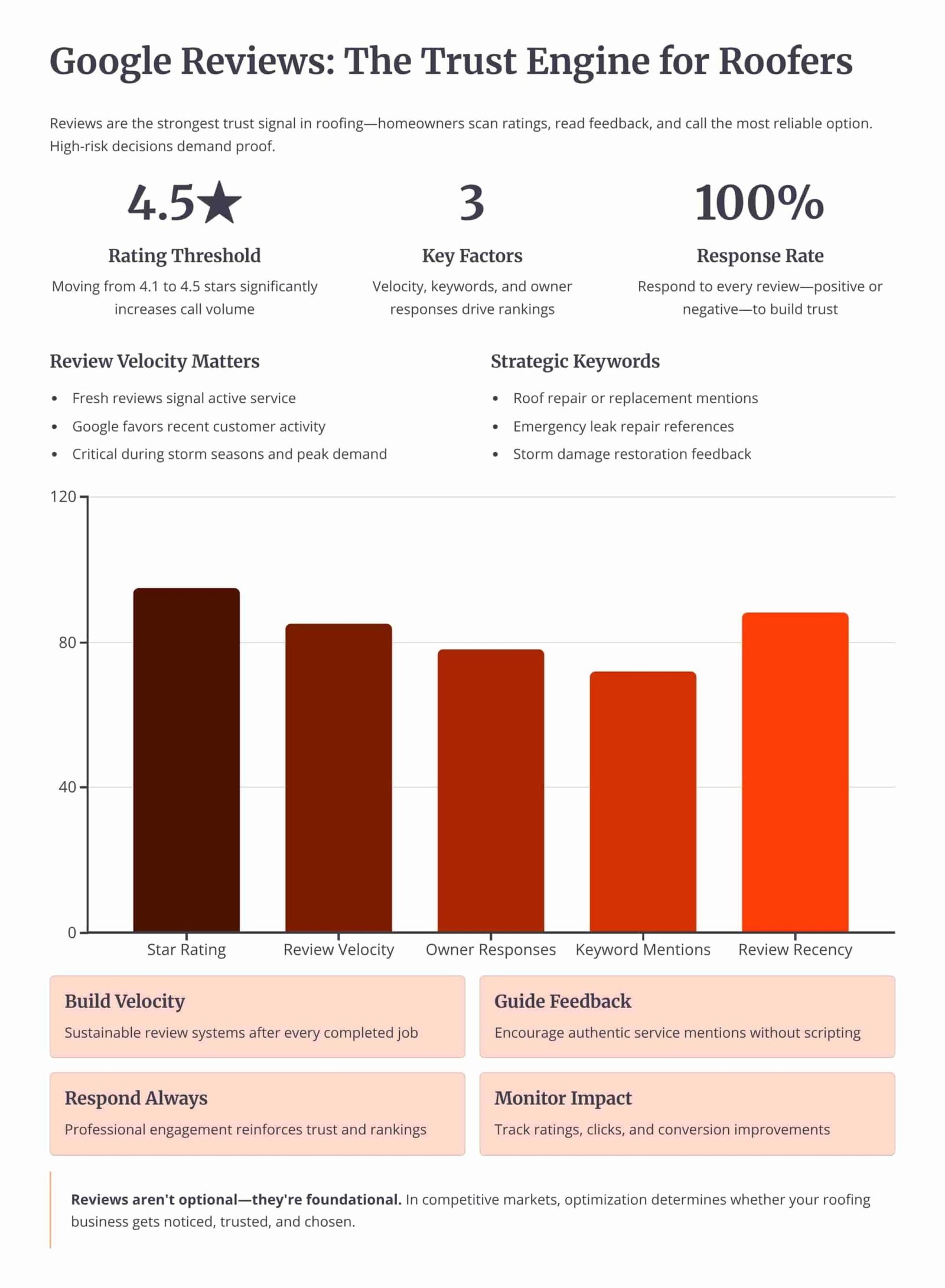
150+ 5-Star Reviews Generated
Organic Traffic
300% Increase in Qualified Traffic
What Roofers Say
The 180-Day Roofing SEO Roadmap
See how we optimize the profile, build the website, and earn local-pack rankings over a 6-month engagement.
Month 1: Profile Audit and Setup
- Category and Field Fixes: Setting the primary category, secondary categories, description, services, and service areas.
- NAP Cleanup: Correcting the name, address, and phone number across the profile, the website, and the directory citations.
Month 2: Reviews and Media
- Review System: Setting up a steady request flow and replying to every review, positive and negative.
- Photo and Post Cadence: Uploading job photos from each completed roof and publishing profile posts twice a month.
Month 4: Citations and Site Support
- Citation Building: Adding consistent listings on the directories that feed prominence for a service area.
- Service-Area Pages: Building city pages on the website that reinforce the profile's service areas.
Month 6: Local-Pack Rankings and Leads
- Map-Pack Position: Reaching the top 3 of the local pack for core roofing queries in the served cities.
- Lead Tracking: Measuring calls and direction requests from the profile against the cost of paid leads.
Owning Search Demand vs Renting It From Lead Platforms
If you pay Angi or Google Ads, you are renting visibility. The moment you stop paying, your pipeline dries up. Ranking the profile and the website for high-intent local searches builds permanent digital equity.
Shared Lead Platforms (Angi, HomeAdvisor)
- The Race to the Bottom: Shared leads force you to slash prices to win against 5 other roofers.
- Low Intent: Half the time they aren't ready to buy, they were just clicking around online.
Local Search SEO (Our Approach)
- 100% exclusive, direct-to-you inbound calls.
- Highest closing rate. They chose YOU from the local pack.
- Compounding ROI. You don't pay per click.
We Identify Search Intent Using Industry-Leading Data Tools




Expertise Built on Data.
Not Guesswork.
I'm Nizam Ud Deen, and I don't build generic websites. I build search intent engines specifically for the roofing industry.
For years, I've watched roofers burn money on agencies that brag about "traffic" while the phones stay silent. Traffic without intent is worthless. My system maps exactly how homeowners search during storms, when comparing prices, and when they're ready to buy, and intercepts them at every stage.
The No-Brainer Roofing SEO Guarantee
We don't guarantee "traffic" or "rankings." We guarantee high-intent leads.
"We guarantee to generate 15 exclusive, inbound replacement or repair leads per month within the first 180 days, driven entirely by high-intent organic search. If we don't hit that metric, we work for free until we do."
Measuring Success: Leads and Revenue
We don't report on vanity metrics. If traffic goes up but revenue stays flat, the strategy failed. We track the pipeline.
Call Tracking
Every keyword mapped to the exact phone call it generated.
Form Fills
Tracking estimate requests from high-intent local landing pages.
Booked Jobs
Connecting CRM data to SEO efforts to prove actual revenue return.
Cost per Lead
Monitoring organic CPL to ensure it beats shared platform costs.
The Roofing Website CDN Checklist
Run the roofing site through this checklist to confirm CDN delivery speeds every page across the service area.
Frequently Asked Questions
Clear answers about CDN usage for roofing websites.
What is a CDN for a roofing website?
How does a CDN work for a roofing site?
Why does CDN usage matter for a roofing website?
Does a CDN improve Core Web Vitals for roofing sites?
How is a CDN different from page speed optimization?
How much does a CDN cost for a roofing website?
Does a small roofing company need a CDN?
Does a CDN help a roofing site serving many cities?
How does a CDN help during storm-season traffic?
Does a CDN replace web hosting for a roofing site?
Does a CDN add any security for roofing contractors?
Does a CDN help Google crawl a roofing site?
What CDN mistakes should roofers avoid?
Get Your Free Roofing Website Speed Audit
We'll measure your current load times and CDN delivery, then show you exactly where the site slows down and loses leads.
What You Get:
- Load-Time MeasurementA check of current load times across desktop and mobile.
- CDN Delivery ReviewWhether the site serves files from the edge or one origin host.
More Deliverables
- Core Web Vitals SnapshotA reading of the loading and stability metrics Google measures.
- Speed Improvement PlanA prioritized list of fixes, starting with delivery and image size.
Claim your free roofing website speed audit today. No commitment required.