
Website Crawlability for Roofing Sites
Crawlability is whether Google can reach and read the pages on a roofing website. When a service page or city page is crawlable, Google can rank it; when it is blocked, that page stays invisible.

Free Roofing Crawlability Audit
Most roofing sites have pages Google cannot reach. Get a free crawlability audit with a competitor comparison and a plan to make every service and city page discoverable.
What Is Website Crawlability?
Website crawlability is Google's ability to access and navigate the pages on a roofing website. A page Googlebot cannot reach provides no search value, however strong its content.
Access, Then Read
Googlebot follows links to reach a page, then reads the page. If a door is locked or a hallway is blocked, the crawler never finishes the walkthrough.
Distinct From Indexing
Crawling is reaching the page; indexing is storing it for ranking. Crawlability comes first. See indexation optimization.
An Infrastructure Issue
A crawlability problem is not weak content or thin backlinks. It is site architecture that either allows or blocks Google from discovering the services a roofing company offers.
Why Does Crawlability Matter for a Roofing Website?
Crawlability matters because a page Google cannot crawl earns zero rankings, zero traffic, and zero leads for that service or location. Most roofing contractors find the problem only after months of SEO produces no result.
The Drain Is Invisible
- The site looks fine to visitors and the content reads well.
- Roof repair pages never index, and city landing pages stay invisible.
- Storm-damage content fails to appear during peak search periods.
The Cost Compounds
- Months of SEO work return little, so paid ads become the only lead source.
- Competitors with weaker services but better crawlability capture the local market.
- The pages Google can reach decide which services and cities a roofer can rank for at all.
How Does Google Crawl a Roofing Site?
Google crawls a roofing site by following internal links from one page to the next, reading each page it reaches, and recording what it finds. The link structure is the path the crawler walks.
Discover
Googlebot finds pages through internal links and the XML sitemap, so a page with no link pointing to it can go unseen.
Fetch
The crawler requests the page. A robots.txt rule, a server error, or a redirect chain can stop the fetch before any content loads.
Read
Googlebot reads the HTML. When a theme renders the main content through JavaScript, the crawler can struggle to read it.
Make Every Roofing Page Reachable
An uncrawlable service or city page cannot rank, so the leads it would earn go to a competitor. We audit the crawl path and open the pages Google misses.
Call Now For PricingOr call +1 272-207-3231
What Crawlability Issues Affect Roofing Websites?
Six issues recur on roofing sites, and each one blocks Google from a page that could rank. Most trace back to a generic theme or a DIY builder rather than the content itself.
Access and File Blocks
- Orphan pages with no internal link pointing to them, so Google cannot reach them.
- A robots.txt disallow that blocks a whole section of service and location pages. See the robots.txt guide.
- A noindex tag left on a page after development that tells Google not to index it.
Structure and Render Blocks
- Weak internal linking between location pages, service categories, and supporting content.
- JavaScript-heavy themes that render content Googlebot struggles to process.
- Parameter-based URLs with session IDs or tracking strings that create crawl traps.
How Does Site Architecture Affect Crawlability?
Site architecture decides how easily Google can discover and crawl a roofing site's service pages. A clear hierarchy and logical categories guide Googlebot through the content. See the hub-and-spoke model.
The Hub-and-Spoke Layout
- The homepage links to main categories: residential roofing, commercial roofing, emergency services.
- Category pages link to specific services: repairs, installations, inspections.
- Location pages connect to the relevant service pages, forming topical clusters.
Inherited Structure Is the Common Fault
Many roofing sites inherit poor architecture from a generic theme or a DIY builder. Fixing it takes a restructure of the hierarchy, not surface tweaks. See silo architecture for roofing sites.
How Do Internal Links Support Crawlability?
Internal links support crawlability because they are the path Googlebot follows to reach one page from another. A page with no incoming link is hard to discover. See internal linking strategy.
Where the Links Should Run
- The homepage passes equity to main service categories and priority pages.
- Category hubs connect related services and location pages into clusters.
- Blog content links to the relevant service pages it supports.
- City pages link to the services that apply, reinforcing local relevance.
Anchor Text and Footer Limits
Use descriptive anchor text that names the target service, and avoid stacking dozens of footer links that spread equity thin across pages that do not need it.
What Is Crawl Budget for a Roofing Site?
Crawl budget is how many pages Google will crawl on a site during each visit. Larger, more authoritative sites get bigger budgets, so a smaller roofing site has to spend its budget on pages that matter.
Budget Wasted on Low-Value URLs
On poorly optimized roofing sites, the source reports a large share of crawl budget spent on duplicate pages, parameter URLs, and thin content rather than service pages.
Indexation Delay
When budget is spent inefficiently, the source notes new roofing service pages take longer to get indexed, which hurts most during storm season.
Efficiency Recovers
The source reports crawl efficiency improves after a roofing site removes crawl traps and tightens its architecture, so budget reaches the pages that earn leads.
How Do XML Sitemaps Help a Roofing Site Get Crawled?
An XML sitemap helps because it gives Google a complete map of the important pages on a roofing site. Internal links handle most discovery, and the sitemap makes sure nothing gets missed. See the XML sitemaps guide.
What Belongs in the Sitemap
- Every roof repair, installation, and inspection page.
- City-specific landing pages that reinforce local signals.
- Blog posts and guides that support topical authority.
What to Leave Out
A clean sitemap includes only indexable pages. It excludes duplicate content, parameter URLs, and anything blocked by robots.txt or a noindex tag, and it updates when new content publishes.
How Does Crawlability Affect Roofing Local SEO?
Crawlability affects local SEO because a Google Business Profile draws relevance signals from the website's location pages and service content. When Google cannot crawl those pages, the signals never reach the listing. See local SEO for roofers.
The Connection Most Roofers Miss
Map-pack performance leans on the website. City pages and service descriptions feed the profile, so uncrawlable pages cost the listing the relevance it needs to rank.
The Pages That Carry the Signal
- City landing pages tie the profile to each served area.
- Service descriptions match the listing to specific roofing queries.
- Content depth supports the topical authority the profile borrows from.
Protect the SEO You Already Pay For
Content, links, and citations only return value when Google can crawl and index the pages. We make the crawl path clean so the rest of the work can rank.
Call Now For PricingOr call +1 272-207-3231
How Do You Diagnose Crawlability Issues?
You diagnose crawlability with tools that show what Google reaches and what it cannot. A full audit reads the crawl path end to end. See technical site audits.
The Tools That Surface the Problems
- Google Search Console reports crawl stats, coverage, and errors.
- A crawler such as Screaming Frog reveals orphan pages and redirect chains.
- Server log analysis shows which pages Google crawls and how often.
What a Full Audit Examines
A thorough audit checks robots.txt, sitemap accuracy, internal linking, URL structure, JavaScript rendering, page speed, mobile usability, and indexation status. Generic tools miss roofing-specific context.
How Do You Fix Crawlability on a Roofing Site?
You fix crawlability through a six-step technical SEO process, ordered by lead impact rather than by ease. It is ongoing work, since a roofing site keeps adding services and locations.
Find and Prioritize
- Audit the current state with a full crawl analysis.
- Prioritize issues by lead value and implementation effort.
- Fix critical blocks: robots.txt errors, stray noindex tags, architecture faults.
Restructure and Maintain
- Optimize the hierarchy and internal linking for efficient crawling.
- Set up monitoring to catch new issues before they cost rankings.
- Improve continuously as the roofing business adds services and content.
Proof of Performance
Results from roofing campaigns that rank in local search.
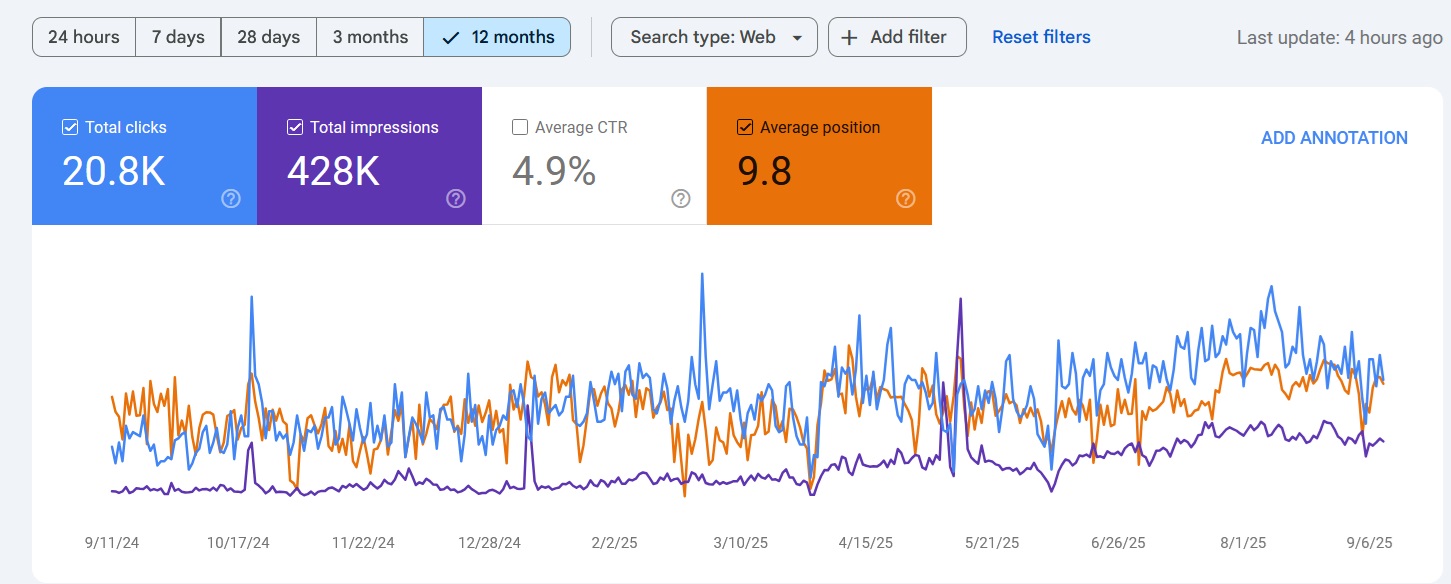
Map Pack Rankings
Ranked in Local Search Within 90 Days
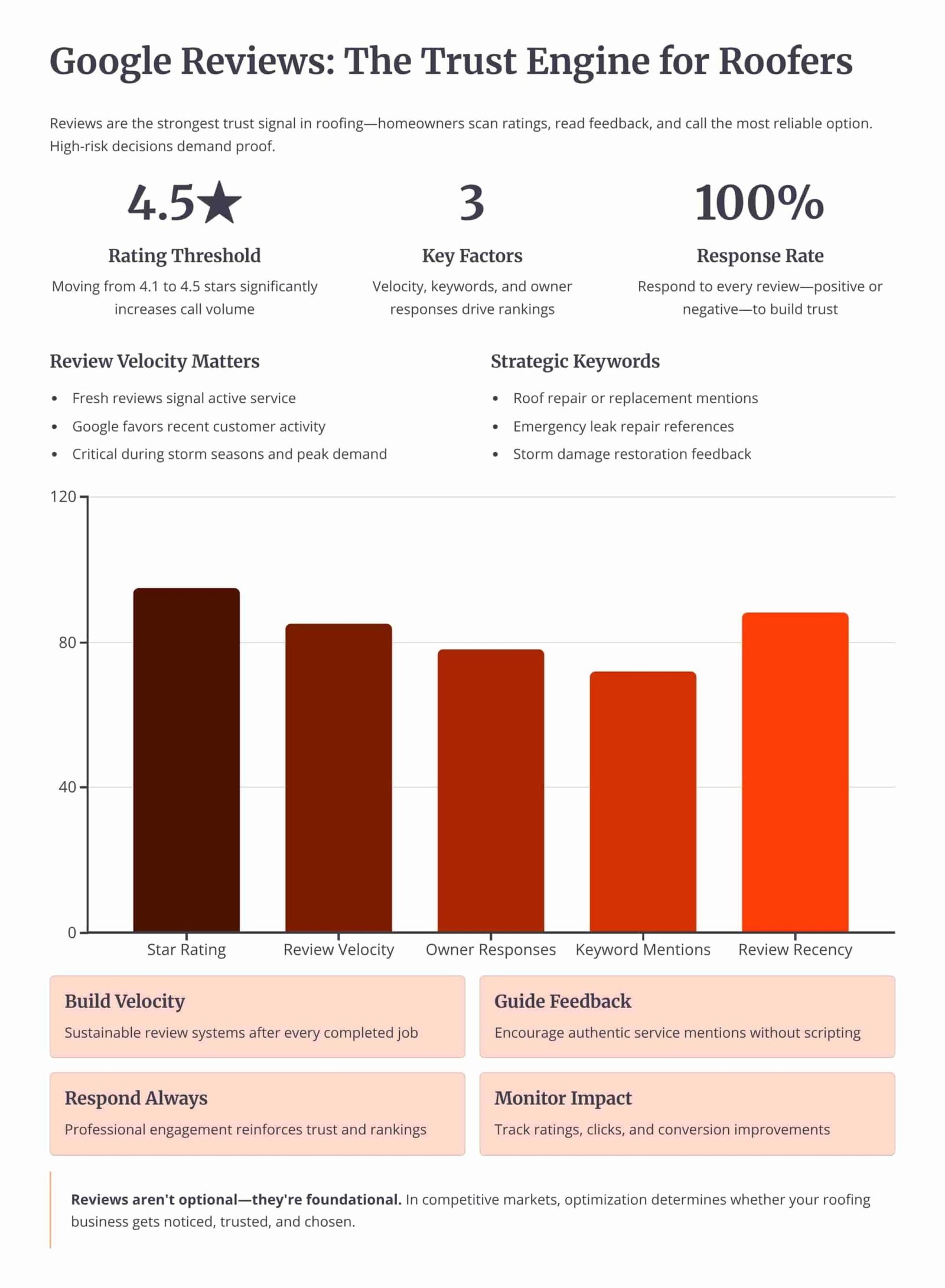
Review Velocity
150+ 5-Star Reviews Generated
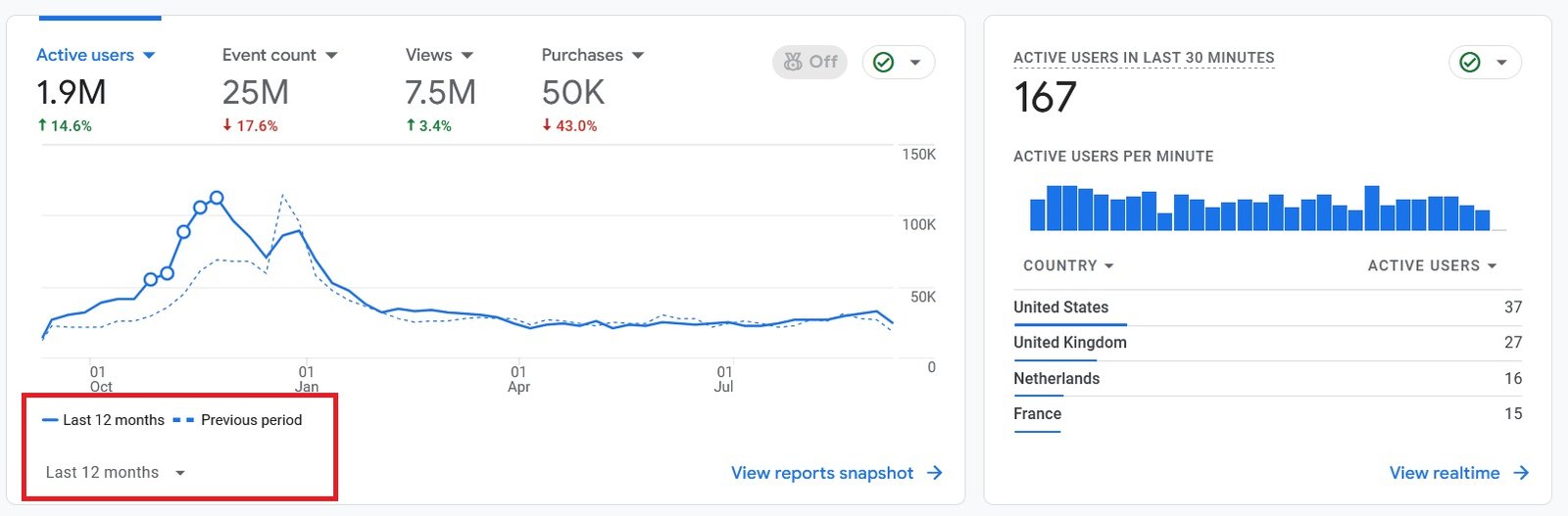
Organic Traffic
300% Increase in Qualified Traffic
What Roofers Say
The 180-Day Roofing Crawlability Roadmap
See how we audit the crawl path, fix the blocks, and rebuild the architecture so Google reaches every page over a 6-month engagement.
Month 1: Crawl Audit and Critical Blocks
- Full Crawl Analysis: Running Search Console, a site crawler, and log review to map what Google reaches and what it misses.
- Block Removal: Clearing robots.txt errors and stray noindex tags that hide service and city pages.
Month 2: Architecture and Internal Linking
- Hub-and-Spoke Build: Restructuring the hierarchy so categories link to services and cities into clean clusters.
- Orphan Fixes: Adding internal links to pages that had none, so Googlebot can reach them.
Month 4: Sitemaps and Crawl Budget
- Sitemap Cleanup: Listing only indexable service and city pages and dropping parameter and duplicate URLs.
- Crawl-Trap Removal: Closing the parameter URLs and redirect chains that waste crawl budget.
Month 6: Coverage and Monitoring
- Full Coverage: Confirming every service and city page is crawled and eligible to rank in Search Console.
- Ongoing Monitoring: Tracking crawl stats and coverage to catch new blocks as the site adds pages.
Owning Search Demand vs Renting It From Lead Platforms
If you pay Angi or Google Ads, you are renting visibility. The moment you stop paying, your pipeline dries up. Ranking the profile and the website for high-intent local searches builds permanent digital equity.
Shared Lead Platforms (Angi, HomeAdvisor)
- The Race to the Bottom: Shared leads force you to slash prices to win against 5 other roofers.
- Low Intent: Half the time they aren't ready to buy, they were just clicking around online.
Local Search SEO (Our Approach)
- 100% exclusive, direct-to-you inbound calls.
- Highest closing rate. They chose YOU from the local pack.
- Compounding ROI. You don't pay per click.
We Identify Search Intent Using Industry-Leading Data Tools



Expertise Built on Data.
Not Guesswork.
I'm Nizam Ud Deen, and I don't build generic websites. I build search intent engines specifically for the roofing industry.
For years, I've watched roofers burn money on agencies that brag about "traffic" while the phones stay silent. Traffic without intent is worthless. My system maps exactly how homeowners search during storms, when comparing prices, and when they're ready to buy, and intercepts them at every stage.
The No-Brainer Roofing SEO Guarantee
We don't guarantee "traffic" or "rankings." We guarantee high-intent leads.
"We guarantee to generate 15 exclusive, inbound replacement or repair leads per month within the first 180 days, driven entirely by high-intent organic search. If we don't hit that metric, we work for free until we do."
Measuring Success: Leads and Revenue
We don't report on vanity metrics. If traffic goes up but revenue stays flat, the strategy failed. We track the pipeline.
Call Tracking
Every keyword mapped to the exact phone call it generated.
Form Fills
Tracking estimate requests from high-intent local landing pages.
Booked Jobs
Connecting CRM data to SEO efforts to prove actual revenue return.
Cost per Lead
Monitoring organic CPL to ensure it beats shared platform costs.
The Roofing Website Crawlability Checklist
Run the roofing site through this checklist to confirm Google can reach, read, and index every service and city page.
Frequently Asked Questions
Clear answers about website crawlability for roofing sites.
What is website crawlability?
How does crawling work for a roofing website?
What is the difference between crawling and indexing?
Why does crawlability matter for a roofing website?
What blocks Google from crawling a roofing site?
What is an orphan page on a roofing site?
What is crawl budget for a roofing site?
How do internal links improve crawlability?
Does an XML sitemap make a roofing site crawlable?
Does robots.txt affect crawlability?
Can JavaScript hurt crawlability on a roofing site?
How do I check if Google can crawl my roofing site?
How does crawlability affect roofing local SEO?
How long does it take to fix crawlability issues?
Get Your Free Roofing Crawlability Audit
We'll crawl your site and your top 3 local competitors to show you exactly which service and city pages Google cannot reach.
What You Get:
- Crawl Coverage ReviewA check of which service and city pages Google reaches and which it misses.
- Block InventoryA list of orphan pages, robots rules, noindex tags, and crawl traps found.
More Deliverables
- Architecture MapA view of the internal-linking structure and where the gaps sit.
- Prioritized Fix PlanThe fixes ranked by lead impact so the costliest blocks get cleared first.
Claim your free roofing crawlability audit today. No commitment required.