
Topical Authority for Roofers
Cover the roofing topic completely with pillar pages, clusters, and internal links so search engines treat your site as the authority on roofing in your market.

Free Roofing Topical Coverage Audit
Most roofing sites cover a handful of pages and leave the topic half-answered. Get a free audit of your coverage gaps with a competitor comparison and a cluster map.
What Is Topical Authority for a Roofing Website?
Topical authority is the position a roofing site earns when it covers a topic so completely that search engines treat it as the reference source for that topic. It comes from breadth of coverage and clear structure, not from one strong page.
Coverage, Not One Page
Authority is the sum of every roofing question the site answers. A single page on roof repair does not signal authority over roofing as a whole.
A Connected System
The pages link to one another in a deliberate structure, so a search engine reads them as one knowledge system rather than scattered posts.
Built on the Fundamentals
Coverage sits on top of relevance and trust. See the roofing SEO fundamentals.
Why Does Topical Authority Matter for Roofers?
Topical authority matters because roofing is a high-ticket service where the site that covers the most relevant questions wins the trust that single keywords cannot buy. Coverage is the moat a competitor cannot copy in a week.
High-Ticket Jobs Reward Coverage
- A roofing job can run from several thousand dollars to well over twenty thousand, so each captured search carries real revenue.
- Homeowners research a roof for weeks, reading many pages before they call, so the site that answers more of those questions stays in front of them.
- A competitor with three thin pages cannot match a site that covers repair, replacement, materials, and cost in depth.
Coverage Feeds Relevance and Trust
- Google weighs relevance, authority, and trust, and broad topic coverage supports all three at once.
- A site that answers the full topic reads as a source, while a site with gaps reads as one more contractor.
- Pair coverage with credibility signals through the roofing trust and authority work.
How Does Google Read Topical Authority on a Roofing Site?
Google reads authority from four signals: content depth, internal linking, entity relationships, and links pointing to cluster pages. Coverage and structure decide how strongly each signal fires.
Depth and Structure
- Content depth: each page answers its question with subtopics and detail, not a surface paragraph.
- Internal linking: the way pages connect shows which topics relate and which page is the main one. The mechanics live in the internal linking strategy.
Entities and External Links
- Entity relationships: clear ties between the business, the service area, and the topics covered. This is the work in entity SEO for roofers.
- Links to cluster pages: external links that point at deep cluster pages, not only the homepage, confirm the depth is recognized.
Cover the Topic, Own the Market
A site with a handful of pages competes on luck. A site that covers the roofing topic completely competes on a moat that takes a rival many months to match. We map and build that coverage.
Call Now For PricingOr call +1 272-207-3231
What Is a Roofing Topical Map?
A topical map is a planned list of every page a roofing site needs to cover the topic completely, drawn before any page is written. It turns coverage from guesswork into a checklist.
The Full List Comes First
The map names every subtopic a homeowner or property manager might search, so the site is planned as a whole rather than grown one post at a time.
Each Page Has a Job
Every entry on the map is one page with one search target, which keeps two pages from chasing the same query.
The Blueprint to Build From
The map is the order of work. See how to build a roofing topical map.
How Do Pillar Pages and Cluster Pages Fit Together?
A pillar page is the broad page that introduces a roofing topic, and cluster pages are the narrower pages that each answer one part of it in depth. The pillar links down to the clusters, and each cluster links back up.
The Pillar Page
- Covers a broad topic such as roof replacement at an overview level.
- Targets the main commercial query for that topic and links out to every cluster under it.
- Learn the structure in roofing pillar pages.
The Cluster Pages
- Each cluster page answers one narrow query, such as roof replacement cost or material comparison.
- Every cluster links back to its pillar, which concentrates the topic in one place.
- Plan the set in roofing cluster pages.
What Role Do Supporting Articles Play?
Supporting articles are the informational pages that answer the questions homeowners ask before they hire, such as cost ranges, material choices, and storm damage steps. They fill the gaps a service page leaves and feed the cluster.
Cost and Material Guides
Homeowners research price and materials before they call. Guides on cost ranges and asphalt against metal capture that research stage.
Storm and Insurance Guides
After severe weather, homeowners search hail damage and insurance claims. These pages catch urgent, high-intent traffic.
Question Pages
Pages built around real questions add depth to the topic. Plan them in supporting articles.
How Does Internal Authority Flow Through the Cluster?
Authority flows through a hub-and-spoke pattern: supporting pages link up to the pillar, the pillar links down to the pages it leads, and the structure tells search engines which page matters most. The links carry the topic, not just navigation.
The Hub Concentrates the Topic
- The pillar is the hub. Every supporting page in the cluster links back to it with descriptive anchor text.
- That inbound flow tells a search engine the pillar is the page to rank for the broad query.
- See how the flow is planned in internal authority flow.
Architecture, Not Mechanics
- This silo decides which pages should link and why, as part of the content architecture.
- The technical mechanics, anchor rules, and link audits live in the internal linking strategy.
- Keep the two separate: plan the structure here, execute the links there.
Why Does Coverage Need Freshness and Updates?
Coverage needs upkeep because roofing costs, materials, and codes change, and a page that goes stale stops reading as the current source. Authority is held by keeping the topic current, not by publishing once.
Freshness Signals Currency
- A cost guide with last year's prices reads as outdated next to a competitor's current figures.
- Refreshing key pages on a schedule keeps the coverage trustworthy. See content freshness.
Updating Deepens Pages
- Updating adds new questions, examples, and detail to a page that already ranks, which strengthens it.
- Treat updates as a routine, not a one-time fix. See content updating.
When Should a Roofing Site Prune Thin Content?
Prune thin content when a page adds no depth, duplicates another, or chases traffic with no local intent, because weak pages dilute the signal of the strong ones. Coverage means the right pages, not the most pages.
What Counts as Thin
- A short service page with a form and little detail, which works as a placeholder, not coverage.
- City pages that copy one another with only the name swapped.
- Posts that pull visitors from other states with no path to a local job.
Merge, Improve, or Remove
- Merge two weak pages into one strong page, or expand a thin one with real depth.
- Remove pages that serve no query and link the topic elsewhere.
- Work through the decision in pruning thin content.
Coverage Compounds Over Time
A built-out cluster does not stop working. Each new page strengthens the ones already ranking, so the coverage returns more every month while a thin site stays flat.
Call Now For PricingOr call +1 272-207-3231
What Is a Roofing Knowledge Base?
A knowledge base is the organized set of definition and explainer pages that answer the basic roofing questions in one place, so the site reads as a reference and not only a sales site. It anchors the broad end of the topic.
Definition-First Pages
- Each page opens by defining the term, such as what flashing is or what a square means in roofing.
- Plain definitions catch the early-research searches that service pages miss.
One Organized Reference
- The pages connect so a reader can move from one term to the next without leaving the site.
- Build the set in knowledge base creation.
How Does Long-Tail Coverage Build Authority?
Long-tail coverage builds authority because answering many specific, low-volume queries proves the site addresses the whole topic, not just the few high-volume terms. Each small query is a piece of the complete picture.
The Long Tail Is the Topic
- A homeowner may search a very specific question, such as the cost to replace a small section of roof.
- Answering those specific questions is how a site demonstrates full coverage of roofing.
- Map the set in long-tail keyword coverage.
Coverage, Then Density
- This silo decides which long-tail pages the topic needs, as part of the architecture.
- How densely each page uses related terms is the work in entity SEO.
What Is a Semantic Gap Analysis?
A semantic gap analysis is the step that compares the topics a roofing site covers against the topics the market searches, then names the missing pages. The gaps it finds are the next pages to build.
List What You Cover
Catalog every page and the query it answers, so the current coverage is written down rather than assumed.
Compare to the Market
Set that list against the full topic and the competitors who rank, and the missing subtopics stand out.
Fill the Gaps in Order
Build the commercial gaps first, then the informational ones. See semantic gap analysis.
Proof of Performance
Results from roofing campaigns that rank in local search.
Map Pack Rankings
Ranked in Local Search Within 90 Days
Review Velocity
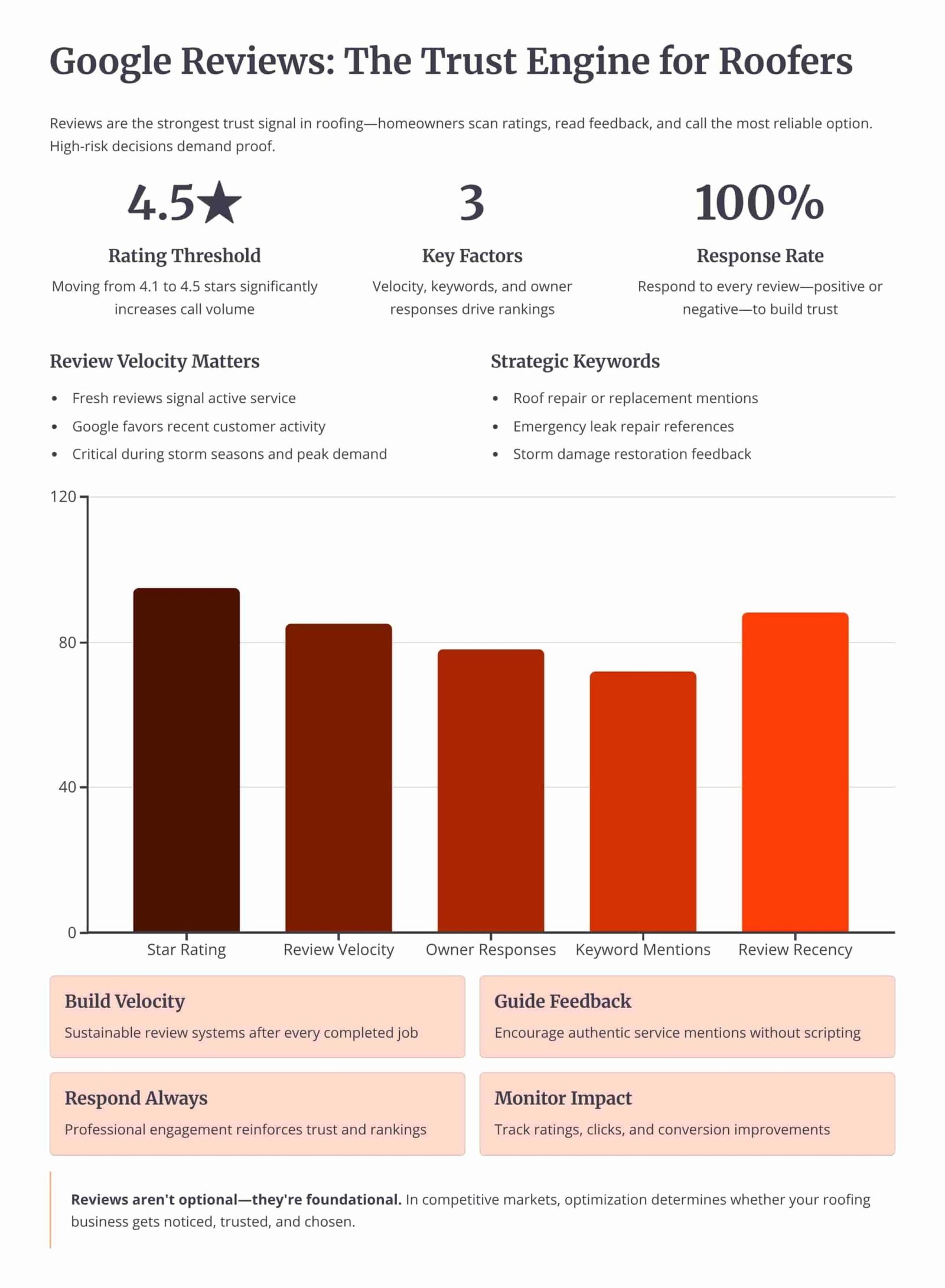
150+ 5-Star Reviews Generated
Organic Traffic
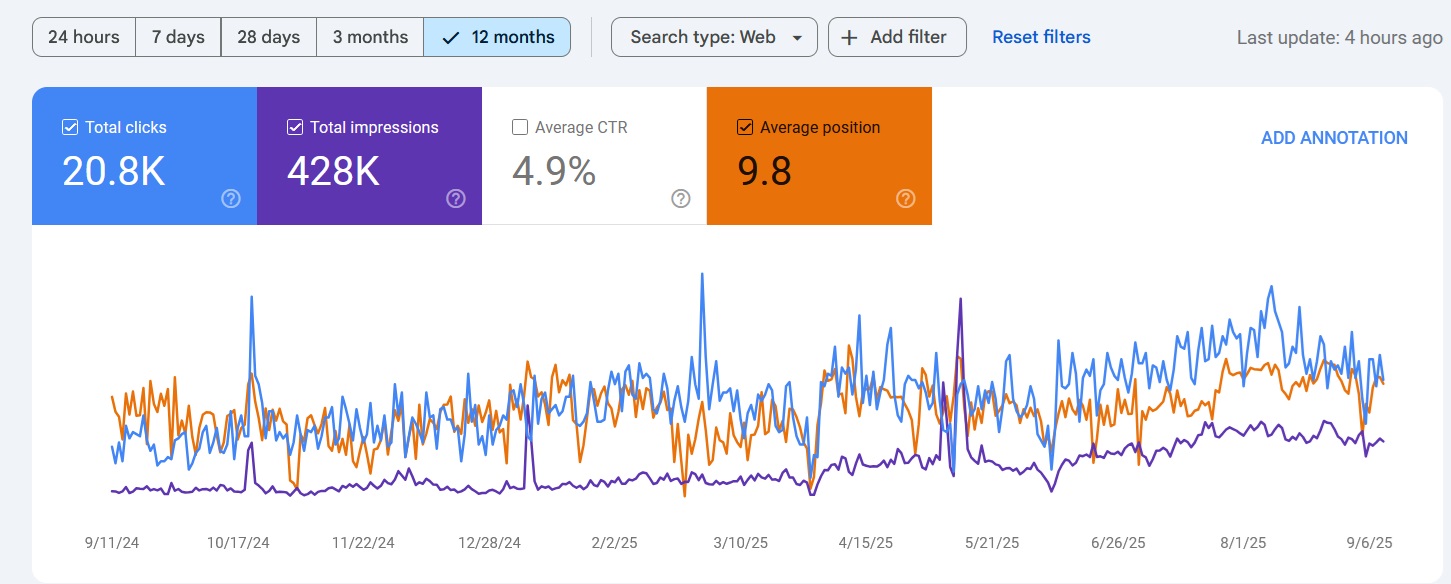
300% Increase in Qualified Traffic
What Roofers Say
The 180-Day Roofing SEO Roadmap
See how we optimize the profile, build the website, and earn local-pack rankings over a 6-month engagement.
Month 1: Profile Audit and Setup
- Category and Field Fixes: Setting the primary category, secondary categories, description, services, and service areas.
- NAP Cleanup: Correcting the name, address, and phone number across the profile, the website, and the directory citations.
Month 2: Reviews and Media
- Review System: Setting up a steady request flow and replying to every review, positive and negative.
- Photo and Post Cadence: Uploading job photos from each completed roof and publishing profile posts twice a month.
Month 4: Citations and Site Support
- Citation Building: Adding consistent listings on the directories that feed prominence for a service area.
- Service-Area Pages: Building city pages on the website that reinforce the profile's service areas.
Month 6: Local-Pack Rankings and Leads
- Map-Pack Position: Reaching the top 3 of the local pack for core roofing queries in the served cities.
- Lead Tracking: Measuring calls and direction requests from the profile against the cost of paid leads.
Owning Search Demand vs Renting It From Lead Platforms
If you pay Angi or Google Ads, you are renting visibility. The moment you stop paying, your pipeline dries up. Ranking the profile and the website for high-intent local searches builds permanent digital equity.
Shared Lead Platforms (Angi, HomeAdvisor)
- The Race to the Bottom: Shared leads force you to slash prices to win against 5 other roofers.
- Low Intent: Half the time they aren't ready to buy, they were just clicking around online.
Local Search SEO (Our Approach)
- 100% exclusive, direct-to-you inbound calls.
- Highest closing rate. They chose YOU from the local pack.
- Compounding ROI. You don't pay per click.
We Identify Search Intent Using Industry-Leading Data Tools




Expertise Built on Data.
Not Guesswork.
I'm Nizam Ud Deen, and I don't build generic websites. I build search intent engines specifically for the roofing industry.
For years, I've watched roofers burn money on agencies that brag about "traffic" while the phones stay silent. Traffic without intent is worthless. My system maps exactly how homeowners search during storms, when comparing prices, and when they're ready to buy, and intercepts them at every stage.
The No-Brainer Roofing SEO Guarantee
We don't guarantee "traffic" or "rankings." We guarantee high-intent leads.
"We guarantee to generate 15 exclusive, inbound replacement or repair leads per month within the first 180 days, driven entirely by high-intent organic search. If we don't hit that metric, we work for free until we do."
Measuring Success: Leads and Revenue
We don't report on vanity metrics. If traffic goes up but revenue stays flat, the strategy failed. We track the pipeline.
Call Tracking
Every keyword mapped to the exact phone call it generated.
Form Fills
Tracking estimate requests from high-intent local landing pages.
Booked Jobs
Connecting CRM data to SEO efforts to prove actual revenue return.
Cost per Lead
Monitoring organic CPL to ensure it beats shared platform costs.
The Roofing Topical Coverage Checklist
Run your roofing site through this checklist to confirm the topic is covered completely and the architecture proves authority.
Frequently Asked Questions
Clear answers about topical authority and content coverage for roofing sites.
What is topical authority for a roofing website?
How is topical authority different from ranking one keyword?
What is a topical map for a roofing site?
What is the difference between a pillar page and a cluster page?
How many pages does a roofing site need for topical authority?
How do supporting articles help build authority?
How does internal linking support topical authority?
Does content freshness affect topical authority?
When should I prune or remove a roofing page?
What is a semantic gap analysis?
How is topical authority related to entity SEO?
How long does it take to build topical authority?
Where do the actual page types get built?
Get Your Free Roofing Topical Coverage Audit
We'll map the roofing topics your site covers, compare them to your top 3 local competitors, and show the cluster gaps that keep you from owning the topic.
What You Get:
- Coverage MapA view of the roofing subtopics your site covers and the ones it leaves open.
- Cluster Gap ListThe pillar and cluster pages missing from your highest-value services.
More Deliverables
- Thin-Page ScanPages that duplicate one another or add no depth and should be merged or pruned.
- Build OrderThe sequence to build the missing pages, commercial gaps first.
Claim your free roofing topical coverage audit today. No commitment required.