
Supporting Articles for Roofers
Write focused supporting articles that answer one specific roofing question each, link back to the service page they sit under, and fill out the coverage that proves topical authority.

Free Roofing Content Coverage Audit
Most roofing sites have isolated service pages with no supporting articles around them. Get a free audit that maps which clusters are thin and which questions are missing.
What Is a Supporting Article?
A supporting article is a focused, non-service, non-location page that answers one specific roofing question and links back to the service page it supports. It builds the topic depth a cluster needs to read as authoritative.
It Educates, It Does Not Sell
A supporting article answers a homeowner question such as a repair cost or a leak cause. It informs first, and the call to a service page comes after the answer.
It Sits Inside a Cluster
Each article covers one subtopic under a service page and links back to it. The group of articles around a service forms a content cluster.
It Is Not a Pillar
A pillar page covers the whole topic broadly. A supporting article goes narrow on one question. See pillar pages.
Why Do Supporting Articles Build Roofing Authority?
Supporting articles build authority because they give Google the topic depth to trust the site, and they pass relevance back to the service pages through internal links.
They Strengthen Relevance Signals
- Each article adds coverage of a roofing subtopic that a thin site leaves uncovered.
- Internal links from articles to service pages pass authority and relevance through the cluster.
- A well-linked cluster can lift the rankings of every page in it, not just the article. See internal linking mechanics.
They Reach Homeowners Earlier
- An article on "how long does a roof last" reaches a homeowner months before they hire.
- Answering the question well builds trust and reduces friction before the call.
- The entity relationships between your brand and roofing topics grow article by article. See entity SEO for roofers.
What Types of Supporting Articles Should Roofers Write?
Write six article types: cost guides, material comparisons, process guides, problem-diagnosis pages, FAQ pages, and seasonal maintenance content. Each one answers a different stage of the homeowner's question.
Cost Guides
Replacement and repair pricing pages reach homeowners comparing options. They carry high conversion intent and belong in the first wave of articles.
Comparisons and Process
Asphalt versus metal, TPO versus EPDM, and installation walkthroughs position the company as an advisor and reduce objections before the estimate.
Diagnosis and Seasonal
Leak causes and storm damage signs catch homeowners with an urgent problem. Winter prep and spring inspection pages keep the site relevant year-round.
Turn Coverage Into Phone Calls
A cluster of supporting articles answers the questions homeowners ask before they call. We map and write the cluster so the answers lead back to your service pages and the call lands on you.
Call Now For PricingOr call +1 272-207-3231
How Do Supporting Articles Reinforce the Cluster?
They reinforce the cluster through a hub-and-spoke shape: the service page is the hub, each article is a spoke that covers one subtopic and links back to the hub.
A Roof Repair Cluster
- Hub: the roof repair service page.
- Spokes: repair cost guide, signs of roof damage, repair versus replacement, emergency repair steps, common repair mistakes, and how long a repair takes.
- Each spoke answers one query a homeowner types around roof repair.
Why the Web of Links Works
When a homeowner lands on any spoke, they find links to the service page and to related spokes. That web distributes authority across the whole cluster and signals comprehensive coverage. The cluster sits inside a larger topical map.
How Many Supporting Articles Does a Roofing Service Need?
Plan for 5 to 10 articles per service as a minimum for meaningful topical signals, and 15 to 30 per service for a genuine edge over local competitors.
5 to 10 Articles: Minimum
Below this range a service page sits too thin for Google to read the site as a topic authority. Five to ten articles set the floor for a working cluster.
15 to 30 Articles: Edge
Fifteen to thirty articles per service cover the subtopics most competitors leave open. This range is where a cluster starts to outrank thinner sites.
75 to 150 Across the Site
A roofer with five core services may map 75 to 150 articles in total. This is a roadmap to build over time, not a number to hit overnight.
How Should a Supporting Article Link to the Cluster?
Link every article to its parent service page with at least one descriptive link, link the service page back, and cross-link related articles in the same cluster.
The Three Links Every Article Needs
- One contextual link up to the parent service page, with descriptive anchor text.
- Links across to related articles in the same cluster where they fit.
- A link down from the service page back to the article, so the flow runs both ways.
Anchor Text That Carries Meaning
Use anchors like "roof repair cost guide" or "emergency roof repair services" instead of "click here". The mechanics of where links go and how authority flows live in internal authority flow.
What Keywords Should Supporting Articles Target?
Target the informational and commercial-investigation queries homeowners type before they hire, which are longer, more specific, and less contested than the core service terms.
Queries to Map to Articles
- How much does a roof replacement cost.
- Signs of storm damage on a roof.
- How long does a roof last.
- Asphalt versus metal roofing comparison.
- What to expect during roof installation.
How to Find Them
Start from the core service keyword, read the People Also Ask box, mine autocomplete for long-tail variants, and group each query by cluster and intent. Map every query to one article before writing. The full long-tail program lives in long-tail keyword coverage.
Organic Coverage Costs Less Than Paid Leads
A cluster of articles earns clicks at no cost per visit, against 50 to 150 dollars for shared roofing leads. Build the coverage once and it keeps reaching homeowners for years.
Call Now For PricingOr call +1 272-207-3231
What Makes a Supporting Article Deep Enough?
Depth comes from real roofing detail: specific product names, measurements, local codes, and the experience signals that thin blog content cannot fake.
Signals of Real Roofing Knowledge
- Name specific shingle brands, materials, and manufacturer warranties.
- Reference local weather patterns, regional materials, and city building codes.
- Include measurements, numbered steps, and comparison tables.
- Add photos, diagrams, and annotated images where they help explain the work.
Each Article Fully Answers Its Question
An article should resolve the question it targets, not skim it. Thin, generic content adds no topic depth and moves no rankings. Depth and specificity are the minimum, not the bonus.
Common Supporting Article Mistakes Roofers Make
Roofing sites waste content through four recurring mistakes, each one fixable inside the cluster plan before a word gets written.
Topic and Intent Errors
- Generic posts like "5 Reasons to Maintain Your Roof", which target no specific query.
- Ignoring search intent, so the article fails to match what the homeowner wanted.
- Building each article around no specific keyword, question, or journey stage.
Structure and Upkeep Errors
- Publishing articles with no internal links, which is like building roads that lead nowhere.
- Publishing at random with no documented cluster map, which produces random results.
- Leaving thin pages in place instead of pruning thin content.
What Publishing Cadence Keeps a Cluster Growing?
Hold a steady cadence of two to three articles per month per cluster, and start with the high-intent topics closest to a sale. Consistency signals an actively maintained site.
Sequence the Build
- Audit existing pages and find the isolated service pages with no articles around them.
- Build the cluster for the highest-revenue service to full depth first.
- Lead each cluster with cost guides and diagnosis pages, the topics closest to a sale.
Keep the Coverage Current
A steady cadence and current pages tell Google the site is growing in topic depth. Refreshing older articles is its own discipline, covered in content freshness and content updating.
Proof of Performance
Results from roofing campaigns that rank in local search.
Map Pack Rankings
Ranked in Local Search Within 90 Days
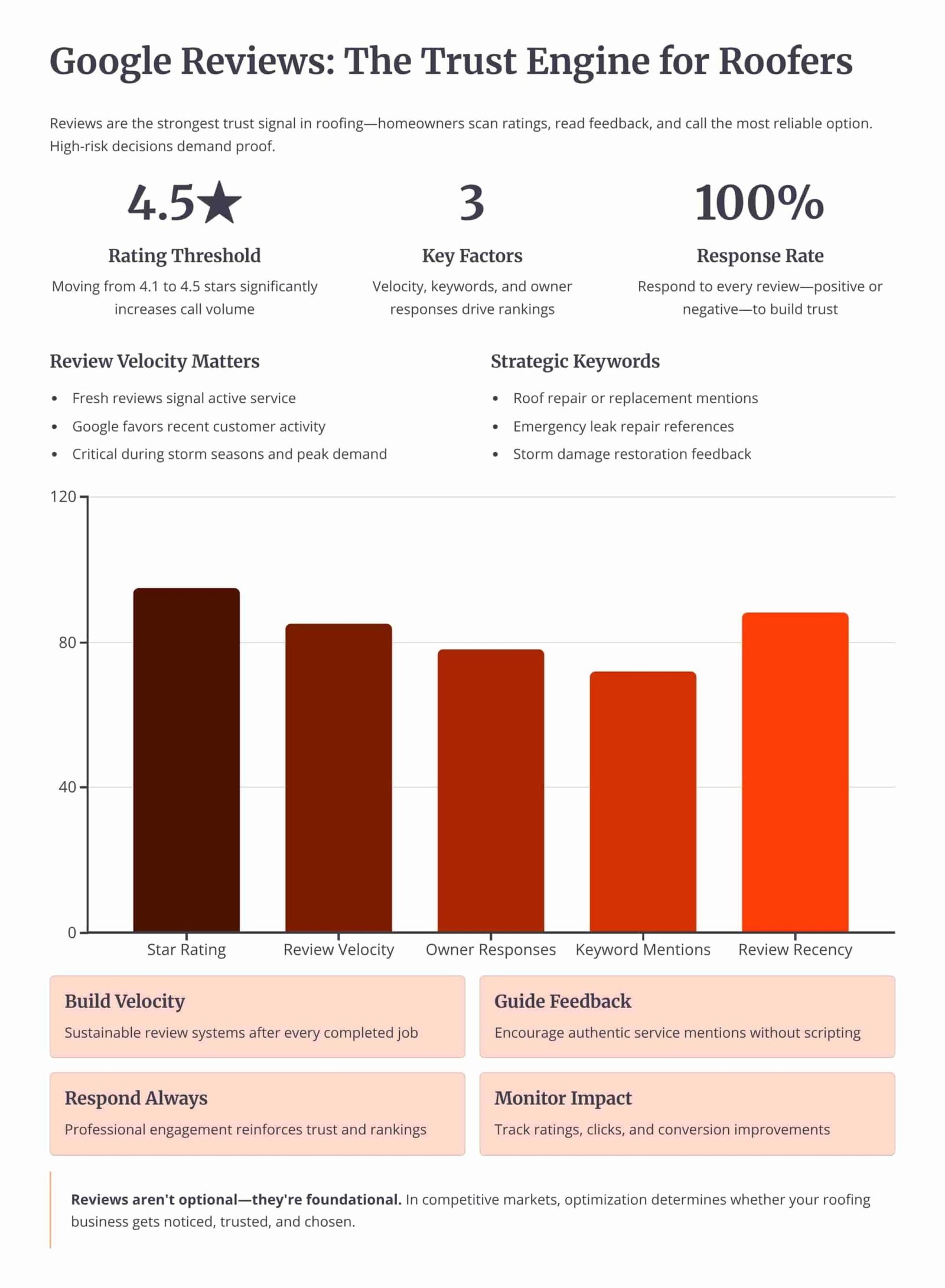
Review Velocity
150+ 5-Star Reviews Generated
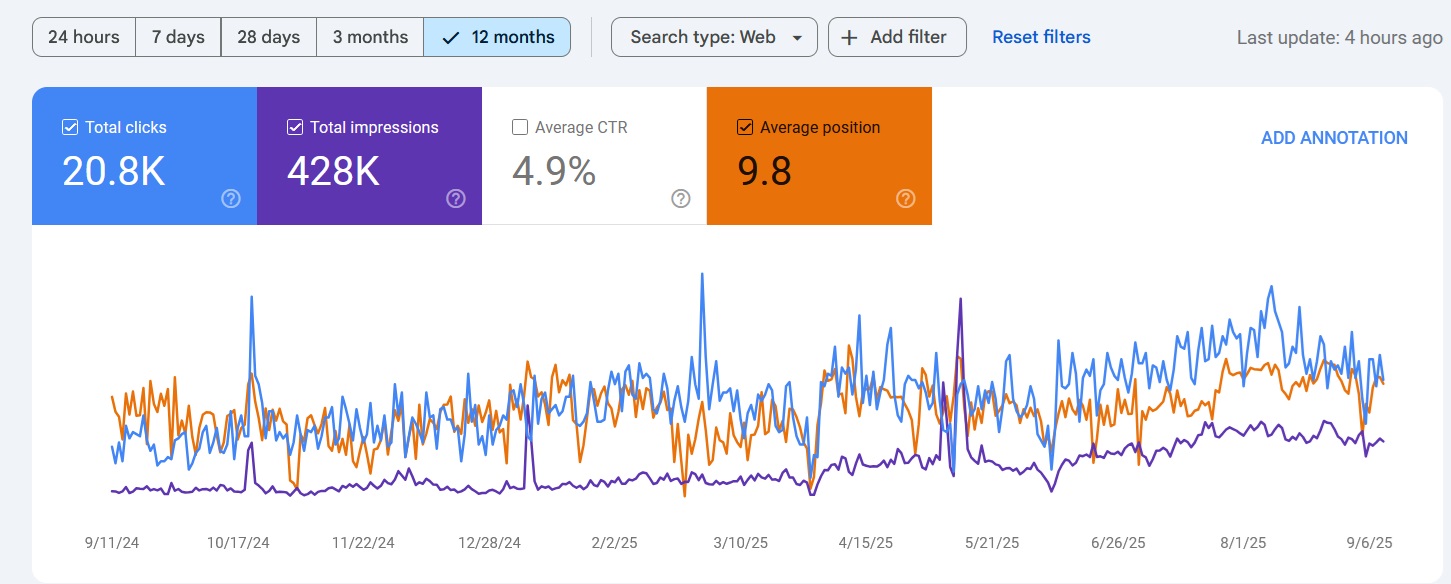
Organic Traffic
300% Increase in Qualified Traffic
What Roofers Say
The 180-Day Roofing SEO Roadmap
See how we optimize the profile, build the website, and earn local-pack rankings over a 6-month engagement.
Month 1: Profile Audit and Setup
- Category and Field Fixes: Setting the primary category, secondary categories, description, services, and service areas.
- NAP Cleanup: Correcting the name, address, and phone number across the profile, the website, and the directory citations.
Month 2: Reviews and Media
- Review System: Setting up a steady request flow and replying to every review, positive and negative.
- Photo and Post Cadence: Uploading job photos from each completed roof and publishing profile posts twice a month.
Month 4: Citations and Site Support
- Citation Building: Adding consistent listings on the directories that feed prominence for a service area.
- Service-Area Pages: Building city pages on the website that reinforce the profile's service areas.
Month 6: Local-Pack Rankings and Leads
- Map-Pack Position: Reaching the top 3 of the local pack for core roofing queries in the served cities.
- Lead Tracking: Measuring calls and direction requests from the profile against the cost of paid leads.
Owning Search Demand vs Renting It From Lead Platforms
If you pay Angi or Google Ads, you are renting visibility. The moment you stop paying, your pipeline dries up. Ranking the profile and the website for high-intent local searches builds permanent digital equity.
Shared Lead Platforms (Angi, HomeAdvisor)
- The Race to the Bottom: Shared leads force you to slash prices to win against 5 other roofers.
- Low Intent: Half the time they aren't ready to buy, they were just clicking around online.
Local Search SEO (Our Approach)
- 100% exclusive, direct-to-you inbound calls.
- Highest closing rate. They chose YOU from the local pack.
- Compounding ROI. You don't pay per click.
We Identify Search Intent Using Industry-Leading Data Tools




Expertise Built on Data.
Not Guesswork.
I'm Nizam Ud Deen, and I don't build generic websites. I build search intent engines specifically for the roofing industry.
For years, I've watched roofers burn money on agencies that brag about "traffic" while the phones stay silent. Traffic without intent is worthless. My system maps exactly how homeowners search during storms, when comparing prices, and when they're ready to buy, and intercepts them at every stage.
The No-Brainer Roofing SEO Guarantee
We don't guarantee "traffic" or "rankings." We guarantee high-intent leads.
"We guarantee to generate 15 exclusive, inbound replacement or repair leads per month within the first 180 days, driven entirely by high-intent organic search. If we don't hit that metric, we work for free until we do."
Measuring Success: Leads and Revenue
We don't report on vanity metrics. If traffic goes up but revenue stays flat, the strategy failed. We track the pipeline.
Call Tracking
Every keyword mapped to the exact phone call it generated.
Form Fills
Tracking estimate requests from high-intent local landing pages.
Booked Jobs
Connecting CRM data to SEO efforts to prove actual revenue return.
Cost per Lead
Monitoring organic CPL to ensure it beats shared platform costs.
The Roofing Supporting Article Checklist
Run each supporting article through this checklist to confirm it answers one question, links to its cluster, and proves real roofing knowledge.
Frequently Asked Questions
Clear answers about supporting articles for roofing topical authority.
What is a supporting article in roofing SEO?
How are supporting articles different from pillar pages?
How many supporting articles does each roofing service need?
What types of supporting articles should roofers write?
Should every supporting article link to a service page?
What is the hub-and-spoke model for supporting articles?
What keywords should a supporting article target?
How deep should a supporting article be?
Are supporting articles the same as blog posts?
How often should I publish supporting articles?
Which supporting articles should I write first?
How do supporting articles relate to cluster pages?
Can supporting articles cross-link between services?
How do I find gaps in my supporting article coverage?
Get Your Free Roofing Content Coverage Audit
We'll map the supporting articles around your roofing service pages and compare your coverage to your top 3 local competitors to show where the cluster is thin.
What You Get:
- Cluster Coverage MapA view of which service pages have supporting articles and which sit isolated.
- Question Gap ListThe homeowner questions your competitors answer and your site does not.
More Deliverables
- Internal Link CheckWhich existing articles link to their service page and which lead nowhere.
- Priority Article ListThe first ten high-intent articles to write, ordered by closeness to a sale.
Claim your free roofing content coverage audit today. No commitment required.