
Steep-Slope Roofing
Steep-slope roofing covers the shingle, tile, slate, and metal systems on sloped residential roofs, and ranking for it means matching the homeowner's search to the system on their house.

Free Steep-Slope Roofing Page Audit
Most roofing sites cover steep-slope work on one thin page that never names the system a homeowner searched for. Get a free audit with a competitor comparison and a content plan.
What Is Steep-Slope Roofing?
Steep-slope roofing is any roof system with a pitch greater than 3:12, meaning the roof rises more than 3 inches for every 12 inches of horizontal run. The slope sheds water by gravity rather than holding it on a membrane.
Defined by Pitch
Pitch is the rise over a 12-inch run. Above 3:12 a roof counts as steep-slope; most homes fall between 4:12 and 8:12.
Gravity Sheds Water
The slope moves water toward gutters and downspouts, so a steep-slope roof relies on shedding rather than the standing-water sealing of a flat system.
Distinct From Flat Roofs
Below 2:12 a roof is flat and uses membrane systems. See flat roofing systems.
Why Does Steep-Slope Roofing Matter for Roofing Companies?
It matters because steep-slope work is the bulk of residential roofing demand, and a homeowner searches by the system on their house, not by the word "roof".
Homeowners Search by System
- Searches name the material, such as "asphalt shingle roof" or "tile roof repair", not the slope category.
- A single steep-slope page cannot rank for every material and pitch a homeowner types.
- Separate pages for shingles, tile, slate, and metal each match a distinct query.
A Hub for Residential Work
- A steep-slope guide links the material and service pages a residential customer needs.
- The cluster signals to search engines that the site covers the full residential roof.
- Strong on-page structure supports each page's rank. See on-page SEO for roofers.
How Is Roof Pitch Measured and Classified?
Pitch is read as rise over a 12-inch run, and it sorts roofs into steep-slope, low-slope, and flat categories that each call for different systems.
Steep-Slope: Above 3:12
A pitch greater than 3:12 sheds water by gravity. Most residential roofs sit between 4:12 and 8:12, with some styles reaching 10:12 to 12:12.
Low-Slope: 2:12 to 3:12
A pitch between 2:12 and 3:12 sits in the middle. It can carry some shingle systems with extra underlayment but often suits membrane products.
Flat: Below 2:12
A pitch under 2:12 reads as flat and uses sealed membrane systems rather than the shedding materials of a steep slope.
Turn Roof Searches Into Phone Calls
A homeowner searching a shingle or tile system on a sloped roof is close to a buying decision. We build the pages that meet that search and route the call to you.
Call Now For PricingOr call +1 272-207-3231
What Materials Go on a Steep-Slope Roof?
Steep-slope roofs use shedding materials: asphalt shingles, metal panels, tile, slate, and wood shake, each with its own lifespan and cost. Pitch and structure decide which fits a given house.
Shingle and Metal Systems
- Asphalt shingles, in 3-tab and architectural forms, last 15 to 30 years and cost the least. See asphalt shingles.
- Metal roofing, in standing seam or exposed-fastener panels, often lasts 40 to 70 years. See metal roofing.
- Metal sheds snow well, which suits cold and high-snow regions.
Tile, Slate, and Wood
- Clay and concrete tile last 50 years or more and need structural support for the weight. See tile roofing.
- Natural slate can last a century, with individual units replaceable by a specialist. See slate roofing.
- Cedar or redwood shake lasts 20 to 40 years and faces fire restrictions in many regions.
How Do You Choose the Right Steep-Slope Material?
Choose by budget, pitch, structural capacity, climate, and how long the owner plans to stay. Each material answers a different combination of those factors.
Budget and Lifespan Trade-Off
Asphalt shingles cost the least up front and repair easily. Metal, tile, and slate cost more but spread the cost over a far longer life, lowering the lifecycle cost.
Structure and Climate
Tile and slate need a frame rated for their weight. Metal suits snow regions; architectural shingles suit moderate climates. See architectural shingles.
What Lies Under the Roofing Material?
Beneath the visible material sits a layered system: underlayment, ice and water shield, flashing, and ventilation, and each layer carries part of the waterproofing load.
Underlayment
Synthetic underlayment has largely replaced felt paper. It forms a secondary water barrier over the deck if the primary material fails.
Ice and Water Shield
In cold climates a self-adhering membrane at eaves, valleys, and penetrations guards against ice-dam backup.
Flashing
Valley, chimney, step, and vent flashing seal the joints where water gathers. Flashing is the most common point of failure on a steep-slope roof.
Why Does Attic Ventilation Matter on a Sloped Roof?
Ventilation matters because balanced intake and exhaust keep the deck dry and the shingles at a stable temperature, and codes set a minimum free-area ratio, commonly 1:150 or 1:300.
Balanced Intake and Exhaust
- Soffit vents draw cool air in at the eaves.
- Ridge vents release warm air at the peak.
- The two together move air through the attic and the slope helps the flow.
What Poor Ventilation Causes
- Premature shingle aging from trapped heat.
- Ice dams from warm air melting snow above cold eaves.
- Insulation degradation and, over time, structural damage to the deck.
What Goes Wrong on Steep-Slope Roofs?
Most failures trace to flashing, wind, ice dams, and hail, and each one drives a distinct repair search a roofing site can rank for.
Leaks and Wind Damage
- Failed flashing at valleys, chimneys, and skylights is the leading leak source.
- Wind lifts, creases, or strips shingles and exposes the underlayment.
- Both point a homeowner toward a repair page. See wind damage repair.
Ice Dams and Hail
- Ice dams form when poor insulation and ventilation melt snow that refreezes at the eaves.
- Hail strips granules, bruises shingles, and dents metal or cracks tile.
- Hail damage often runs through an insurance claim. See hail damage repair.
Organic Clicks Cost Less Than Paid Ones
A click earned from a strong organic listing costs nothing per visit, against 50 to 150 dollars for paid roofing leads. Rank the steep-slope pages and keep the lead instead of buying it.
Call Now For PricingOr call +1 272-207-3231
When Should a Steep-Slope Roof Be Repaired or Replaced?
Repair fits localized damage on a roof under half its life; replacement fits a roof past 75 to 80 percent of its life or with widespread failure.
When Repair Makes Sense
- The roof is less than halfway through its expected lifespan.
- Damage is confined to a small area and the deck is sound.
- Matching materials are available. See roof repair.
When Replacement Is Justified
- The roof exceeds 75 to 80 percent of its expected life.
- Leaks appear in several areas or the deck is damaged.
- Repair cost reaches 30 to 50 percent of replacement. See roof replacement.
What Codes and Permits Apply to Steep-Slope Work?
Most steep-slope projects need a local permit, and a replacement often triggers code upgrades for ice barriers, ventilation, and flashing.
Permits and Inspections
A replacement and most major repairs need a permit, with plan review, an installation inspection, and a final inspection. See roofing permits.
Code Upgrades and Warranties
A new roof can trigger ice-barrier, ventilation, and flashing upgrades, and three warranty types apply: material, workmanship, and system. See roofing building codes.
How Should Steep-Slope Content Follow the Season?
Steep-slope search shifts through the year, so align the page wording and publishing to spring planning, summer replacement, fall inspection, and winter emergency repair.
Demand by Season
- Spring brings inspections, winter-damage checks, and replacement planning.
- Summer brings replacements and major repairs.
- Fall brings pre-winter inspections; winter brings emergency repairs and ice-dam removal.
Match Pages to the Calendar
Publish and refresh storm and emergency content ahead of the season the search peaks. See seasonal SEO for roofers.
Proof of Performance
Results from roofing campaigns that rank in local search.

Map Pack Rankings
Ranked in Local Search Within 90 Days
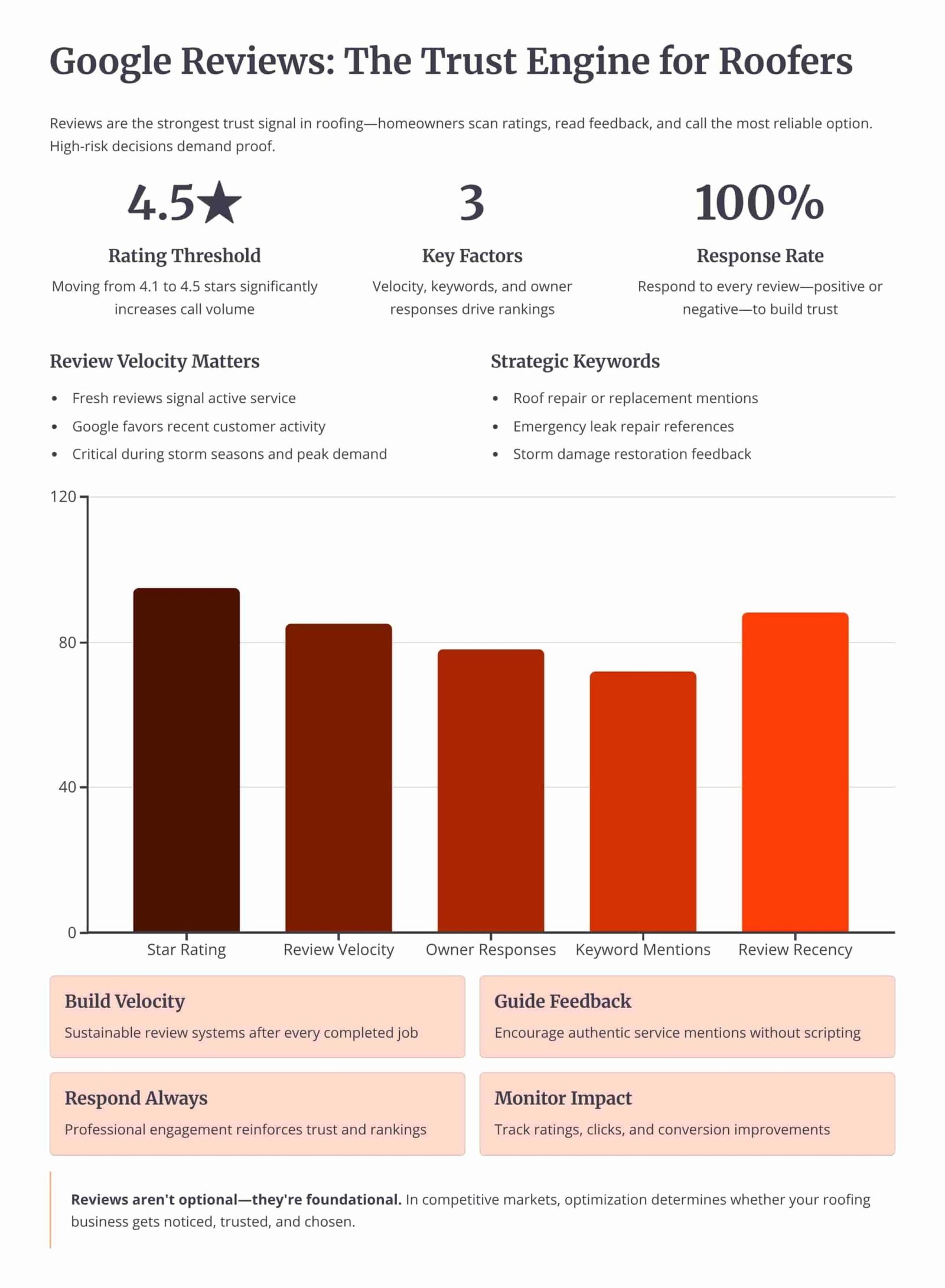
Review Velocity
150+ 5-Star Reviews Generated

Organic Traffic
300% Increase in Qualified Traffic
What Roofers Say
The 180-Day Roofing SEO Roadmap
See how we optimize the profile, build the website, and earn local-pack rankings over a 6-month engagement.
Month 1: Profile Audit and Setup
- Category and Field Fixes: Setting the primary category, secondary categories, description, services, and service areas.
- NAP Cleanup: Correcting the name, address, and phone number across the profile, the website, and the directory citations.
Month 2: Reviews and Media
- Review System: Setting up a steady request flow and replying to every review, positive and negative.
- Photo and Post Cadence: Uploading job photos from each completed roof and publishing profile posts twice a month.
Month 4: Citations and Site Support
- Citation Building: Adding consistent listings on the directories that feed prominence for a service area.
- Service-Area Pages: Building city pages on the website that reinforce the profile's service areas.
Month 6: Local-Pack Rankings and Leads
- Map-Pack Position: Reaching the top 3 of the local pack for core roofing queries in the served cities.
- Lead Tracking: Measuring calls and direction requests from the profile against the cost of paid leads.
Owning Search Demand vs Renting It From Lead Platforms
If you pay Angi or Google Ads, you are renting visibility. The moment you stop paying, your pipeline dries up. Ranking the profile and the website for high-intent local searches builds permanent digital equity.
Shared Lead Platforms (Angi, HomeAdvisor)
- The Race to the Bottom: Shared leads force you to slash prices to win against 5 other roofers.
- Low Intent: Half the time they aren't ready to buy, they were just clicking around online.
Local Search SEO (Our Approach)
- 100% exclusive, direct-to-you inbound calls.
- Highest closing rate. They chose YOU from the local pack.
- Compounding ROI. You don't pay per click.
We Identify Search Intent Using Industry-Leading Data Tools




Expertise Built on Data.
Not Guesswork.
I'm Nizam Ud Deen, and I don't build generic websites. I build search intent engines specifically for the roofing industry.
For years, I've watched roofers burn money on agencies that brag about "traffic" while the phones stay silent. Traffic without intent is worthless. My system maps exactly how homeowners search during storms, when comparing prices, and when they're ready to buy, and intercepts them at every stage.
The No-Brainer Roofing SEO Guarantee
We don't guarantee "traffic" or "rankings." We guarantee high-intent leads.
"We guarantee to generate 15 exclusive, inbound replacement or repair leads per month within the first 180 days, driven entirely by high-intent organic search. If we don't hit that metric, we work for free until we do."
Measuring Success: Leads and Revenue
We don't report on vanity metrics. If traffic goes up but revenue stays flat, the strategy failed. We track the pipeline.
Call Tracking
Every keyword mapped to the exact phone call it generated.
Form Fills
Tracking estimate requests from high-intent local landing pages.
Booked Jobs
Connecting CRM data to SEO efforts to prove actual revenue return.
Cost per Lead
Monitoring organic CPL to ensure it beats shared platform costs.
The Steep-Slope Roofing Content Checklist
Run each steep-slope page through this checklist to confirm it matches a homeowner's search to the roof system on their house.
Frequently Asked Questions
Clear answers about steep-slope roofing systems and how to rank for them.
What is steep-slope roofing?
What pitch counts as a steep slope?
What materials work on a steep-slope roof?
How long do steep-slope roofing materials last?
What is the difference between steep-slope and flat roofing?
Why does a steep-slope roof need underlayment?
What is ice and water shield?
Why does flashing fail on steep-slope roofs?
How much attic ventilation does a sloped roof need?
When should a steep-slope roof be replaced instead of repaired?
Do steep-slope roof replacements need a permit?
Can steep-slope shingles be installed in any weather?
How should a roofing site rank for steep-slope topics?
Does steep-slope search change with the season?
Get Your Free Steep-Slope Roofing Page Audit
We'll review how your site covers steep-slope materials and services and compare it to your top 3 local competitors to show where the cluster loses ranking and clicks.
What You Get:
- Material Coverage ReviewA check of whether each shingle, tile, slate, and metal system has its own page.
- Internal Link MapA view of how the steep-slope pages link to the material and service pages.
More Deliverables
- Content Gap ListThe steep-slope queries your site does not yet answer with a dedicated page.
- Page PlanA prioritized list of steep-slope pages to build or rewrite first.
Claim your free steep-slope roofing page audit today. No commitment required.