
Roofing Building Codes
Roofing building codes are the legal rules that govern how a roof is installed, what materials qualify, and which inspections a job must pass. This guide explains the codes for the roofing-business owner and shows how to rank for code and compliance searches.

Free Roofing Code Content Audit
Most roofing sites never explain the codes behind their work, so they lose the homeowner who is researching compliance. Get a free audit with a competitor comparison and a content plan for your code and permit pages.
What Are Roofing Building Codes?
Roofing building codes are the legal minimum standards a roof must meet, set by model codes and adopted with local amendments by the building department.
The Model Codes
The International Residential Code governs one and two family homes, and the International Building Code covers commercial structures. Both set the baseline a roof must meet.
Local Amendments
Jurisdictions adopt a code edition and amend it for regional concerns such as high wind, hail, or snow load, so the rule that applies is the local version.
The Authority Having Jurisdiction
The local building department enforces the code as the authority having jurisdiction and inspects the work at critical stages. See roofing permits.
Why Do Roofing Building Codes Matter for Roofers?
Codes matter because a job that fails inspection costs time and money to redo, and a homeowner who reads about compliance trusts the company that explains it.
Compliance Protects the Job
- A roof that meets code passes inspection on the first visit and avoids a stop-work order.
- Manufacturer warranties require installation to published specifications, which the code reinforces.
- A failed inspection means corrections, a re-inspection fee, and a delayed final payment.
Code Content Earns Search Trust
- Homeowners search the codes that apply to their roof before they hire, and the page that answers wins the visit.
- A clear code page positions the company as the one that knows the rules, not the one that cuts corners.
- Code and compliance content supports the service pages it links to. See on-page SEO for roofers.
Which Codes Govern Roof Work?
Roof work is governed by the IRC or IBC, a local amendment layer, and an energy code, all tied to the edition the jurisdiction has adopted.
Residential: The IRC
The International Residential Code covers roof coverings, underlayment, fastening, and ventilation for one and two family homes in its roof chapter.
Commercial: The IBC
The International Building Code governs commercial roofs and references standards for low-slope membranes, fire classification, and wind design.
The Adopted Edition
Codes update on a three-year cycle, and a jurisdiction may sit on an older edition. The adopted edition, not the newest, is the one that applies.
Turn Code Questions Into Booked Jobs
A homeowner researching codes is close to hiring a roofer who knows them. We build the code and compliance pages that answer the search and route the reader to your estimate form.
Call Now For PricingOr call +1 272-207-3231
What Do Codes Require for Wind Resistance?
Wind provisions require materials rated for the local wind zone and a fastening pattern that holds the roof down at the edges and corners where uplift is highest.
Rated Materials and Fasteners
- Wind requirements vary by geographic location, set by the local wind speed map.
- The covering must carry a wind resistance rating appropriate for that zone.
- High-wind areas call for additional fasteners per shingle beyond the standard count.
Perimeter and Corner Zones
Enhanced fastening applies in the perimeter and corner zones, where uplift concentrates, and the manufacturer installation instructions must be followed precisely for the rating to hold. The page can route storm-prone readers to wind damage repair.
What Are the Ice Barrier and Water Rules?
Cold-climate codes require a self-adhering ice and water barrier at vulnerable areas, underlayment as a secondary barrier, and drip edge at the roof edges.
Ice and Water Barrier
- Cold regions often require self-adhering ice and water barrier membrane in vulnerable areas.
- Coverage extends a set distance from the exterior wall line at eaves, valleys, and penetrations.
- The barrier guards against the backup that ice dams force under the covering.
Underlayment and Drip Edge
- Underlayment is the critical secondary water barrier at the deck level beneath the covering.
- Drip edge is metal flashing at the roof edges that directs water away from the fascia and into the gutters.
- Flashing at every penetration completes the water path the code expects.
How Do Fire Ratings Work in the Code?
Roof coverings carry a fire classification of Class A, B, or C, where Class A is the highest level of protection against fire exposure.
Class A
Class A is the highest protection, effective against severe fire exposure. Most asphalt shingles, metal, clay and concrete tile, and slate carry a Class A rating.
Class B and Class C
Class B offers moderate protection and Class C offers light protection. Wildfire-prone jurisdictions commonly require a Class A assembly on new roofs.
Rating Is an Assembly
The rating applies to the full assembly, not the covering alone, so an underlayment or barrier board can be part of meeting the class the code requires.
What Does the Code Say About Ventilation?
Attic ventilation is set by a net free area ratio, with intake low at the soffit and exhaust high at the ridge to move air through the space.
The Net Free Area Ratio
- The standard is one square foot of net free ventilation area for every 150 square feet of attic floor space.
- The ratio relaxes to one square foot per 300 square feet when the ventilation is balanced.
- The numbers are read off the attic floor area the roof covers.
Balanced Intake and Exhaust
Balanced ventilation places intake vents at the soffits or eaves and exhaust vents at or near the ridge, so air enters low and leaves high. This guards against the moisture and heat buildup that shortens a roof's life.
What Are the Deck and Fastening Rules?
The code sets the nailing pattern, the deck condition, and the number of roof layers allowed before a tear-off becomes mandatory.
Fastening and Deck
- The covering is fastened to the manufacturer pattern, with extra fasteners in high-wind zones.
- The deck or sheathing must be sound and dry before the new covering goes on.
- Rotten or delaminated decking is replaced, not covered, to meet the code.
Number of Layers
Many jurisdictions allow no more than two layers of roof covering before a full tear-off is required, and some require a tear-off on any re-roof. The covering choice ties to roofing materials and the work to roof replacement.
Organic Clicks Cost Less Than Paid Ones
A click earned from a strong organic listing costs nothing per visit, against 50 to 150 dollars for paid roofing leads. Publish the code and permit pages that rank, and keep the click instead of buying it.
Call Now For PricingOr call +1 272-207-3231
How Do Inspections and Permits Tie to the Code?
A permit is how the building department confirms the work meets code, through plan review and inspections at critical stages of the job.
When a Permit Applies
- Permits typically apply to roof replacements, major repairs, structural modifications, and additions.
- The process involves submitting plans or specifications and paying the permit fee.
- Inspections are scheduled at critical stages, such as a deck inspection and a final inspection.
The Cost of Non-Compliance
Skipping the permit or failing inspection can bring a stop-work order, fines, and required corrections, and it can void the manufacturer warranty that depends on a code-compliant install. See roof inspection and roofing warranties.
How to Rank for Roofing Code Searches
Rank for code queries by answering the homeowner question directly, naming the local edition, and linking the page to the service it supports.
Answer the Question First
Open each code page with a plain definition of the rule, then explain how it affects the homeowner's roof and the cost of the job.
Name the Local Edition
State which code edition the jurisdiction has adopted. Local detail signals the page is written for that area and matches the local search. See local SEO for roofers.
Link to the Service
Connect the code page to the replacement, repair, or permit page it supports, so a reader researching the rule reaches the service that does the work.
Proof of Performance
Results from roofing campaigns that rank in local search.
Map Pack Rankings
Ranked in Local Search Within 90 Days
Review Velocity
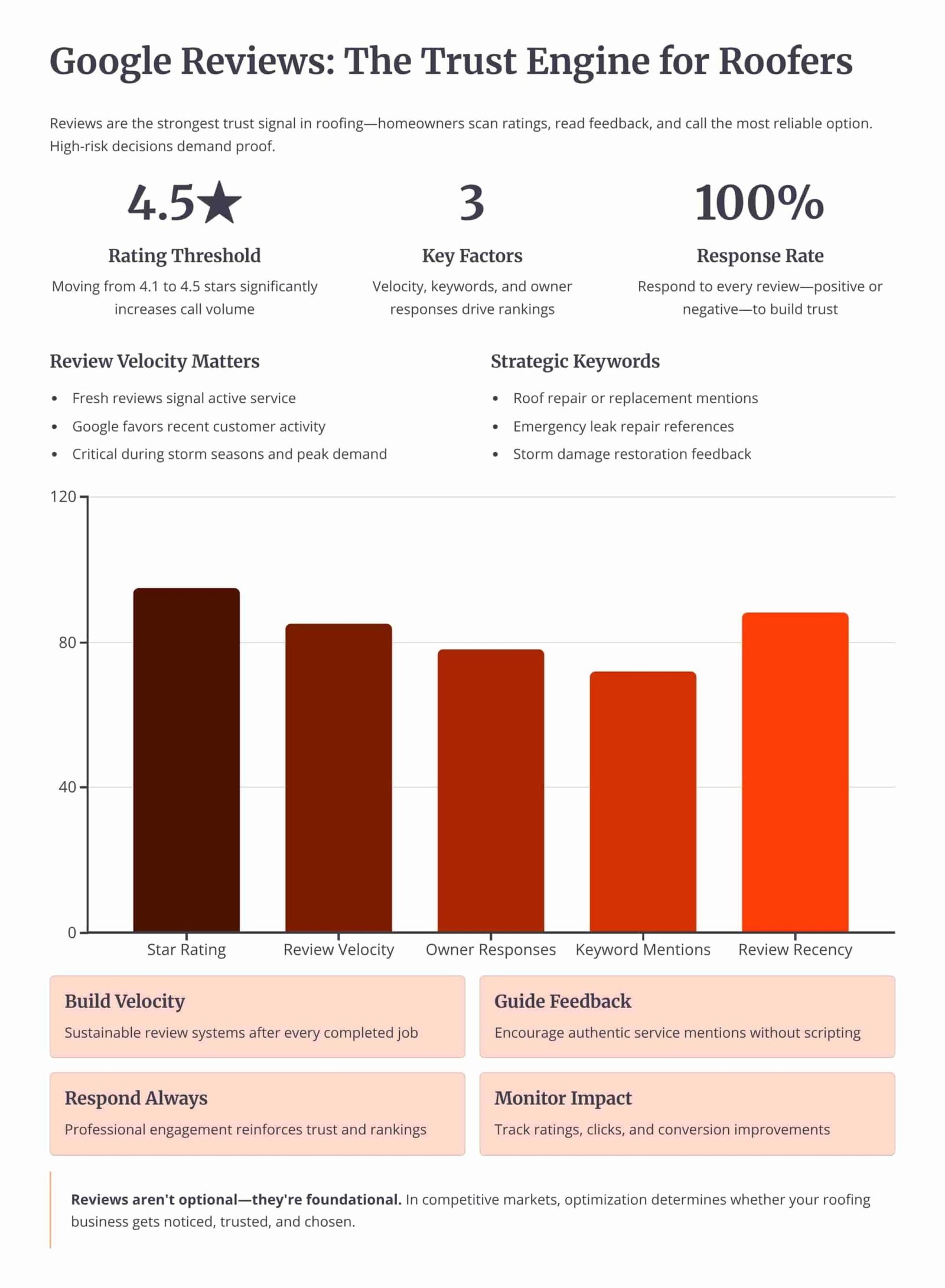
150+ 5-Star Reviews Generated
Organic Traffic
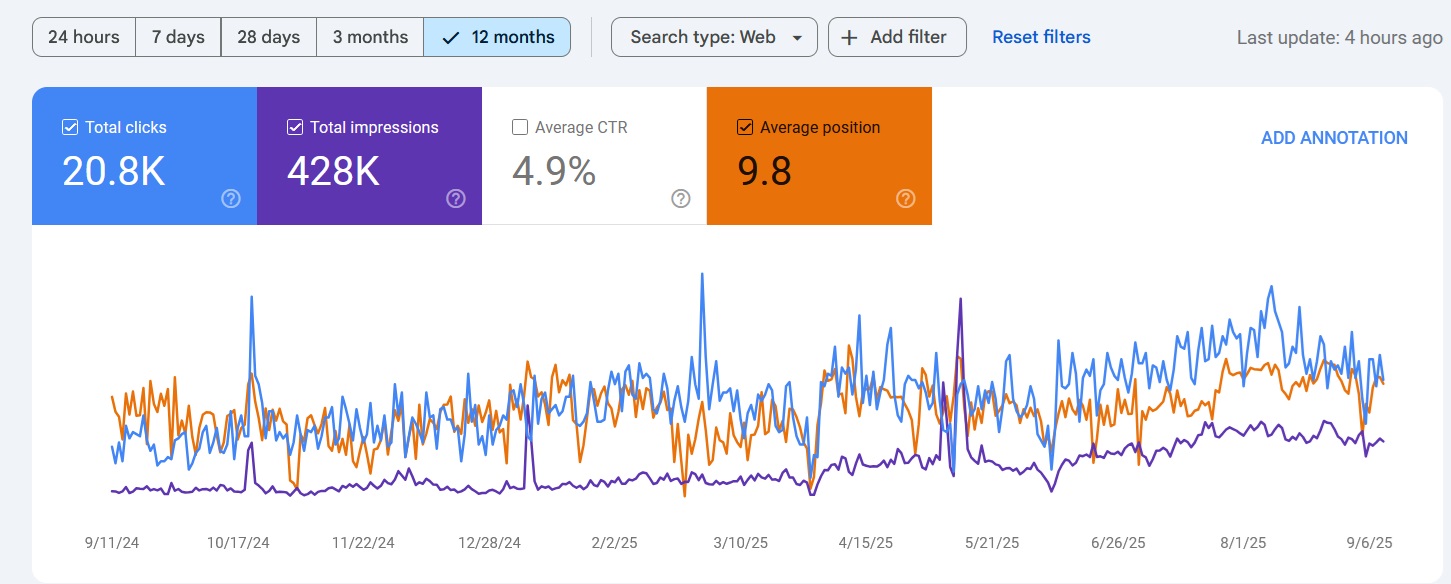
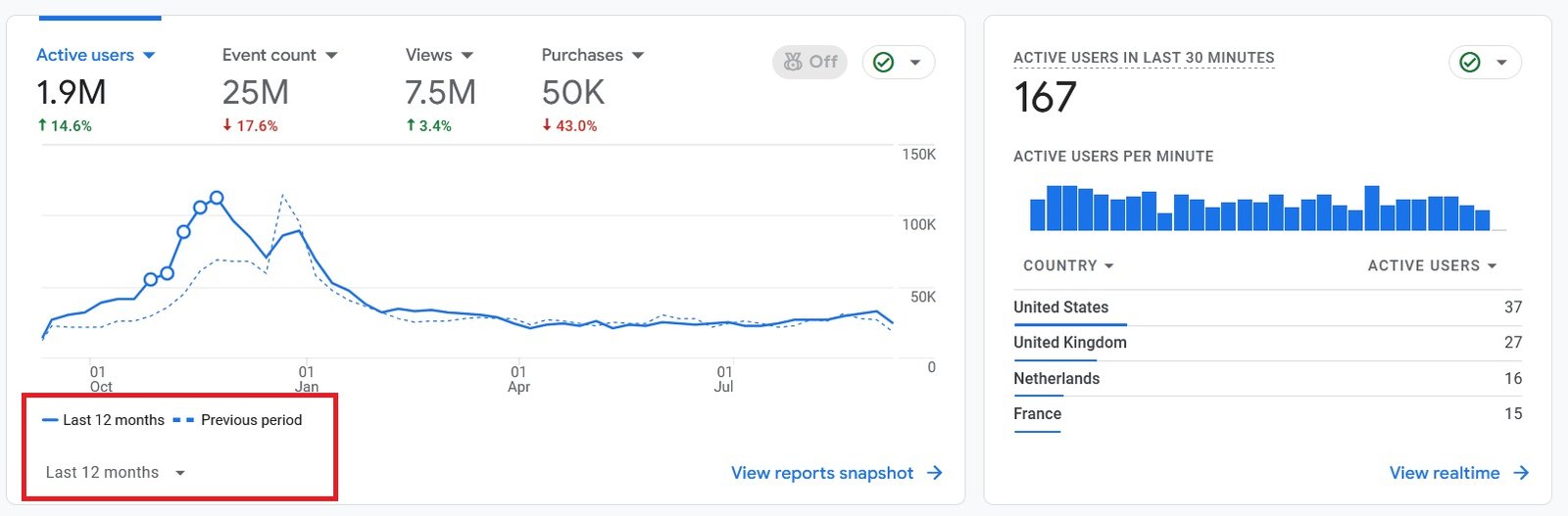
300% Increase in Qualified Traffic
What Roofers Say
The 180-Day Roofing SEO Roadmap
See how we optimize the profile, build the website, and earn local-pack rankings over a 6-month engagement.
Month 1: Profile Audit and Setup
- Category and Field Fixes: Setting the primary category, secondary categories, description, services, and service areas.
- NAP Cleanup: Correcting the name, address, and phone number across the profile, the website, and the directory citations.
Month 2: Reviews and Media
- Review System: Setting up a steady request flow and replying to every review, positive and negative.
- Photo and Post Cadence: Uploading job photos from each completed roof and publishing profile posts twice a month.
Month 4: Citations and Site Support
- Citation Building: Adding consistent listings on the directories that feed prominence for a service area.
- Service-Area Pages: Building city pages on the website that reinforce the profile's service areas.
Month 6: Local-Pack Rankings and Leads
- Map-Pack Position: Reaching the top 3 of the local pack for core roofing queries in the served cities.
- Lead Tracking: Measuring calls and direction requests from the profile against the cost of paid leads.
Owning Search Demand vs Renting It From Lead Platforms
If you pay Angi or Google Ads, you are renting visibility. The moment you stop paying, your pipeline dries up. Ranking the profile and the website for high-intent local searches builds permanent digital equity.
Shared Lead Platforms (Angi, HomeAdvisor)
- The Race to the Bottom: Shared leads force you to slash prices to win against 5 other roofers.
- Low Intent: Half the time they aren't ready to buy, they were just clicking around online.
Local Search SEO (Our Approach)
- 100% exclusive, direct-to-you inbound calls.
- Highest closing rate. They chose YOU from the local pack.
- Compounding ROI. You don't pay per click.
We Identify Search Intent Using Industry-Leading Data Tools




Expertise Built on Data.
Not Guesswork.
I'm Nizam Ud Deen, and I don't build generic websites. I build search intent engines specifically for the roofing industry.
For years, I've watched roofers burn money on agencies that brag about "traffic" while the phones stay silent. Traffic without intent is worthless. My system maps exactly how homeowners search during storms, when comparing prices, and when they're ready to buy, and intercepts them at every stage.
The No-Brainer Roofing SEO Guarantee
We don't guarantee "traffic" or "rankings." We guarantee high-intent leads.
"We guarantee to generate 15 exclusive, inbound replacement or repair leads per month within the first 180 days, driven entirely by high-intent organic search. If we don't hit that metric, we work for free until we do."
Measuring Success: Leads and Revenue
We don't report on vanity metrics. If traffic goes up but revenue stays flat, the strategy failed. We track the pipeline.
Call Tracking
Every keyword mapped to the exact phone call it generated.
Form Fills
Tracking estimate requests from high-intent local landing pages.
Booked Jobs
Connecting CRM data to SEO efforts to prove actual revenue return.
Cost per Lead
Monitoring organic CPL to ensure it beats shared platform costs.
The Roofing Code Compliance Checklist
Run each roofing job through this checklist to confirm the work meets the local code before the final inspection.
Frequently Asked Questions
Clear answers about roofing building codes and how to rank for them.
What are roofing building codes?
Which code governs residential roofing?
Do roofing codes vary by location?
What does the code require for wind resistance?
What is an ice and water barrier?
What is a Class A fire rating?
How much attic ventilation does the code require?
How many layers of roofing does the code allow?
Do I need a permit for a roof replacement?
What inspections does a roof job require?
What happens if a roof fails to meet code?
Does meeting code affect my roofing warranty?
How do roofers rank for code and compliance searches?
Should I publish a code page for each service area?
Get Your Free Roofing Code Content Audit
We'll review your code, permit, and compliance pages and compare them to your top 3 local competitors to show where the search demand goes unanswered.
What You Get:
- Code Page ReviewA check of how clearly each page answers the code and compliance questions homeowners search.
- Topic Gap ScanA list of code, permit, and inspection topics your competitors cover and your site does not.
More Deliverables
- Interlink MapHow to link the code guide to your replacement, repair, and permit pages.
- Content OutlinesDrafted outlines for the code and compliance pages with the highest search demand.
Claim your free roofing code content audit today. No commitment required.