
Social Proof Placement for Roofers
Position reviews, ratings, and project photos near the decision point on a roofing site so a homeowner reading the page picks up the phone instead of leaving to compare.
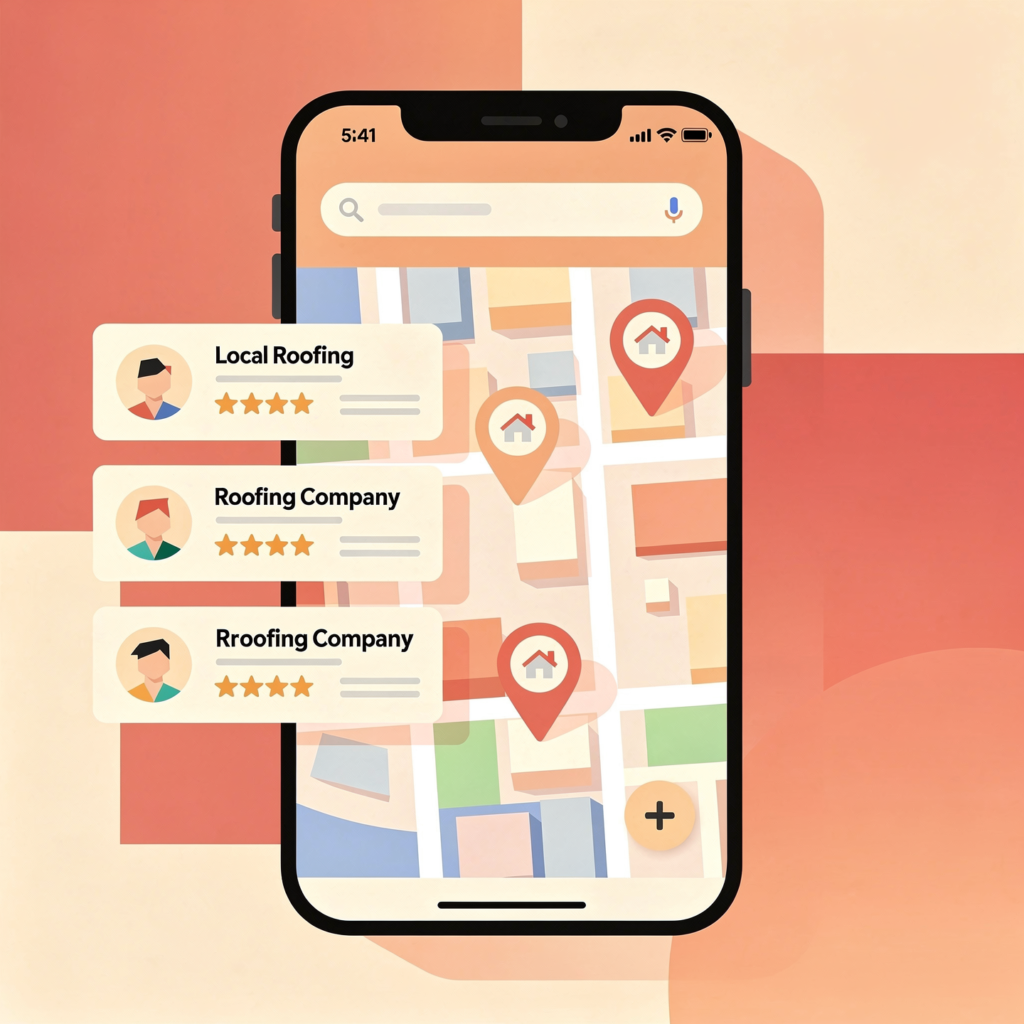
Free Roofing Social Proof Audit
Most roofing sites hide reviews on a single page far from the call buttons. Get a free audit that maps where trust signals belong against each conversion point.
What Is Social Proof Placement?
Social proof placement is the practice of positioning reviews, star ratings, project photos, and certifications at the exact spots on a roofing page where a homeowner decides whether to call. It moves the trust signal next to the action, instead of leaving it on a separate page the visitor never reaches.
The Signal
Reviews, a Google star rating, before-and-after photos, video, and certifications are the proof. The signal itself lives in roofing trust and reviews.
The Placement
Placement is where on the page each signal sits. The same review lifts more calls beside a phone button than buried in a footer link no one clicks.
The Lever
Placement is a conversion lever, not a ranking trick. It turns existing visitors into leads by removing doubt at the moment a homeowner hesitates.
Why Does Placement Decide Whether Proof Converts?
Placement decides the result because a homeowner only acts on proof they actually see at the moment doubt rises, and most visitors never scroll to a hidden reviews page.
The Hidden Testimonial Problem
- Reviews kept on one dedicated page rarely get found, so the proof sits unread.
- Eye-tracking studies show visitors scan in F and Z patterns and often do not scroll at first.
- A trust signal works only when it sits in the path the eye already follows.
Proof Belongs Where Doubt Peaks
- Doubt rises right before a homeowner commits, beside a call button or an estimate form.
- Trust signals near a call to action can lift form submissions by roughly 15 to 34 percent across high-ticket services.
- The page itself carries the form. See roofing lead forms for the form build.
What Makes a Homeowner Act on a Review?
A review moves a homeowner through three drivers: it reduces the risk of hiring, it shows people like them chose well, and it pairs reassurance with the demand for a roofer.
Risk Reduction
A roof is a large purchase. Reviews answer the fear of overpaying or poor workmanship before the homeowner has to ask.
People Like Me
A review from a homeowner in the same city, naming the same job, carries more weight than generic praise from no place in particular.
Urgency With Reassurance
A high review count signals both that the company is safe to hire and that it is in demand, which nudges the homeowner to call sooner.
Turn Trust Into Phone Calls
A roofing page can hold strong reviews and still lose the call when the proof sits where no one reads it. We move the right signal next to every action across the site.
Call Now For PricingOr call +1 272-207-3231
Where Should Social Proof Go on a Roofing Page?
Place proof in at least six spots in priority order: the hero, beside every call button, on service pages, near pricing, in the footer, and in a sticky element that follows the scroll. Each spot covers a different point of doubt.
Start in the Hero, Above the Fold
- Show the Google star rating, such as a 4.8 average, in the first view.
- State the total review count, such as "Based on 300+ Google reviews".
- Add one certification badge so credibility lands in the first second.
Carry It Down the Page
- Repeat a short proof element at each scroll depth, not just at the top.
- The footer holds a global trust zone with logos, license number, and the aggregate rating.
- A sticky review bar or badge keeps reassurance on screen as the visitor scrolls.
How Do You Place Proof Next to a Call to Action?
Set a one-line testimonial, a star rating, or a review count directly above or below each call button or form. The highest-friction moment is the click, so the proof has to sit at the click.
Above the Call Button
A single quote or a "4.8 stars, 300+ reviews" line above the button answers the last doubt before the tap. See click-to-call buttons.
Beside the Estimate Form
A short testimonial next to the form reassures the homeowner that the request leads to fair, real work. Pair it with quote request optimization.
Inside the Offer Block
Where a free inspection is offered, a proof line lifts the take rate. Tie it to free roof inspection offers.
Which Types of Proof Convert Best?
Rank proof by conversion weight: Google reviews carry the most trust, before-and-after photos convince fastest, and video testimonials are the hardest to fake. Match the type to the spot it sits in.
Google Reviews
Verified, third-party, and tied to the Google Business Profile, so they carry the heaviest trust weight. Keep on-site reviews consistent with the profile.
Before-and-After Photos
The most immediately convincing format. Caption each with the city, the roof type, and the materials so the proof reads as real work.
Video Testimonials
Difficult to fake and emotionally engaging. A spoken homeowner story can outperform written quotes, which is why it earns a top spot near the main call.
How Should Roofers Place Certification Badges?
Pick three to five meaningful credentials and give each room to breathe, rather than crowding a wall of badges. A badge reads as proof only when it is legible and spaced.
Credentials That Reassure
- A manufacturer certification, such as GAF Master Elite, held by a small share of roofers.
- An Owens Corning Platinum Preferred status where it applies.
- The state contractor license number and proof of insurance.
- A BBB accreditation, displayed plainly. The trust badge itself lives in trust badges.
Spacing Decides Credibility
Three clean, spaced badges read as real credentials. A dense grid of ten logos reads as clutter and the visitor skips all of them. Choose the few that matter and let each stand alone.
How Does Placement Change on Mobile?
On mobile, proof must stack cleanly and must never push the call button below the fold. More than half of roofing traffic now arrives on a phone, so the phone layout decides the result.
Keep the Call in View
- A long testimonial block can shove the call button off the first screen on a phone.
- Use a compact rating line in the hero and save the long quotes for lower spots.
- Test every page on a real phone, not just a desktop preview.
Stack, Do Not Crowd
- Badges and widgets should reflow into a single column without overlap.
- A sticky proof bar works on mobile only if it does not cover the call button.
- The full mobile layout sits in mobile UX optimization.
The Same Traffic Can Book More Jobs
You already pay to bring homeowners to the site through search. Placing the right proof at each decision point lifts the share that calls, without buying a single extra visit.
Call Now For PricingOr call +1 272-207-3231
Common Social Proof Mistakes Roofers Make
Roofing sites lose conversions through four recurring placement mistakes, each one fixable without new reviews.
Location Errors
- Siloing every testimonial on one "Reviews" page that most visitors never open.
- Leaving the hero and the call buttons with no proof at all.
- Letting a long proof block push the call button below the fold on mobile.
Content and Clutter Errors
- Using fake or generic lines like "Great company, highly recommend", which read as filler.
- Overloading a page with too many badges and widgets so none stands out.
- Matching generic praise to a city page instead of a local homeowner's words.
How Do You Test Where Proof Belongs?
Test placement with A/B comparisons, heatmaps, scroll-depth data, and conversion tracking, so the spot is chosen by evidence rather than guesswork.
What to Measure
- A/B tests compare proof positions, formats, and types on the same page.
- Heatmaps show whether visitors look at a testimonial or scroll past it.
- Scroll-depth in GA4 reveals what share of visitors ever reach each section.
Read the Behavior
- Segment form fills and calls by landing page to see which placement earns leads.
- The heatmap method sits in heatmaps.
- The wider read of visitor behavior sits in user behavior analysis.
Proof of Performance
Results from roofing campaigns that rank in local search.
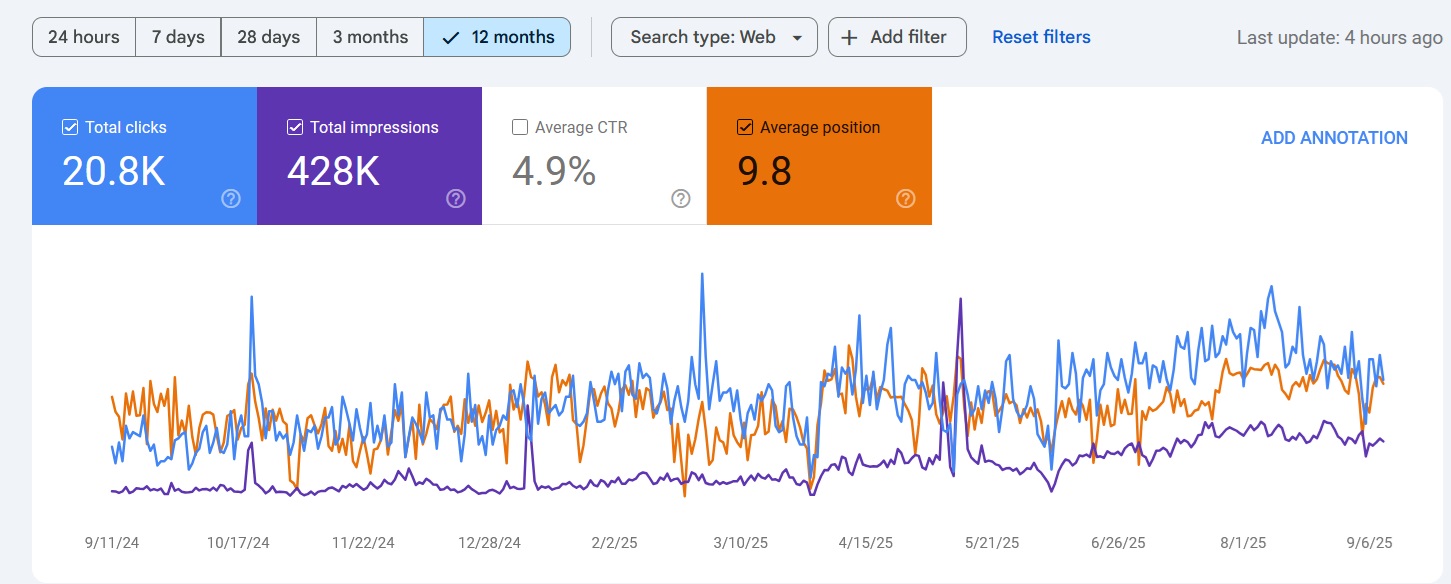
Map Pack Rankings
Ranked in Local Search Within 90 Days
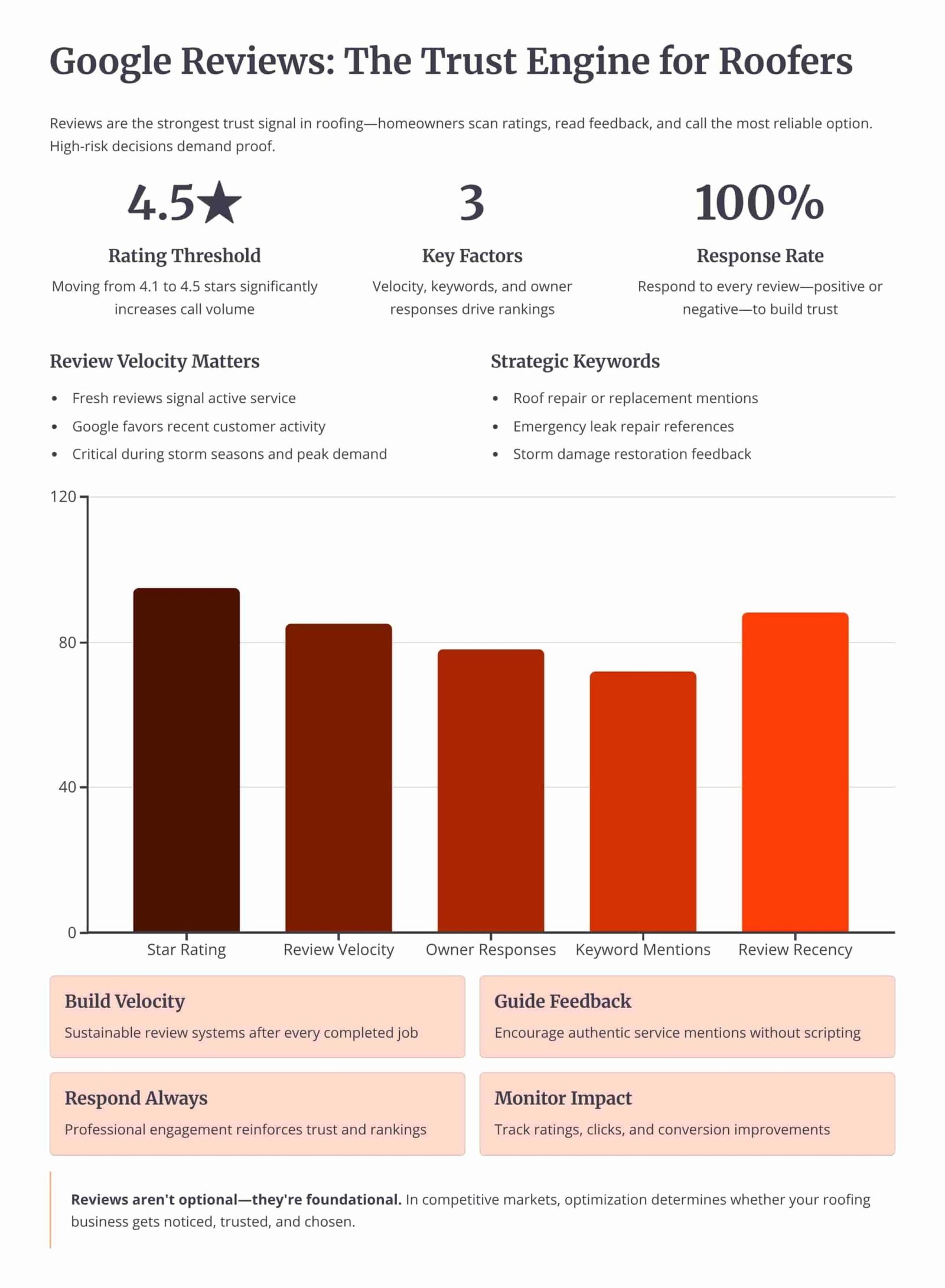
Review Velocity
150+ 5-Star Reviews Generated
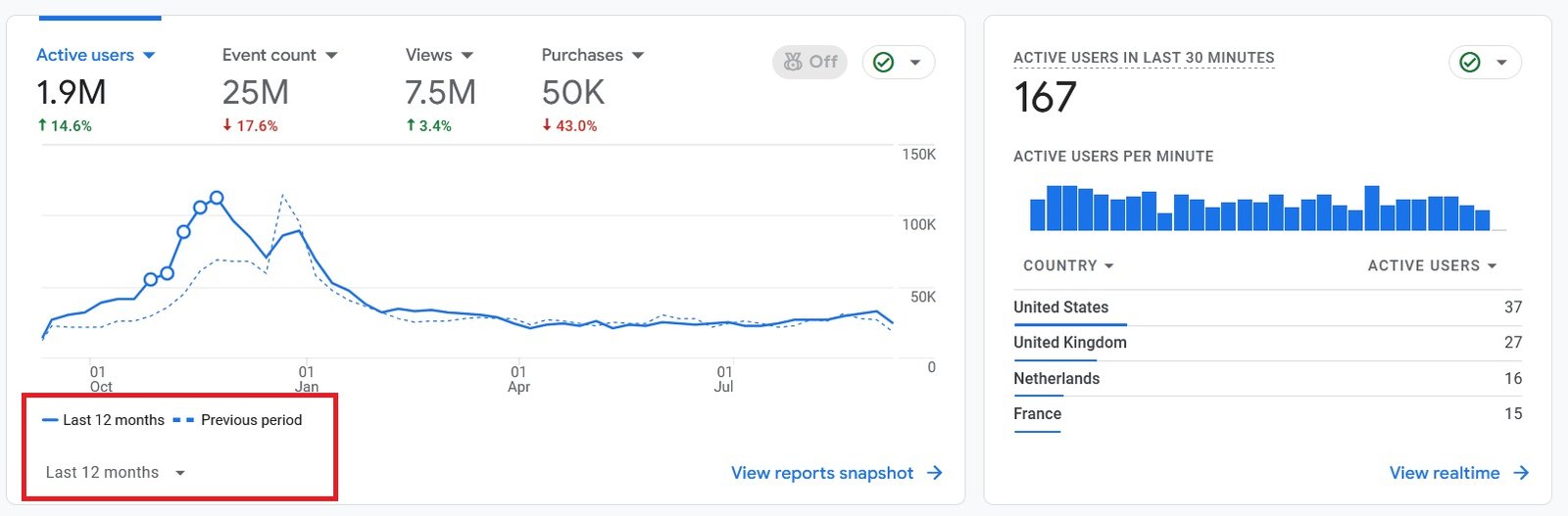
Organic Traffic
300% Increase in Qualified Traffic
What Roofers Say
The 180-Day Roofing SEO Roadmap
See how we optimize the profile, build the website, and earn local-pack rankings over a 6-month engagement.
Month 1: Profile Audit and Setup
- Category and Field Fixes: Setting the primary category, secondary categories, description, services, and service areas.
- NAP Cleanup: Correcting the name, address, and phone number across the profile, the website, and the directory citations.
Month 2: Reviews and Media
- Review System: Setting up a steady request flow and replying to every review, positive and negative.
- Photo and Post Cadence: Uploading job photos from each completed roof and publishing profile posts twice a month.
Month 4: Citations and Site Support
- Citation Building: Adding consistent listings on the directories that feed prominence for a service area.
- Service-Area Pages: Building city pages on the website that reinforce the profile's service areas.
Month 6: Local-Pack Rankings and Leads
- Map-Pack Position: Reaching the top 3 of the local pack for core roofing queries in the served cities.
- Lead Tracking: Measuring calls and direction requests from the profile against the cost of paid leads.
Owning Search Demand vs Renting It From Lead Platforms
If you pay Angi or Google Ads, you are renting visibility. The moment you stop paying, your pipeline dries up. Ranking the profile and the website for high-intent local searches builds permanent digital equity.
Shared Lead Platforms (Angi, HomeAdvisor)
- The Race to the Bottom: Shared leads force you to slash prices to win against 5 other roofers.
- Low Intent: Half the time they aren't ready to buy, they were just clicking around online.
Local Search SEO (Our Approach)
- 100% exclusive, direct-to-you inbound calls.
- Highest closing rate. They chose YOU from the local pack.
- Compounding ROI. You don't pay per click.
We Identify Search Intent Using Industry-Leading Data Tools




Expertise Built on Data.
Not Guesswork.
I'm Nizam Ud Deen, and I don't build generic websites. I build search intent engines specifically for the roofing industry.
For years, I've watched roofers burn money on agencies that brag about "traffic" while the phones stay silent. Traffic without intent is worthless. My system maps exactly how homeowners search during storms, when comparing prices, and when they're ready to buy, and intercepts them at every stage.
The No-Brainer Roofing SEO Guarantee
We don't guarantee "traffic" or "rankings." We guarantee high-intent leads.
"We guarantee to generate 15 exclusive, inbound replacement or repair leads per month within the first 180 days, driven entirely by high-intent organic search. If we don't hit that metric, we work for free until we do."
Measuring Success: Leads and Revenue
We don't report on vanity metrics. If traffic goes up but revenue stays flat, the strategy failed. We track the pipeline.
Call Tracking
Every keyword mapped to the exact phone call it generated.
Form Fills
Tracking estimate requests from high-intent local landing pages.
Booked Jobs
Connecting CRM data to SEO efforts to prove actual revenue return.
Cost per Lead
Monitoring organic CPL to ensure it beats shared platform costs.
The Roofing Social Proof Placement Checklist
Run each roofing page through this checklist to confirm the proof sits where it lifts the call, not where it sits unread.
Frequently Asked Questions
Clear answers about placing social proof on roofing pages.
What is social proof placement on a roofing site?
Where should testimonials go on a roofing page?
Does social proof increase roofing conversions?
How many reviews should a roofing page display?
Should roofers use video testimonials?
Should proof sit near the call button?
What proof works best in the hero section?
How should before-and-after photos be placed?
How many certification badges should I show?
Does social proof help roofing SEO?
What is the biggest social proof mistake roofers make?
How does placement change on mobile?
Should city pages use city-specific reviews?
How do I test where proof should go?
Get Your Free Roofing Social Proof Audit
We'll review where reviews, ratings, photos, and badges sit across your roofing pages and map them against each conversion point to show where the page loses calls.
What You Get:
- Placement MapWhere proof sits today against each call button, form, and pricing block.
- Hidden Proof ScanReviews and testimonials stranded on pages visitors rarely reach.
More Deliverables
- Mobile Fold CheckWhich proof blocks push the call button below the fold on a phone.
- Placement PlanA spot-by-spot plan for the hero, call buttons, and city pages.
Claim your free roofing social proof audit today. No commitment required.