
Trust Badges for Roofing Websites
Place certification, review, and guarantee badges where a homeowner reads them at the decision point, so a visitor who landed from search turns into a call or a form.
Free Roofing Trust Badge Audit
Most roofing sites hide their proof below the fold or show badges with no link to verify them. Get a free audit that maps which badges to show and where to place them near the call to action.
What Is a Trust Badge on a Roofing Website?
A trust badge is a visual or textual indicator on a page that proves a roofing company's legitimacy, competence, and reliability to a first-time visitor. It answers the homeowner's silent question, "can I trust this contractor," within seconds of the page loading.
A Conversion Lever, Not a Logo
A badge is a conversion lever: it lowers hesitation at the decision point so a visitor who already arrived from search picks up the phone or fills the form.
Proof a Homeowner Can See
A certification, a review rating, a warranty, or a "licensed and insured" line gives a homeowner something concrete to weigh before a roof decision worth thousands of dollars.
The Signal Lives in the Trust Silo
The badge is the on-page placement. The underlying credibility signal, such as reviews, is built in the roofing trust and E-E-A-T silo.
Why Do Trust Badges Matter for Roofing Conversions?
Trust badges matter because traffic does not equal conversions, and a homeowner comparing three to five contractors picks the one who looks most credible. A ranking alone does not produce the call.
Roofing Is a High-Stakes Decision
- A roof replacement runs from roughly 8,000 to 15,000 dollars or more, so a homeowner weighs the risk carefully.
- Google treats this category as Your Money or Your Life, which justifies the homeowner's skepticism.
- Visible proof at the top of the page reduces that skepticism before the visitor leaves.
Visitors Compare Trust, Not Just Price
- Homeowners open several roofing sites in tabs and scan each one for credibility signals.
- The contractor who reads as most credible often wins the call, even at a higher price.
- A page with strong rankings but no visible trust can carry a high bounce rate. See conversion optimization for roofers.
Which Trust Badges Should a Roofer Show?
Show four families of badge: manufacturer certifications, review and rating badges, guarantee and insurance signals, and local-proof statements. Pick the ones your company can verify, and skip the rest.
Certification and Review Badges
- Manufacturer credentials such as GAF Master Elite, Owens Corning Preferred, or CertainTeed SELECT ShingleMaster.
- GAF reports that Master Elite is held by a small share of US roofing contractors, which makes it a real differentiator.
- Review badges that name the rating and count, such as a Google rating with its review number.
- A Better Business Bureau rating, plus Yelp, Angi, or Houzz where they apply.
Guarantee, Insurance, and Local Proof
- A workmanship warranty with the term stated, such as a 10-year guarantee.
- A "licensed and insured" line, with the liability coverage named where it helps.
- An HTTPS lock and a satisfaction or no-leak guarantee with clear terms.
- Local proof such as "serving [City] since [year]" or a count of roofs completed in the county.
Turn Visitors Into Phone Calls
A roofing page can earn the visit yet lose the lead to a site that shows its proof first. We place the right badges next to the call to action so the visitor who arrived becomes a caller.
Call Now For PricingOr call +1 272-207-3231
Where Should Trust Badges Go on a Roofing Page?
Place badges above the fold, next to the primary call to action, and on each service page in context. Placement decides whether the proof gets seen, and it matters as much as the badge itself.
Above the Fold
A badge hidden below the fold is never read by a visitor who bounces. Put the strongest signals where the page first loads, before any scroll.
Beside the Call to Action
Set proof next to the call or form button, so the homeowner reads the reassurance at the exact moment of the decision. See call-to-action optimization.
Sticky Header or Footer Bar
A small badge bar in a sticky header or footer keeps the rating and licensing in view as the visitor scrolls through the page.
What Is the Trust Stack?
The trust stack is several proof signals layered together near the headline and the call to action, rather than one badge on its own. Each element reinforces the others, so the set reads stronger than any single badge.
A Worked Trust Stack
- A manufacturer certification, such as GAF Master Elite.
- A Google rating with its review count, stated as an exact number.
- A workmanship warranty with the term named.
- A "licensed and insured" line and a years-in-business statement.
Why Layering Works
One badge answers one doubt. A certification, a rating, a warranty, and a local statement together answer several at once, so the homeowner has fewer reasons to leave for a competitor's tab.
Why Do Trust Badges Change Behavior?
Badges change behavior through four mechanics: social proof, authority transfer, risk reduction, and familiarity. Each one removes a specific reason a homeowner hesitates before calling.
Social Proof and Authority
- Social proof: a high review count tells a homeowner that other people in the area already trusted this company.
- Authority transfer: a manufacturer or association badge passes that organization's credibility to the contractor.
Risk Reduction and Familiarity
- Risk reduction: a warranty and insurance shift the perceived risk from the homeowner to the contractor.
- Familiarity: a recognized mark, such as Google or a major manufacturer, triggers a sense of safety in the decision.
How Do You Make a Badge Believable?
Make a badge believable by using exact numbers and linking each one to its verification source. A fake or unverifiable badge damages credibility more than showing no badge at all.
Be Specific, Then Link the Proof
- State an exact count, such as a named number of verified five-star Google reviews, not "great reviews".
- Link the certification badge to the manufacturer's contractor finder.
- Link the review badge to the Google Business Profile or the BBB page.
- For the underlying review signal, see the roofing trust silo.
Pair Badges With Named Testimonials
A five-star badge next to a named local homeowner testimonial reads stronger than the badge alone, because the visitor sees both the rating and a real person behind it.
The Gap Between 2 and 5 Percent Is Real Money
Moving a roofing page from a low conversion rate to a higher one, on the same traffic, can mean dozens of extra jobs a year at a roof's average value. Trust placement is one of the levers that closes that gap.
Call Now For PricingOr call +1 272-207-3231
Common Trust Badge Mistakes Roofers Make
Roofing sites lose leads through six recurring badge mistakes, each one fixable in the page layout.
Placement and Proof Errors
- Hiding badges below the fold, where a bouncing visitor never sees them.
- Showing badges with no link to a verification page.
- Displaying an expired or lapsed certification.
Relevance and Clutter Errors
- Overloading the page with too many badges, which creates visual clutter.
- Showing certifications that have nothing to do with the core roofing services.
- Using a vague claim like "great reviews" instead of an exact, verifiable number.
How Do Trust Badges Fit the Rest of the Page?
Badges work alongside the landing page build, the social proof layout, and schema markup, not as a standalone fix. The badge is one part of the page that earns the lead.
Build the Page First
A badge needs a page built to convert. For the page construction itself, see on-page SEO for roofers.
Arrange the Social Proof
Reviews, ratings, and testimonials need a deliberate layout. See social proof placement for arranging that proof.
Mark It Up for Search
Review and organization schema can surface ratings in the search result. See roofing schema markup for that setup.
How Do You Test Badge Placement?
Test placement by changing one badge position at a time and watching whether calls and form fills move. Behavior data shows where visitors actually look before they decide.
Watch Where Visitors Look
A scroll and attention map shows whether the badge sits in the path a visitor reads, or below it. See heatmaps for roofing pages to see the attention pattern.
Change One Thing at a Time
Move the trust stack, then measure the call and form rate against the prior version. Testing one variable keeps the result readable. See landing page CRO.
Proof of Performance
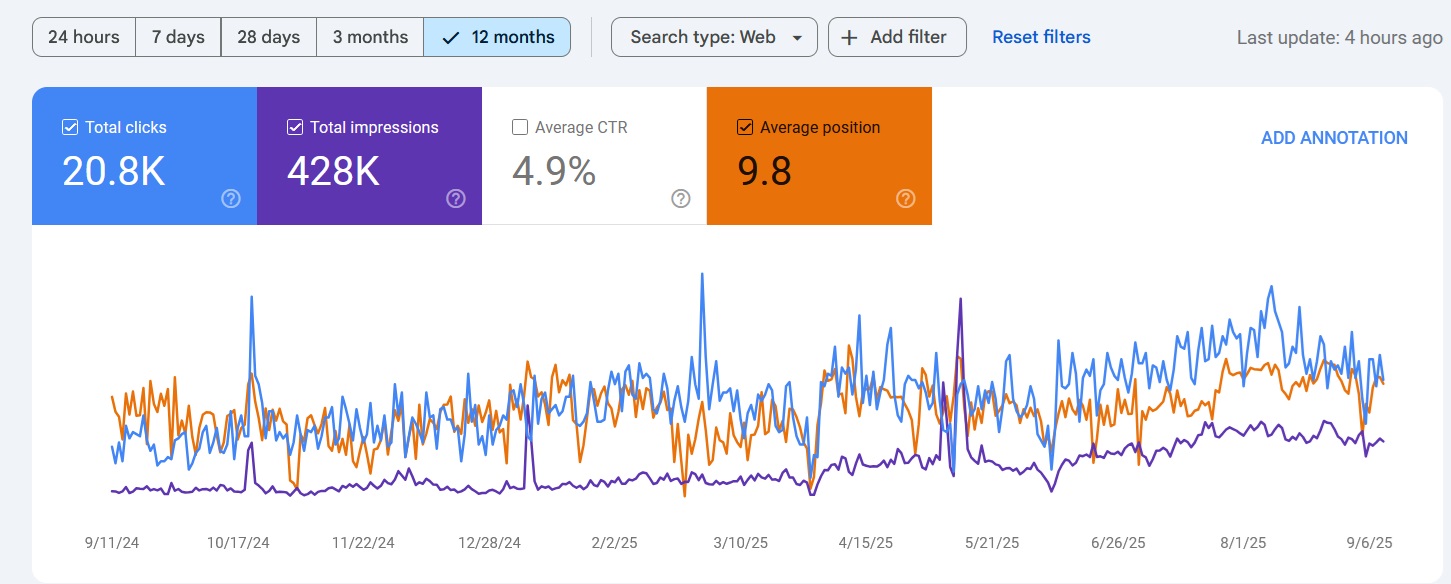
Results from roofing campaigns that rank in local search.
Map Pack Rankings
Ranked in Local Search Within 90 Days
Review Velocity
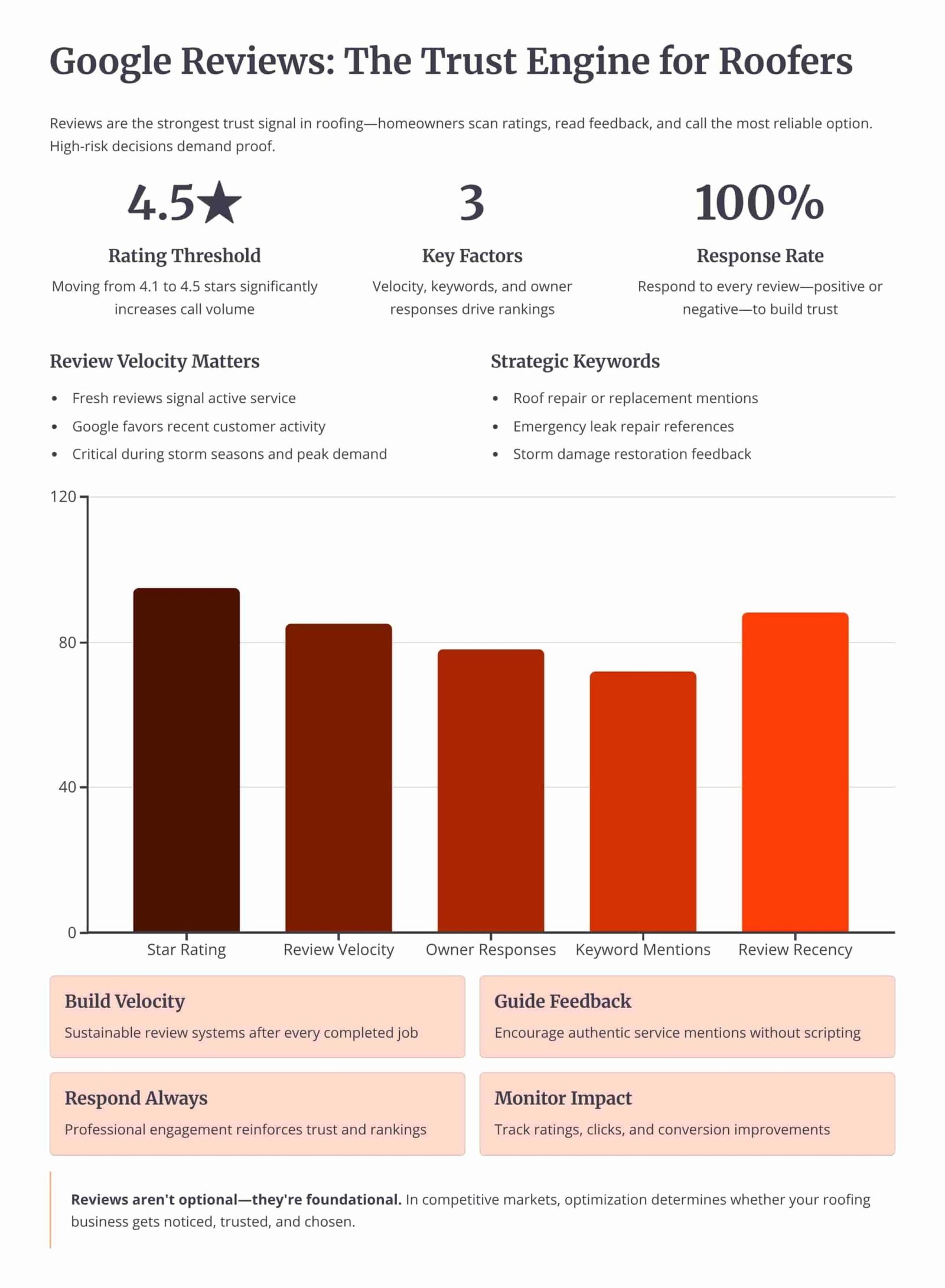
150+ 5-Star Reviews Generated
Organic Traffic
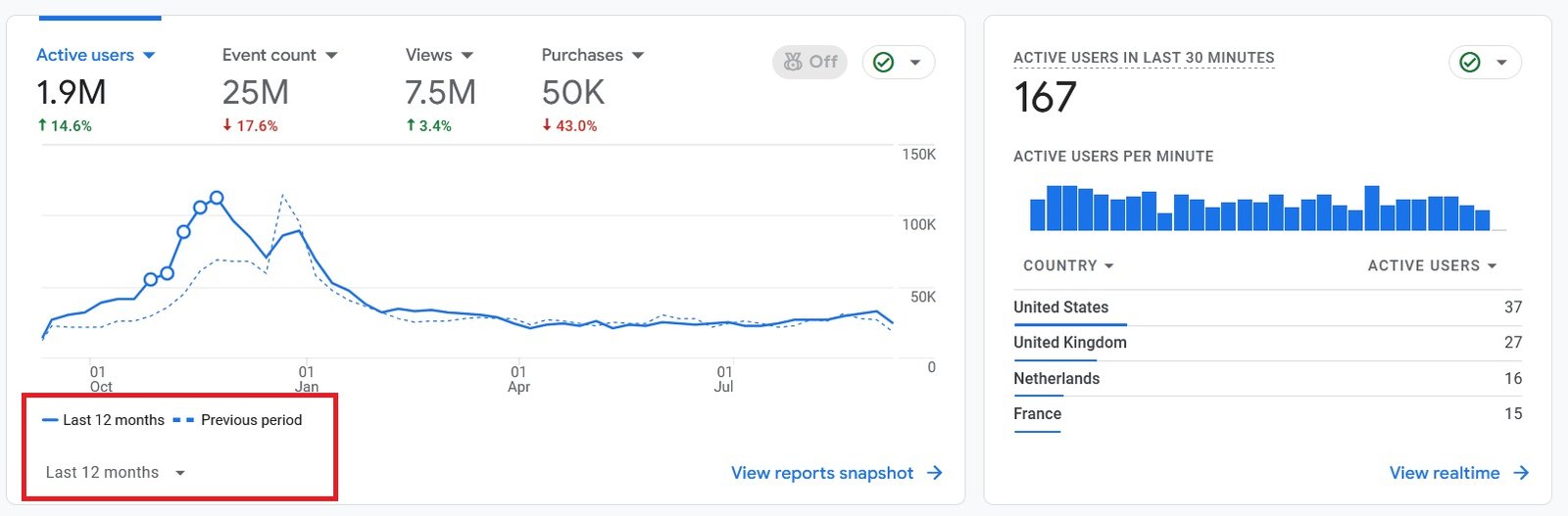
300% Increase in Qualified Traffic
What Roofers Say
The 180-Day Roofing SEO Roadmap
See how we optimize the profile, build the website, and earn local-pack rankings over a 6-month engagement.
Month 1: Profile Audit and Setup
- Category and Field Fixes: Setting the primary category, secondary categories, description, services, and service areas.
- NAP Cleanup: Correcting the name, address, and phone number across the profile, the website, and the directory citations.
Month 2: Reviews and Media
- Review System: Setting up a steady request flow and replying to every review, positive and negative.
- Photo and Post Cadence: Uploading job photos from each completed roof and publishing profile posts twice a month.
Month 4: Citations and Site Support
- Citation Building: Adding consistent listings on the directories that feed prominence for a service area.
- Service-Area Pages: Building city pages on the website that reinforce the profile's service areas.
Month 6: Local-Pack Rankings and Leads
- Map-Pack Position: Reaching the top 3 of the local pack for core roofing queries in the served cities.
- Lead Tracking: Measuring calls and direction requests from the profile against the cost of paid leads.
Owning Search Demand vs Renting It From Lead Platforms
If you pay Angi or Google Ads, you are renting visibility. The moment you stop paying, your pipeline dries up. Ranking the profile and the website for high-intent local searches builds permanent digital equity.
Shared Lead Platforms (Angi, HomeAdvisor)
- The Race to the Bottom: Shared leads force you to slash prices to win against 5 other roofers.
- Low Intent: Half the time they aren't ready to buy, they were just clicking around online.
Local Search SEO (Our Approach)
- 100% exclusive, direct-to-you inbound calls.
- Highest closing rate. They chose YOU from the local pack.
- Compounding ROI. You don't pay per click.
We Identify Search Intent Using Industry-Leading Data Tools




Expertise Built on Data.
Not Guesswork.
I'm Nizam Ud Deen, and I don't build generic websites. I build search intent engines specifically for the roofing industry.
For years, I've watched roofers burn money on agencies that brag about "traffic" while the phones stay silent. Traffic without intent is worthless. My system maps exactly how homeowners search during storms, when comparing prices, and when they're ready to buy, and intercepts them at every stage.
The No-Brainer Roofing SEO Guarantee
We don't guarantee "traffic" or "rankings." We guarantee high-intent leads.
"We guarantee to generate 15 exclusive, inbound replacement or repair leads per month within the first 180 days, driven entirely by high-intent organic search. If we don't hit that metric, we work for free until we do."
Measuring Success: Leads and Revenue
We don't report on vanity metrics. If traffic goes up but revenue stays flat, the strategy failed. We track the pipeline.
Call Tracking
Every keyword mapped to the exact phone call it generated.
Form Fills
Tracking estimate requests from high-intent local landing pages.
Booked Jobs
Connecting CRM data to SEO efforts to prove actual revenue return.
Cost per Lead
Monitoring organic CPL to ensure it beats shared platform costs.
The Roofing Trust Badge Checklist
Run each roofing page through this checklist to confirm the trust badges earn the call rather than clutter the layout.
Frequently Asked Questions
Clear answers about trust badges on roofing pages.
What is a trust badge on a roofing website?
Which trust badges work best for roofers?
Where should I place trust badges on a roofing page?
What is a trust stack?
Do trust badges actually improve conversions?
How many trust badges should a roofing page show?
Should trust badges link to a verification page?
What is the GAF Master Elite badge?
Can fake or expired badges hurt my roofing site?
How are trust badges different from social proof?
Do trust badges help SEO directly?
Should I add review schema with my badges?
How do I test which badge placement converts best?
Does the page itself need to be built to convert first?
Get Your Free Roofing Trust Badge Audit
We'll review the trust badges across your roofing pages and compare them to your top 3 local competitors to show where the page loses the lead.
What You Get:
- Badge and Placement ReviewA check of which badges you show and whether they sit above the fold and near the call to action.
- Verification ScanA list of badges that lack a link to a verification source or show an expired credential.
More Deliverables
- Trust Stack LayoutA recommended set of five to seven badges arranged near the headline and the call to action.
- Schema RecommendationWhere review and organization schema can surface your rating in the search result.
Claim your free roofing trust badge audit today. No commitment required.