
Roofing Landing Pages That Convert Search Traffic Into Calls
Build high-converting roofing landing pages that match a homeowner's search intent and turn a ranked click into a phone call or an estimate request.
Free Roofing Landing Page Audit
Most roofing landing pages leak conversions through intent mismatch and thin content. Get a free audit with a competitor comparison and a plan to lift the conversion rate.
What Is a Roofing Landing Page?
A roofing landing page is a single page built to satisfy one search intent and move that visitor toward a call or an estimate request. It is a search-intent endpoint, not a homepage extension.
One Page, One Intent
Each landing page answers a specific homeowner need at a single decision stage, rather than acting as a general entry point to the site.
Built to Convert
The job of the page is the call or form fill. Rankings without conversions are wasted, since traffic that does not contact the company earns no revenue.
Part of the On-Page System
A landing page sits inside the wider on-page setup alongside service and location pages. See on-page SEO for roofers.
How Does a Landing Page Differ From a Service or Location Page?
A landing page differs because it targets one search intent and one conversion action, while a service or location page describes an offering or a geography in broader terms.
Landing Page vs Service Page
- A landing page narrows to one intent, such as emergency repair, and one action.
- A roofing service page explains a full service line for research and comparison.
- A landing page strips out anything that does not move the visitor toward contact.
Landing Page vs Location Page
- A landing page leads with the intent; the city is one of several trust signals.
- A roofing location page centers on a city or service area as its main subject.
- Both weave local relevance through the page, not only into a footer or sidebar.
What Search Intents Should Roofing Landing Pages Match?
Roofing landing pages match 4 distinct intents, each one needing its own page architecture: emergency, repair, replacement, and cost. A single page cannot serve all 4 at once.
Emergency and Repair Intent
- Emergency searchers have an active problem and need immediate contact options, 24/7 availability, and a fast response above the fold.
- Repair searchers want clarity on the issue and whether repair or replacement makes sense.
Replacement and Cost Intent
- Replacement searchers face a major investment and want material comparisons, cost detail, and contractor evaluation resources.
- Cost searchers want ballpark figures, cost factors, and financing options to budget the project.
What Belongs Above the Fold on a Roofing Landing Page?
Above the fold, the page should communicate that you understand the urgency, you are available now, and you can respond quickly. An emergency searcher decides in seconds.
Required Above-the-Fold Elements
- One or more phone numbers with click-to-call functionality.
- 24/7 availability messaging for emergency intent.
- Average response time stated plainly.
Why the Fold Decides the Lead
A homeowner with a leak rarely scrolls before acting. If the contact path and the urgency message are not visible at once, the page loses the call before trust forms. For deeper guidance, see above-the-fold optimization for roofers.
What Are the Conversion Paths on a Roofing Landing Page?
A roofing landing page carries 2 conversion paths: a primary phone call and a secondary form submission. The page makes the primary path the easiest action on the screen.
Primary Path: The Phone Call
- Calls come from qualified homeowners ready to schedule an estimate.
- Clear click-to-call buttons and a visible phone number carry the urgency.
- The number repeats at decision points down the page.
Secondary Path: The Form
- A form collects project details from visitors not ready to call.
- A multi-step form gathers qualifying information while keeping momentum.
- Field count is a test variable, since each field adds friction.
Turn Ranked Traffic Into Booked Estimates
A landing page built for one intent can convert at 8 to 12 percent against a 3 to 5 percent average. We design and write the pages that capture the call.
Call Now For PricingOr call +1 272-207-3231
How to Structure the Content on a Roofing Landing Page?
Structure the page in 3 layers, from essential information above the fold to detail for researchers below. Every page covers problem, solution, process, trust, risk reduction, and a conversion path.
The 3 Content Layers
- Essential information above the fold for quick-decision homeowners.
- Detailed explanations for visitors who need more before they act.
- Supporting detail, FAQs, and resources for thorough researchers.
The 6 Core Sections
Problem acknowledgment, solution explanation, process overview, trust building, risk reduction, and conversion path. Headings carry the structure, so review heading optimization for roofers to keep the hierarchy clear.
How Long Should a Roofing Landing Page Be?
An effective roofing landing page typically holds 1,500 to 2,500 words of unique, relevant content tied to one intent. Length supports coverage, not padding.
Why Thin Pages Lose
- A page with a headline, 3 bullets, and a form reads as thin and gets demoted.
- Word count alone is not the goal; coverage of the intent is.
- A replacement page runs longest, since it answers material, warranty, and cost questions.
Replacement Pages Need the Most Depth
A roof replacement page is the most comprehensive on the site. It compares materials such as asphalt, metal, and tile, explains manufacturer versus workmanship warranties, lays out the timeline, and covers financing.
How Do Trust Signals and Risk Reduction Lift Conversions?
Trust signals lift conversions by proving local authority and lowering the homeowner's perceived risk before the call. Uncertainty stalls action, so the page answers it directly.
Local Trust Signals
- City names, neighborhood mentions, and clear service-area statements.
- Project photos from the area with recognizable local settings.
- Local customer testimonials that name the city.
- License numbers, insurance verification, and local certifications.
Risk Reduction Mechanisms
- Specific warranty terms, coverage detail, and the claim process; vague promises create doubt.
- Credentials a homeowner can verify, not just claims to trust.
- A step-by-step timeline and communication plan, since uncertainty breeds anxiety.
Why Does Mobile Optimization Matter for Roofing Landing Pages?
Mobile matters because more than 60 percent of roofing searches happen on mobile devices, often during a leak or storm. The page has to work on a phone first.
Tappable Contact
The phone number stays prominent and tappable on mobile, so a homeowner calls with one tap.
Fast Load
Mobile visitors abandon slow pages, so Core Web Vitals and load time hold the lead on the page.
Finger-Sized Targets
Buttons and links are sized for finger taps, not mouse clicks. See mobile content formatting.
What Conversion Rates Should a Roofing Landing Page Reach?
A roofing landing page should reach 8 to 12 percent or higher when well optimized, against a 3 to 5 percent average. Doubling the conversion rate matches doubling traffic, at far lower cost.
The Benchmarks to Track
- Average conversion rate sits near 3 to 5 percent; well-optimized pages reach 8 to 12 percent.
- A bounce rate below 45 percent signals a good content-to-intent match.
- Time on page of 2 to 3 minutes fits a comprehensive page.
What to A/B Test
- Headlines: different value propositions and levels of urgency.
- CTAs: button text, color, placement, and quantity.
- Forms: field count, required fields, and single-page versus multi-step.
Doubling Conversions Beats Buying More Traffic
Lifting a roofing landing page from 4 percent to 8 percent doubles the leads from the same ranked traffic, without paying for a single extra click. We build pages around that math.
Call Now For PricingOr call +1 272-207-3231
Common Roofing Landing Page Mistakes
Roofing landing pages lose conversions through 6 recurring mistakes, each one fixable in the page itself.
Content and Intent Errors
- Thin content: a headline, 3 bullets, and a form, which Google demotes.
- Intent mismatch: an emergency page that leads with company history instead of fast response.
- Generic copy that could describe any roofing company in any city.
Structure and Signal Errors
- Overdesign with no information hierarchy: a beautiful page with no logical order.
- Missing conversion architecture: no clear path from awareness to action.
- Weak local signals: the city named once in the title, then generic content.
Proof of Performance
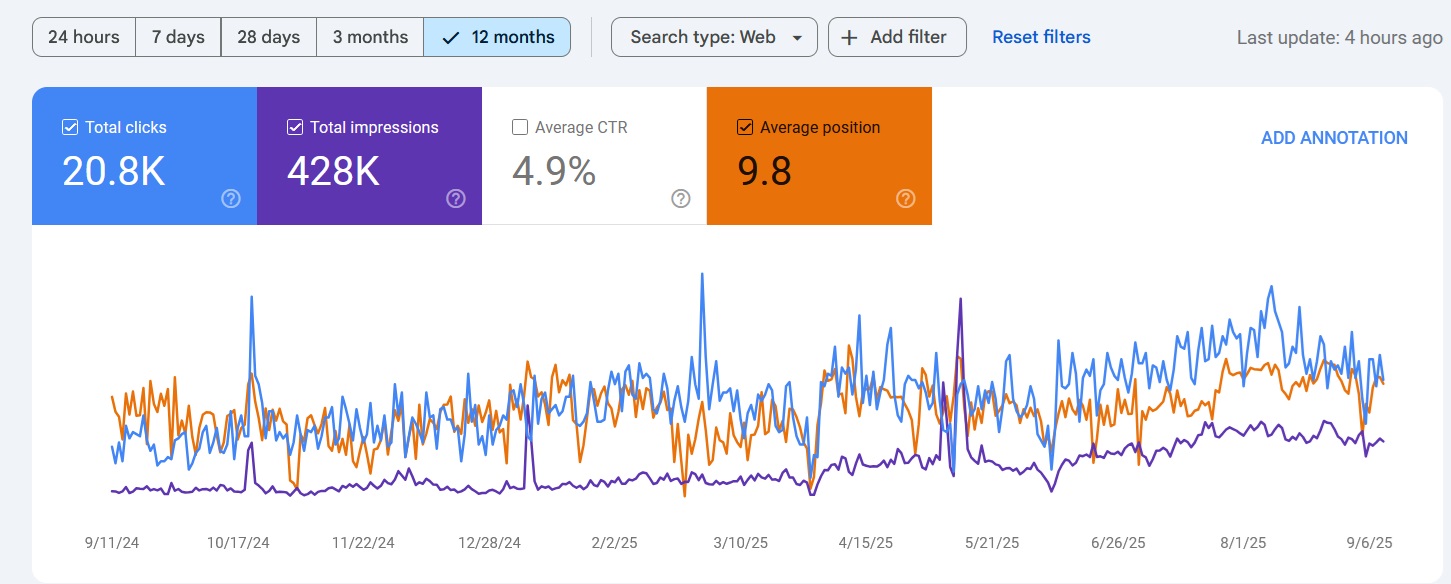
Results from roofing campaigns that rank in local search.
Map Pack Rankings
Ranked in Local Search Within 90 Days
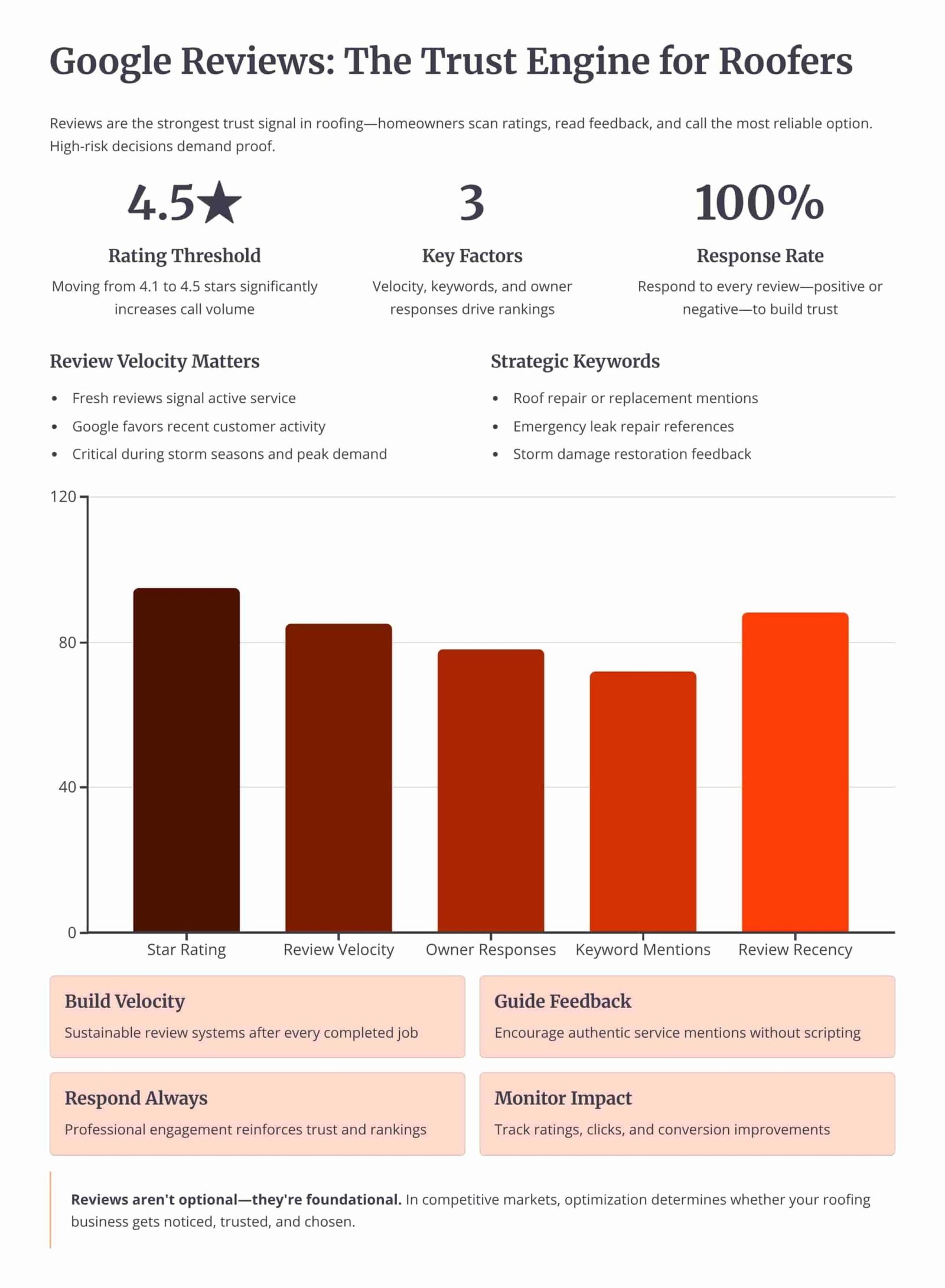
Review Velocity
150+ 5-Star Reviews Generated
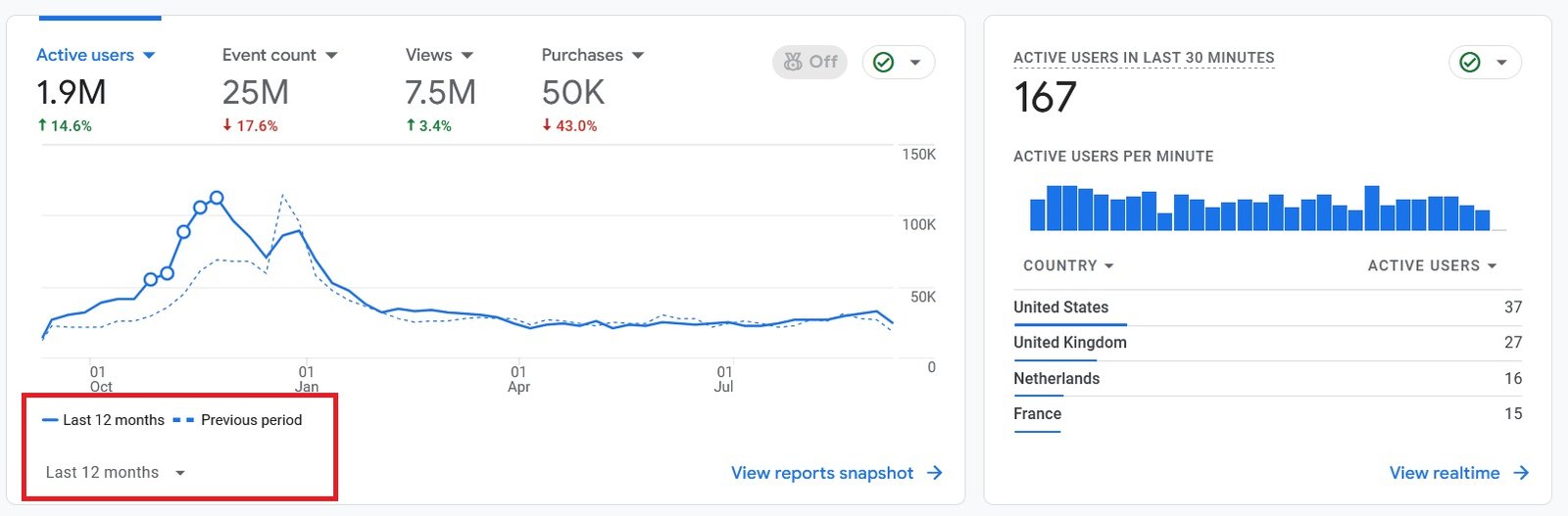
Organic Traffic
300% Increase in Qualified Traffic
What Roofers Say
The 180-Day Roofing SEO Roadmap
See how we map intent, build the landing pages, and turn ranked traffic into booked estimates over a 6-month engagement.
Month 1: Intent Mapping and Page Plan
- Intent Analysis: Identifying the emergency, repair, replacement, and cost searches each page must satisfy.
- Structure Selection: Choosing the page template that fits each intent type before any copy is written.
Month 2: Copy and Conversion Architecture
- Local Customization: Adding genuine city content, area photos, and local testimonials to each page.
- Conversion Setup: Placing click-to-call buttons, the form, and trust signals along a clear path to action.
Month 4: Testing and Technical SEO
- A/B Testing: Running tests on headlines, CTAs, and form length to raise the conversion rate.
- Technical Pass: Adding LocalBusiness, Service, and Review schema, plus page-speed and Core Web Vitals fixes.
Month 6: Rankings, Leads, and Scale
- Conversion Lift: Pushing the best pages from the 3 to 5 percent average toward the 8 to 12 percent range.
- Template Scale: Rolling the proven structure to new cities and intents while keeping content unique.
Owning Search Demand vs Renting It From Lead Platforms
If you pay Angi or Google Ads, you are renting visibility. The moment you stop paying, your pipeline dries up. Ranking intent-matched landing pages for high-intent local searches builds permanent digital equity.
Shared Lead Platforms (Angi, HomeAdvisor)
- The Race to the Bottom: Shared leads force you to slash prices to win against 5 other roofers.
- Low Intent: Half the time they aren't ready to buy, they were just clicking around online.
Local Search SEO (Our Approach)
- 100% exclusive, direct-to-you inbound calls.
- Highest closing rate. They chose YOU from the search results.
- Compounding ROI. You don't pay per click.
We Identify Search Intent Using Industry-Leading Data Tools




Expertise Built on Data.
Not Guesswork.
I'm Nizam Ud Deen, and I don't build generic websites. I build search intent engines specifically for the roofing industry.
For years, I've watched roofers burn money on agencies that brag about "traffic" while the phones stay silent. Traffic without intent is worthless. My system maps exactly how homeowners search during storms, when comparing prices, and when they're ready to buy, and intercepts them at every stage.
The No-Brainer Roofing SEO Guarantee
We don't guarantee "traffic" or "rankings." We guarantee high-intent leads.
"We guarantee to generate 15 exclusive, inbound replacement or repair leads per month within the first 180 days, driven entirely by high-intent organic search. If we don't hit that metric, we work for free until we do."
Measuring Success: Leads and Revenue
We don't report on vanity metrics. If traffic goes up but revenue stays flat, the strategy failed. We track the pipeline.
Call Tracking
Every keyword mapped to the exact phone call it generated.
Form Fills
Tracking estimate requests from high-intent local landing pages.
Booked Jobs
Connecting CRM data to SEO efforts to prove actual revenue return.
Cost per Lead
Monitoring organic CPL to ensure it beats shared platform costs.
The Roofing Landing Page Optimization Checklist
Run each roofing landing page through this checklist to confirm it matches one intent and carries the visitor to a call.
Frequently Asked Questions
Clear answers about building high-converting roofing landing pages.
What is a roofing landing page?
How is a landing page different from a service page?
How long should a roofing landing page be?
What conversion rate should a roofing landing page hit?
What belongs above the fold on a roofing landing page?
What search intents do roofing landing pages target?
Why do thin roofing landing pages fail?
How does mobile affect roofing landing pages?
What should I A/B test on a roofing landing page?
What trust signals raise landing page conversions?
Should a roofing cost page show prices?
What schema do roofing landing pages need?
How do I scale roofing landing pages across cities?
How do I measure roofing landing page success?
Get Your Free Roofing Landing Page Audit
We'll review your current landing pages and your top 3 local competitors to show you exactly where the page loses the conversion.
What You Get:
- Intent Match ReviewA check that each page matches one search intent and one clear action.
- Conversion Path ScoreWhere the page leaks calls and form fills against the top local competitor.
More Deliverables
- Above-the-Fold CheckA review of the offer, click-to-call, and urgency message on mobile and desktop.
- Content Depth ComparisonHow the page's coverage and word count compare to the local winner.
Claim your free roofing landing page audit today. No commitment required.