
Heading Optimization for Roofing Pages
Structure H1, H2, and H3 tags so a roofing page maps to search intent, earns featured snippets, and reads clearly on every device.

Free Roofing Heading Structure Audit
Most roofing pages carry multiple H1 tags or skipped heading levels. Get a free audit of your heading structure with a plan to align it to search intent.
What Is Heading Optimization for Roofing Pages?
Heading optimization is the practice of writing and ordering the H1, H2, and H3 tags on a roofing page so the structure guides Google and homeowners through the content.
A Page's Outline
Headings form the outline a crawler reads to understand what a roofing page covers and how its sections relate.
An On-Page Element
Headings sit inside the page body, separate from the title tag and meta description that show in the search result.
Structure, Not Style
A heading is a structural tag, so large bold text styled to look like a heading without the tag does not carry the same signal.
Why Does Heading Optimization Matter for Roofers?
Heading optimization matters because a clear heading structure tells Google what each section answers and lets a homeowner scan for the service they need.
Headings Map Content to Search Intent
- A heading that names the service and intent matches the query that triggered the search.
- Section headings let Google place a roofing page against an emergency, cost, or comparison search.
- A logical outline supports the work on each roofing service page.
Clear Headings Hold a Reader on the Page
- A homeowner scans headings before reading, so descriptive headings keep the reader moving down the page.
- The author's data attributes a 23 percent gain in time on page to clear heading structure.
- The same data attributes a 31 percent rise in conversion rate to strategic headings.
How Should H1, H2, and H3 Tags Be Structured?
Use one H1 that states the page topic, H2 tags for major sections, and H3 tags for subsections, without skipping a level. The hierarchy stays logical from top to bottom.
One H1 Per Page
Each roofing page carries exactly one H1 that states the primary topic, such as "Roof Replacement Services in Austin."
H2 for Sections
H2 tags divide the page into major sections like services, process, and service area, each one a distinct part of the topic.
H3 for Subsections
H3 tags sit under an H2 to cover a detail, and an H4 covers a finer point under an H3, so levels never skip.
Turn Structure Into Ranked Pages
An intent-mapped heading structure helps a roofing page rank for the searches that convert. We write and structure the pages for you.
Call Now For PricingOr call +1 272-207-3231
How to Write a Roofing H1 That Targets Intent?
Write the H1 to name the service and the intent in a concise, readable line, such as "Roof Replacement Services in Austin" over a generic label. The H1 states what the page is, not a slogan.
What a Strong Roofing H1 Includes
- The core service, like roof replacement, repair, or inspection.
- The city or service area when the page targets a location.
- Wording specific enough to match intent and short enough to read at a glance.
Match the H1 to the Page's Job
An emergency page leads with urgency, like "24/7 Emergency Roof Repair in Phoenix," while a service page names the work and the city plainly.
How Do H2 Headings Map to Search Intent?
Write H2 tags as descriptive section labels that match how homeowners search, replacing generic headings with specific ones. "Metal Roof Replacement Process" beats "Our Process."
Descriptive H2 Beats Generic H2
- "Why Austin Homeowners Choose Our Roofing Services" beats "Why Choose Us."
- "Asphalt Shingle Roof Repair Cost" beats "Pricing."
- Each H2 names a topic a homeowner would type into search.
Order H2s by the Service Lifecycle
Sequence sections from inspection to repair to replacement to warranty, so the outline follows the path a homeowner takes through a roofing decision.
How to Add Geographic Modifiers to Headings?
Add the city or region to headings on location pages so the content reinforces geographic relevance for city-specific searches. "Roof Replacement Services in Scottsdale, Arizona" pairs the service with the place.
Where Location Modifiers Belong
- The H1 names the service and the city on a location page.
- An H2 can scope a section to a neighborhood the roofing company serves.
- The modifier supports each roofing location page.
Keep the City Natural in the Heading
A city name added to a heading reads as a real location served, not a list of towns the roofing company cannot reach. One page targets one city.
How Do Question Headings Win Featured Snippets?
Phrase an H2 as the exact question a homeowner asks, then answer it directly in the first sentence below. "How Long Does an Asphalt Shingle Roof Last?" targets the snippet that "Roof Lifespan Information" misses.
Question Headings That Earn Snippets
- "How Much Does a Roof Replacement Cost?" targets a cost query.
- "What Causes a Roof Leak?" targets a diagnostic query.
- "How Long Does a Roof Repair Take?" targets a timeline query.
Answer Right After the Heading
Place a direct, complete answer in the sentence under the question heading. Google pulls that passage into the featured snippet when the match is clear.
How to Place Keywords in Roofing Headings?
Place the primary keyword in the H1 and related terms in the H2 and H3 tags, written for a reader first. H3 headings carry semantic variations that signal topical depth.
Keywords Where They Read Naturally
- The H1 holds the page's primary term.
- H2 tags hold the section terms a homeowner searches.
- H3 tags hold related materials, like asphalt shingle, metal, or tile.
Skip Keyword Stuffing in Headings
A heading that repeats the keyword reads as spam and weakens the section. One natural use per heading reads clearly and still signals the topic.
Structured Pages Cost Less Than Paid Ads
Pages built on a clear heading structure earn organic leads that run closer to 15 to 25 dollars each, against 50 to 150 dollars for paid roofing leads. Build the asset once.
Call Now For PricingOr call +1 272-207-3231
How Should Headings Read on Mobile?
Write headings concise enough to read on a phone without losing the keyword or the intent. "24/7 Emergency Roof Repair in Houston" reads cleanly on a narrow screen, where most roofing searches happen.
Keep Mobile Headings Short and Clear
- A long heading wraps to several lines on a phone and buries the point.
- A concise heading keeps the service and city visible above the fold.
- Heading length ties into wider above-the-fold optimization.
Test the Heading on a Real Phone
View the page on a phone to confirm the H1 and the first H2 read without scrolling. A heading that fits one screen holds the visitor's attention.
Common Heading Mistakes Roofers Make
Roofing pages lose ranking signal through 6 recurring heading mistakes, each one fixable in the page editor.
Structure and Tag Errors
- Using multiple H1 tags, which splits the page's primary topic.
- Skipping a level, like jumping from H2 to H4, which breaks the outline.
- Styling bold text to look like a heading without the heading tag.
Wording and Mobile Errors
- Writing generic headings like "Our Services" that match no search.
- Stuffing keywords into a heading until it reads as spam.
- Leaving long headings that wrap and lose the point on a phone.
Proof of Performance
Results from roofing campaigns that rank in local search.
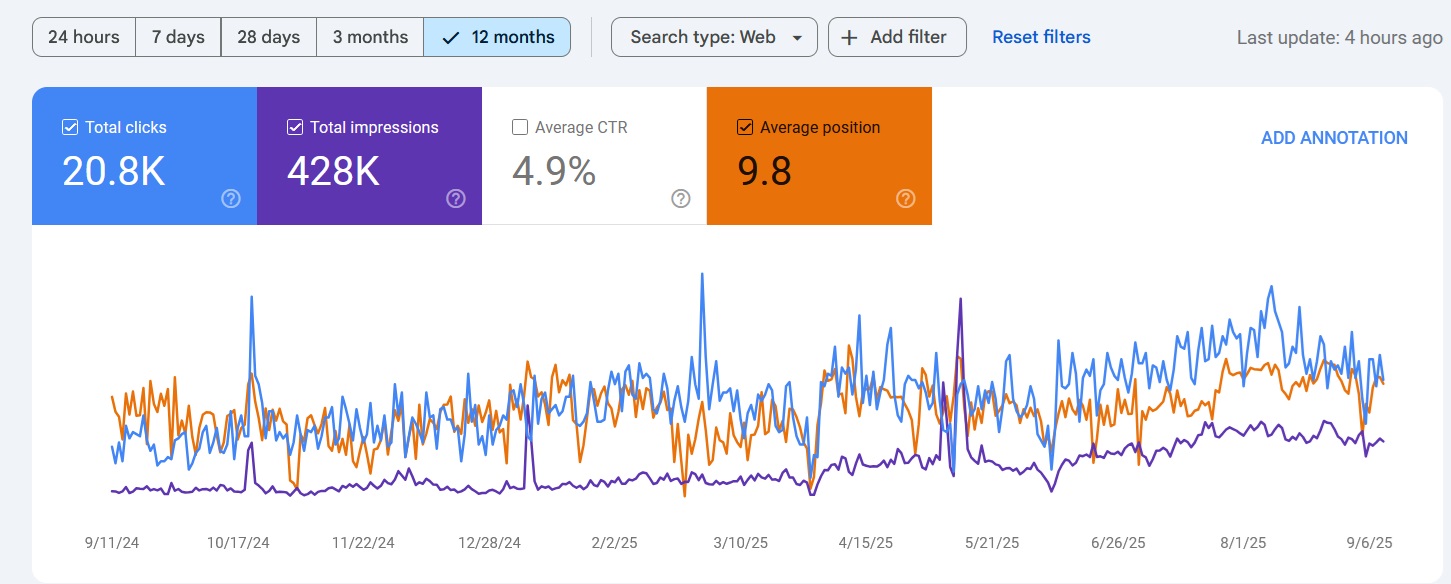
Map Pack Rankings
Ranked in Local Search Within 90 Days
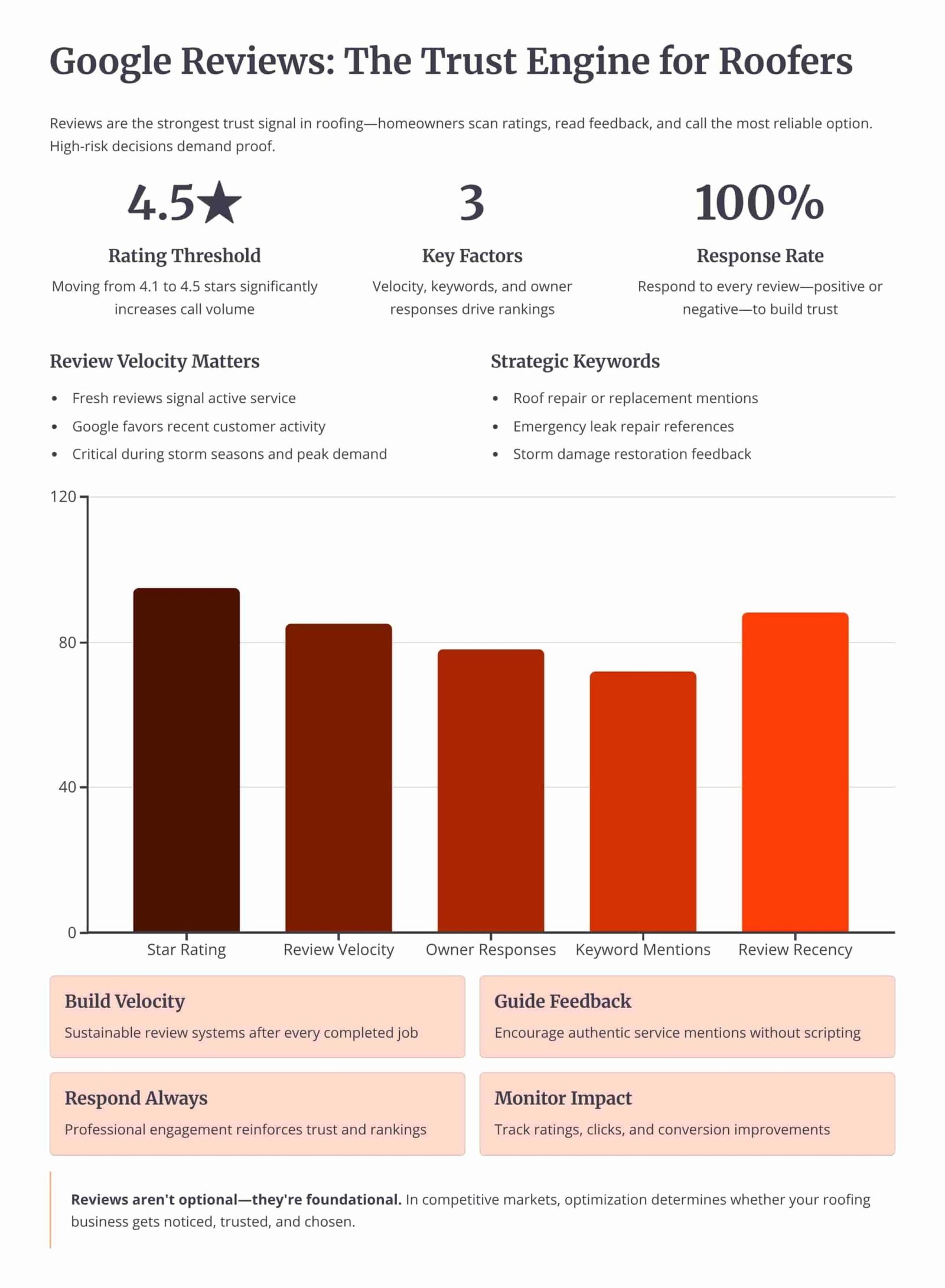
Review Velocity
150+ 5-Star Reviews Generated
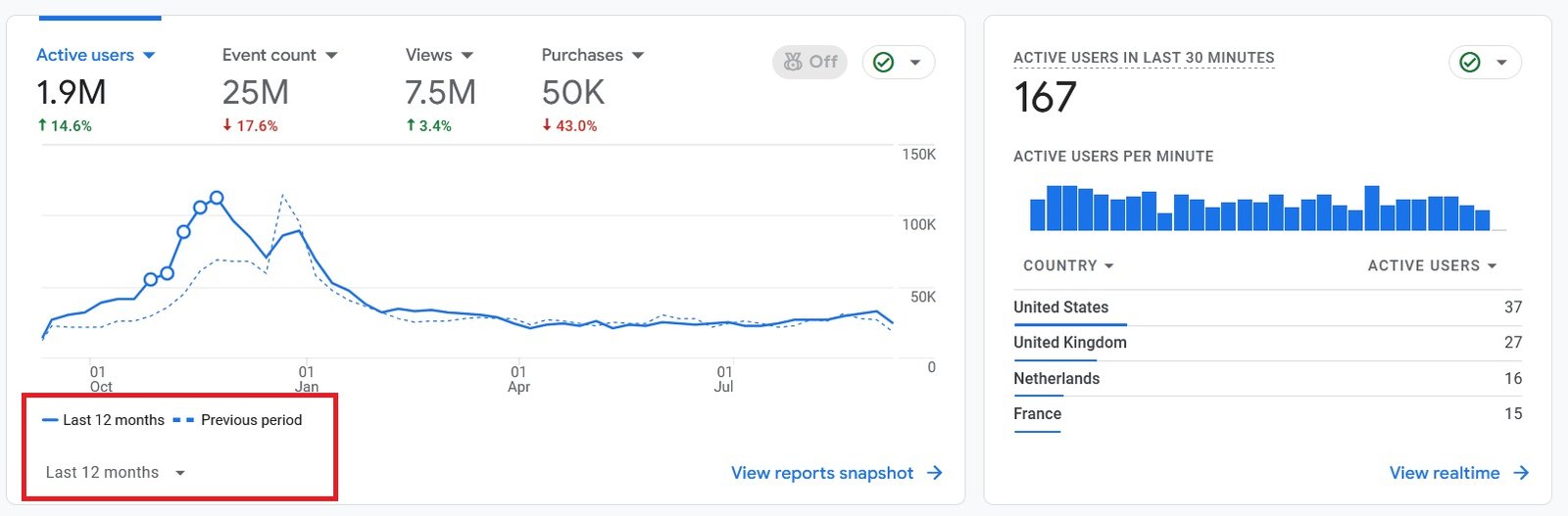
Organic Traffic
300% Increase in Qualified Traffic
What Roofers Say
The 180-Day Roofing SEO Roadmap
See how we restructure headings, build the pages, and earn organic rankings over a 6-month engagement.
Month 1: Heading Audit and Mapping
- Structure Audit: Finding multiple H1 tags, skipped levels, and styled text posing as headings across the site.
- Intent Mapping: Matching each page's H1 to the emergency, cost, comparison, or local intent it should serve.
Month 2: Heading Rewrite
- Descriptive H2s: Replacing generic section headings with specific, search-matched H2 tags on every page.
- Question Headings: Adding question-format H2s that target featured snippets on cost and service pages.
Month 4: Page Build and Mesh
- Service and Location Pages: Building pages with location-modified headings that target city-specific searches.
- Internal Mesh: Linking sections to related on-page guides so the heading structure supports the silo.
Month 6: Rankings and Leads
- Snippet Wins: Tracking featured snippets earned by question headings on cost and service pages.
- Lead Tracking: Measuring calls and form fills from the restructured pages against the cost of paid leads.
Owning Search Demand vs Renting It From Lead Platforms
If you pay Angi or Google Ads, you are renting visibility. The moment you stop paying, your pipeline dries up. Ranking your pages for high-intent local searches builds permanent digital equity.
Shared Lead Platforms (Angi, HomeAdvisor)
- The Race to the Bottom: Shared leads force you to slash prices to win against 5 other roofers.
- Low Intent: Half the time they aren't ready to buy, they were just clicking around online.
Local Search SEO (Our Approach)
- 100% exclusive, direct-to-you inbound calls.
- Highest closing rate. They chose YOU from the search results.
- Compounding ROI. You don't pay per click.
We Identify Search Intent Using Industry-Leading Data Tools




Expertise Built on Data.
Not Guesswork.
I'm Nizam Ud Deen, and I don't build generic websites. I build search intent engines specifically for the roofing industry.
For years, I've watched roofers burn money on agencies that brag about "traffic" while the phones stay silent. Traffic without intent is worthless. My system maps exactly how homeowners search during storms, when comparing prices, and when they're ready to buy, and intercepts them at every stage.
The No-Brainer Roofing SEO Guarantee
We don't guarantee "traffic" or "rankings." We guarantee high-intent leads.
"We guarantee to generate 15 exclusive, inbound replacement or repair leads per month within the first 180 days, driven entirely by high-intent organic search. If we don't hit that metric, we work for free until we do."
Measuring Success: Leads and Revenue
We don't report on vanity metrics. If traffic goes up but revenue stays flat, the strategy failed. We track the pipeline.
Call Tracking
Every keyword mapped to the exact phone call it generated.
Form Fills
Tracking estimate requests from high-intent local landing pages.
Booked Jobs
Connecting CRM data to SEO efforts to prove actual revenue return.
Cost per Lead
Monitoring organic CPL to ensure it beats shared platform costs.
The Roofing Heading Optimization Checklist
Run each roofing page through this checklist to confirm the heading structure feeds intent, snippets, and clarity.
Frequently Asked Questions
Clear answers about heading optimization for roofing pages.
What is heading optimization in SEO?
How many H1 tags should a roofing page have?
What is the difference between H1, H2, and H3 tags?
Does the H1 need to match the page title tag?
Should roofing headings include keywords?
How do headings help win featured snippets for roofers?
What makes a roofing H1 good?
Why are generic headings a problem on roofing pages?
Can I skip from an H2 to an H4?
How should headings read on a roofing location page?
Does styled bold text count as a heading?
How does heading structure affect mobile readers?
How does heading optimization fit into on-page SEO?
Get Your Free Roofing Heading Structure Audit
We'll analyze the heading structure on your top pages and show you exactly where it loses ranking signal and where it buries intent.
What You Get:
- Heading Structure ReviewA check of H1 count, level order, and section labels across the page.
- Intent Match ScoreHow well each H1 and H2 maps to the search intent the page should serve.
More Deliverables
- Snippet Opportunity ListQuestion headings you can add to target featured snippets.
- Rewrite RecommendationsSpecific descriptive headings to replace the generic ones on the page.
Claim your free roofing heading structure audit today. No commitment required.