
Roofing How-To Guides for On-Page SEO
Long-form roofing guides are evergreen on-page assets that answer a homeowner's full research question and route educated visitors toward service pages.

Free Roofing Guide Content Audit
Most roofing sites publish thin posts instead of complete guides. Get a free audit of your guide coverage with a competitor comparison and a plan to fill the gaps.
What Is a Roofing How-To Guide?
A roofing how-to guide is a long-form on-page asset that answers a homeowner's full research question on one roofing topic, from material choice to cost to repair.
Evergreen, Not Timely
A guide covers a topic that homeowners search every year, so the page earns rankings that hold instead of fading with a trend.
A Strategic Asset
A guide is not a quick post. It is a planned page built to own one search topic and route a reader toward an estimate.
A Hub for Service Pages
A guide links down to the matching service and location pages, so it sits above them in the funnel. See on-page SEO for roofers.
Why Do Roofing Guides Matter for SEO?
Roofing guides matter because they let a roofing company answer a homeowner's question before a competitor does, then keep that reader on the site through the decision.
Guides Capture Research-Stage Searches
- Informational queries like "how long does a roof last" reach a guide first.
- Cost queries like "roof replacement cost" pull a homeowner mid-research.
- Problem queries like "roof leaking causes" arrive before the homeowner picks a roofer.
Guides Support Authority and Trust
- Detailed answers demonstrate experience, expertise, and trustworthiness on the topic.
- A reader who finds the full answer stays on the site instead of returning to search.
- The guide warms the visitor before the roofing service page asks for the call.
How Do Roofing Guides Differ From Blog Posts and FAQs?
Guides differ because a guide owns a topic in full, a blog post follows a timely angle, and an FAQ answers one narrow question.
The Guide Owns the Topic
A guide covers one roofing subject from start to finish, so it ranks for the topic and its related questions over years.
The Blog Post Follows the Moment
A roofing blog post is shorter and timely, suited to a season, a storm, or a news angle.
The FAQ Answers One Question
A roofing FAQ page gives a short answer to a single query, while a guide explains the whole subject around it.
Turn Guides Into Booked Estimates
A homeowner who reads a full roofing guide arrives at the estimate request already informed. We write the guides and connect them to your service pages.
Call Now For PricingOr call +1 272-207-3231
What Types of Roofing Guides Earn Rankings?
Four guide types match how homeowners search: material guides, cost guides, problem-diagnosis guides, and maintenance guides. Each one answers a distinct stage of roofing research.
Material and Cost Guides
- A material guide compares durability, cost, and look across asphalt, metal, and tile.
- A cost guide gives transparent pricing ranges for the cost-based searcher.
- A cost guide can link to the dedicated roofing cost page for the conversion step.
Problem and Maintenance Guides
- A problem-diagnosis guide explains causes, warning signs, and the path to a fix.
- A maintenance guide gives seasonal care and preventive steps for each roof type.
- Both formats reach a homeowner who is researching, not yet buying.
How to Structure a Long-Form Roofing Guide?
Structure the guide around depth, question-based headings, and a clear path from the answer to the next step. Depth matters more than raw word count.
Build the Guide for Depth
- Cover the topic in full with technical detail and practical examples.
- Add regional notes, since climate changes the right roofing answer.
- State cost ranges plainly so the reader does not leave to find them.
Format for Search and Snippets
- Use question-based headings that match how people search.
- Lead each section with a direct answer to set up a featured snippet.
- Use industry terms naturally so the page reads as expert work.
How Do Guides Move a Homeowner From Reading to Hiring?
Guides move a reader through four stages: education, problem awareness, solution comparison, and the hiring decision. The call to action matches the stage.
Match the CTA to the Stage
- An early guide uses a soft call, offering a related resource to read next.
- A late-stage guide uses a stronger call toward an inspection or estimate.
- The guide prepares the conversion rather than forcing it.
Lead Quality From Educated Readers
The author reports that prospects who read a full guide close at 3.2 times the rate of cold leads, raise fewer objections, and bring higher lifetime value. Treat these as the author's own figures, not independent research.
How Do Guides Build Topical Authority?
Topical authority forms when the site covers roofing in enough depth that Google reads it as a definitive source on the subject. Each guide adds to that coverage.
Cover the Whole Subject
- Address material types, installation, cost factors, and maintenance.
- Add problem diagnosis, regional notes, warranties, and contractor selection.
- Each new guide reinforces the rankings the earlier guides already hold.
Link Guides to Pages and Locations
A guide links down to service pages and location pages, distributing ranking strength across the site and creating a clear path from education to a request.
Guides Earn Traffic You Keep
A guide keeps ranking and feeding leads long after it publishes, unlike a paid ad that stops the moment the budget stops. Build the asset once and keep it.
Call Now For PricingOr call +1 272-207-3231
How to Keep Roofing Guides Current?
Keep guides current with a quarterly review that refreshes pricing, materials, and any industry change. An outdated guide loses the trust that earned its ranking.
Review Each Quarter
Check ranking performance and flag the guides that need an update before they slip.
Refresh the Facts
Update cost ranges, material options, and warranty notes as the roofing market shifts.
Close Competitor Gaps
Watch competing guides, find missing subtopics, and expand the top performers to hold the position.
Common Roofing Guide Mistakes Roofers Make
Roofing companies lose guide rankings through six recurring mistakes, each one fixable in the way the content is planned and written.
Planning and Depth Errors
- Writing generic, surface-level content with no roofing-specific detail.
- Publishing scattered short posts instead of complete topical coverage.
- Treating a guide as a hard sales page instead of an educational asset.
Linking and Maintenance Errors
- Failing to link the guide to the matching service and location pages.
- Letting a guide go stale until the facts and prices fall out of date.
- Ignoring regional detail and transparency that set a guide apart.
Proof of Performance
Results from roofing campaigns that rank in local search.
Map Pack Rankings
Ranked in Local Search Within 90 Days
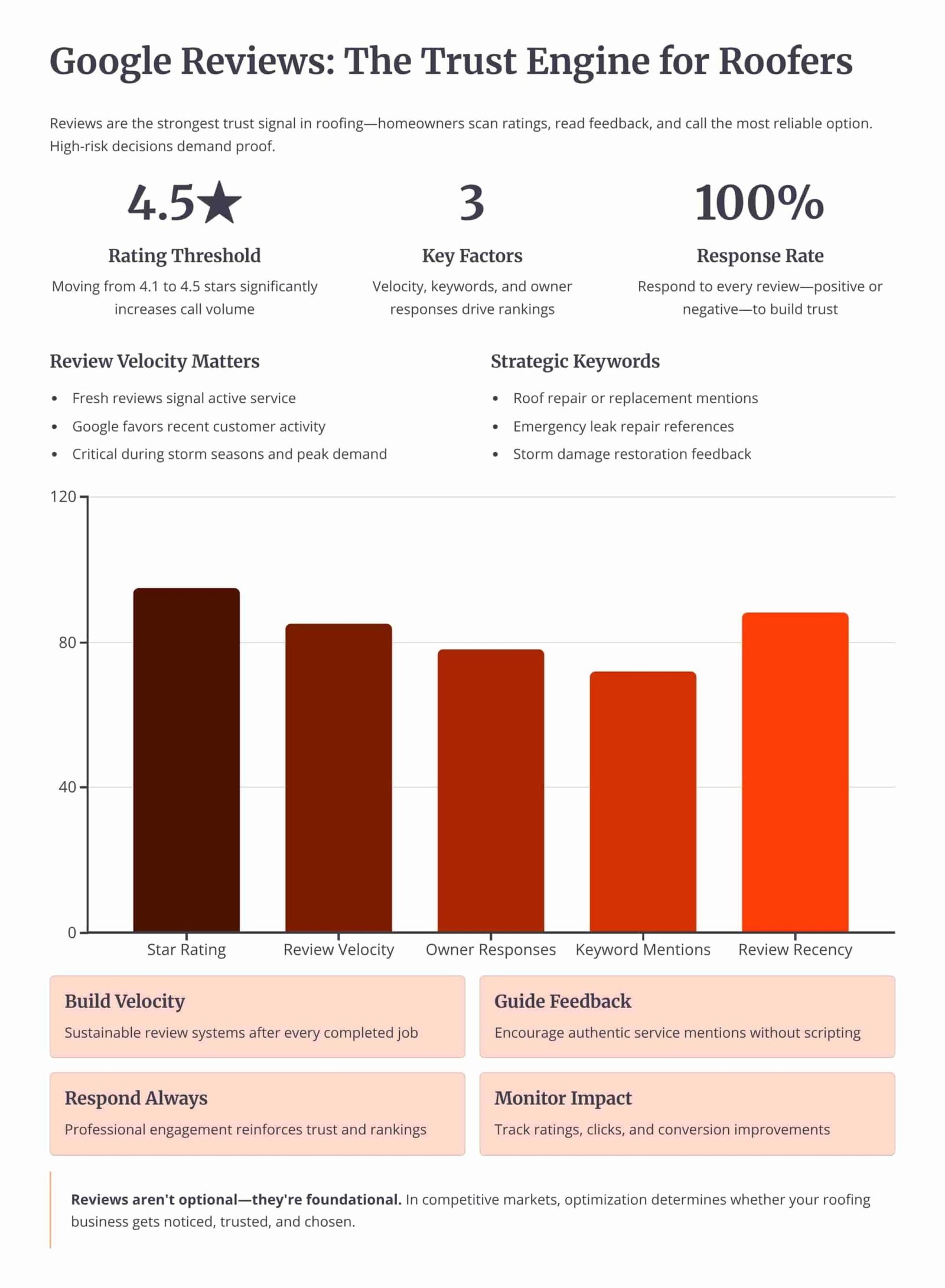
Review Velocity
150+ 5-Star Reviews Generated
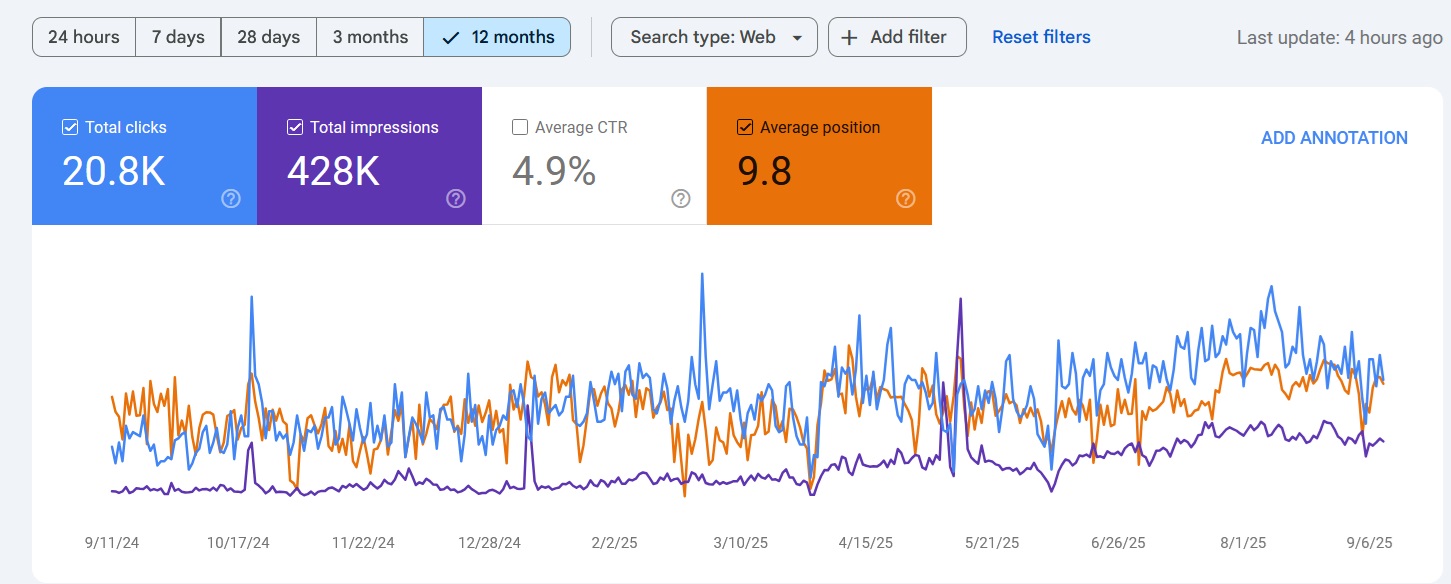
Organic Traffic
300% Increase in Qualified Traffic
What Roofers Say
The 180-Day Roofing SEO Roadmap
See how we plan the guide topics, write the content, and earn rankings over a 6-month engagement.
Month 1: Topic Map and Brief
- Guide Topic Map: Listing the material, cost, problem, and maintenance guides the site needs for full coverage.
- Search-Intent Briefs: Mapping each guide to the questions and headings a homeowner uses during research.
Month 2: First Guides Published
- Anchor Guides: Writing the foundational material and cost guides that establish the first rankings.
- Internal Links: Linking each guide down to the matching service and location pages.
Month 4: Coverage Expansion
- Problem and Maintenance Guides: Adding the diagnosis and seasonal-care guides that broaden the topic.
- Snippet Formatting: Leading sections with direct answers so the guides capture featured snippets.
Month 6: Rankings and Leads
- Topical Authority: Holding rankings across the guide set as the coverage reinforces itself.
- Lead Tracking: Measuring estimate requests that begin on a guide and end on a service page.
Owning Search Demand vs Renting It From Lead Platforms
If you pay Angi or Google Ads, you are renting visibility. The moment you stop paying, your pipeline dries up. Ranking guides and service pages for high-intent local searches builds permanent digital equity.
Shared Lead Platforms (Angi, HomeAdvisor)
- The Race to the Bottom: Shared leads force you to slash prices to win against 5 other roofers.
- Low Intent: Half the time they aren't ready to buy, they were just clicking around online.
Local Search SEO (Our Approach)
- 100% exclusive, direct-to-you inbound calls.
- Highest closing rate. They chose YOU after reading your guide.
- Compounding ROI. You don't pay per click.
We Identify Search Intent Using Industry-Leading Data Tools




Expertise Built on Data.
Not Guesswork.
I'm Nizam Ud Deen, and I don't build generic websites. I build search intent engines specifically for the roofing industry.
For years, I've watched roofers burn money on agencies that brag about "traffic" while the phones stay silent. Traffic without intent is worthless. My system maps exactly how homeowners search during storms, when comparing prices, and when they're ready to buy, and intercepts them at every stage.
The No-Brainer Roofing SEO Guarantee
We don't guarantee "traffic" or "rankings." We guarantee high-intent leads.
"We guarantee to generate 15 exclusive, inbound replacement or repair leads per month within the first 180 days, driven entirely by high-intent organic search. If we don't hit that metric, we work for free until we do."
Measuring Success: Leads and Revenue
We don't report on vanity metrics. If traffic goes up but revenue stays flat, the strategy failed. We track the pipeline.
Call Tracking
Every keyword mapped to the exact phone call it generated.
Form Fills
Tracking estimate requests from high-intent local landing pages.
Booked Jobs
Connecting CRM data to SEO efforts to prove actual revenue return.
Cost per Lead
Monitoring organic CPL to ensure it beats shared platform costs.
The Roofing Guide Content Checklist
Run each roofing guide through this checklist to confirm it covers the topic, ranks for the question, and routes the reader onward.
Frequently Asked Questions
Clear answers about long-form roofing guides for on-page SEO.
What is a roofing how-to guide?
How is a roofing guide different from a blog post?
How is a roofing guide different from an FAQ page?
How long should a roofing guide be?
What types of roofing guides should a company write first?
Do roofing guides convert visitors into leads?
How do guides build topical authority for a roofing site?
How should a guide link to other pages on the site?
How often should a roofing guide be updated?
When do new roofing guides start ranking?
Can AI write a roofing guide on its own?
What are the common mistakes roofers make with guides?
Where do roofing guides fit in on-page SEO?
Get Your Free Roofing Guide Content Audit
We'll review your current guide coverage and your top 3 competitors to show you exactly which roofing topics your site does not yet own.
What You Get:
- Guide Coverage ReviewA check of which material, cost, problem, and maintenance guides your site has.
- Search-Intent Gap MapThe research-stage queries your guides do not yet answer.
More Deliverables
- Internal-Link CheckWhether your guides link down to the matching service and location pages.
- Depth ComparisonHow your top guides compare in depth to the competitor that outranks them.
Claim your free roofing guide content audit today. No commitment required.