
Blog Content for Roofers
Blog content for roofers is a set of shorter posts that answer homeowner questions, support the service pages, and build topical authority over time.

Free Roofing Blog Content Audit
Most roofing blogs publish posts that never link to a service page. Get a free audit with a topic-gap review and a plan to turn posts into qualified leads.
What Is Blog Content for Roofers?
Blog content for roofers is a set of shorter informational posts that answer homeowner questions and link to the service pages that close the work.
Shorter Than a Guide
A blog post answers one question in a focused read. A long-form roofing guide covers a full topic end to end.
Built to Support Pages
Each post links to a service page with intent-based anchor text, so the post feeds the page that takes the call.
An SEO Asset
A published post keeps attracting prospects for years, so blog content works as SEO infrastructure rather than a one-time campaign.
Why Do Most Roofing Blogs Fail?
Most roofing blogs fail because the posts stand alone instead of feeding the pages that win the work. Four patterns explain the wasted effort.
Isolated and Generic Posts
- Posts carry no internal links to service pages, location pages, or a contact path.
- Topics apply to any roofer anywhere, with no service area or specialty named.
- Without a link, a post that ranks sends the reader nowhere.
No Intent Map and Thin Expertise
- Posts target informational searches but never connect to a commercial page.
- Surface-level advice reads like a content farm, with no local context.
- Posts skip the technical detail only an experienced roofer can give.
How Does Blog Content Build Topical Authority?
Blog content builds topical authority because Google evaluates a site's full coverage of roofing topics, not a single service page. Authority comes from coverage, not volume.
Cover the Topic
Posts span roof types, materials, problems, solutions, maintenance, insurance, and local factors, so the site reads as a roofing source.
Support the Page
Posts on cost factors, repair versus replacement, and warranty terms surround and reinforce the replacement service page.
Depth Over Count
Around 20 strategic posts that show real expertise outrank 50 random posts, since systematic coverage beats raw publishing frequency.
Turn Blog Posts Into Booked Jobs
A blog built around search intent feeds the service pages that take the call. We plan, write, and link the posts for you.
Call Now For PricingOr call +1 272-207-3231
How Do Homeowners Search Before They Hire?
Homeowners start with informational searches about the roof problem before they search for a local contractor. Blog content meets them at the start of that journey.
The Search Starts With a Question
- "How long does a roof last" comes before "roofer near me."
- "Signs you need a roof replacement" runs ahead of any contractor search.
- "Will insurance cover roof damage" signals a homeowner weighing a claim.
Competitors Skip This Stage
Most roofers chase only bottom-funnel keywords, so the homeowners searching for roofing information go uncaptured. A post that answers the early question earns the relationship first.
How to Map Blog Posts to the Customer Journey
Map each post to the stage a homeowner sits in, from noticing a problem to requesting a quote. Four stages cover the full path from question to job.
Problem Awareness and Education
- Awareness posts cover roof damage signs, when to call a roofer, and common problems.
- Education posts cover repair versus replacement, costs, and lifespan by material.
- The homeowner moves from uncertain to informed.
Comparison and Action
- Comparison posts cover questions to ask a roofer, warranty terms, and material choice.
- Action-ready visitors hand off to the service pages for repair, replacement, and inspection.
- Each post links forward to the next stage.
How Does Content Strategy Differ From Content Marketing?
Content marketing chases engagement and shares, while content strategy targets rankings, authority, and revenue. A roofing blog needs the second one.
Content Marketing Output
- "Spring home maintenance tips" reads broad and unfocused.
- "How to choose exterior paint colors" drifts off the roofing topic.
- The post earns shares but not search positions that lead to work.
Content Strategy Output
- "Signs you need a roof replacement in [city]" targets a real search.
- "Roof repair vs replacement cost comparison" serves a buying decision.
- Every post carries an SEO purpose and a link to the right page.
How to Link Blog Posts to Service Pages
Link each post to the service page that closes the work, using anchor text that names the intent. Four linking patterns connect the blog to revenue.
Page and Location Support
- A post links to the matching roofing service page with intent-based anchor text.
- A local post links to the geographic service page for that area.
- The reader moves from the question to the page that books the job.
Clusters and Intent Hubs
- Related posts link to each other and up to a pillar page.
- Posts group by need, such as cost intent or problem-solution intent.
- A cost post links to the roofing cost page for the same service.
How to Avoid Keyword Cannibalization on a Roofing Blog
Avoid cannibalization by splitting commercial intent onto the service page and informational intent onto the blog post. Three rules keep the two from competing.
Separate the Intent
The service page targets "roof replacement [city]". The blog post targets "how much does a roof replacement cost".
Link With Context
The post links to the service page with clear commercial wording, so Google reads the page as the destination.
Differentiate the Content
The page states what, where, and why; the post educates and shows expertise on the question.
Why Does Local Context Matter in Blog Posts?
Local context matters because it shows real regional experience and strengthens geographic relevance at the same time. Generic posts do neither.
What Local Context Adds
- References to regional weather, building codes, and roof styles.
- Common roof problems specific to the area.
- Titles like "best roofing materials for [region]" or "roof problems in [city]".
It Pairs With Local SEO
A locally framed post reinforces the location pages and supports the wider local SEO effort for roofers, so the blog and the map presence pull together.
How Long Should a Roofing Blog Post Be?
A roofing blog post runs long enough to answer the question fully, with depth ahead of word count. Around 1,500 focused words can outperform 3,000 generic ones.
Depth Decides the Length
- A 1,500-word post that explains one problem fully shows more expertise than 3,000 generic words.
- Technical detail, real examples, and local context separate an expert post from filler.
- Length follows the question, not a target count.
When to Reach for a Guide
A question with one clear answer fits a blog post. A topic that needs full end-to-end coverage belongs in a long-form roofing guide.
Blog Leads Cost Less Than Paid Clicks
A ranking post keeps generating leads months after it publishes, while a paid ad stops the moment the budget ends. You keep the asset instead of renting attention.
Call Now For PricingOr call +1 272-207-3231
How to Plan a Roofing Content Calendar
Plan the calendar so every post supports a service, fits a season, or names a place. Systematic coverage of roofing topics matters more than publishing frequency.
Service and Seasonal Posts
- Each service gets several posts on costs, materials, timelines, and warranties.
- Spring covers storm damage and insurance; summer covers replacement timing.
- Fall covers winter preparation; winter covers ice-dam prevention.
Location and Cluster Posts
- City and neighborhood posts cover local codes, weather, and roof styles.
- A pillar page anchors a cluster of supporting posts on one topic.
- The cluster shows full coverage rather than scattered posts.
How to Refresh Roofing Blog Content
Refresh content on a schedule, since a published post needs ongoing maintenance to hold its rankings and value. A four-step cycle keeps the blog current.
Audit, Then Update
- A quarterly review flags posts that under-perform, draw traffic without converting, or slip in rank.
- Updates add current information, more depth, and better internal links.
- Conversion elements get sharpened on each refreshed post.
Optimize, Then Re-Promote
- Technical work covers page speed, mobile, title tags, schema, and broken links.
- A refreshed post republishes with a current date.
- New internal links point back to the updated post.
How to Measure Whether Blog Content Works
Measure blog content by rankings, traffic that flows to service pages, and leads it attributes, not page views or shares. Three metrics show real return.
Rankings
Track positions for informational keywords like "signs you need a roof replacement" and "how long does a roof last".
Traffic to Pages
Watch how many readers move from a post to a service page, since that flow shows the link is working.
Lead Attribution
Track which posts generate leads directly or assist a lead later in the journey, so each post earns a clear value.
Proof of Performance
Results from roofing campaigns that rank in local search.
Map Pack Rankings
Ranked in Local Search Within 90 Days
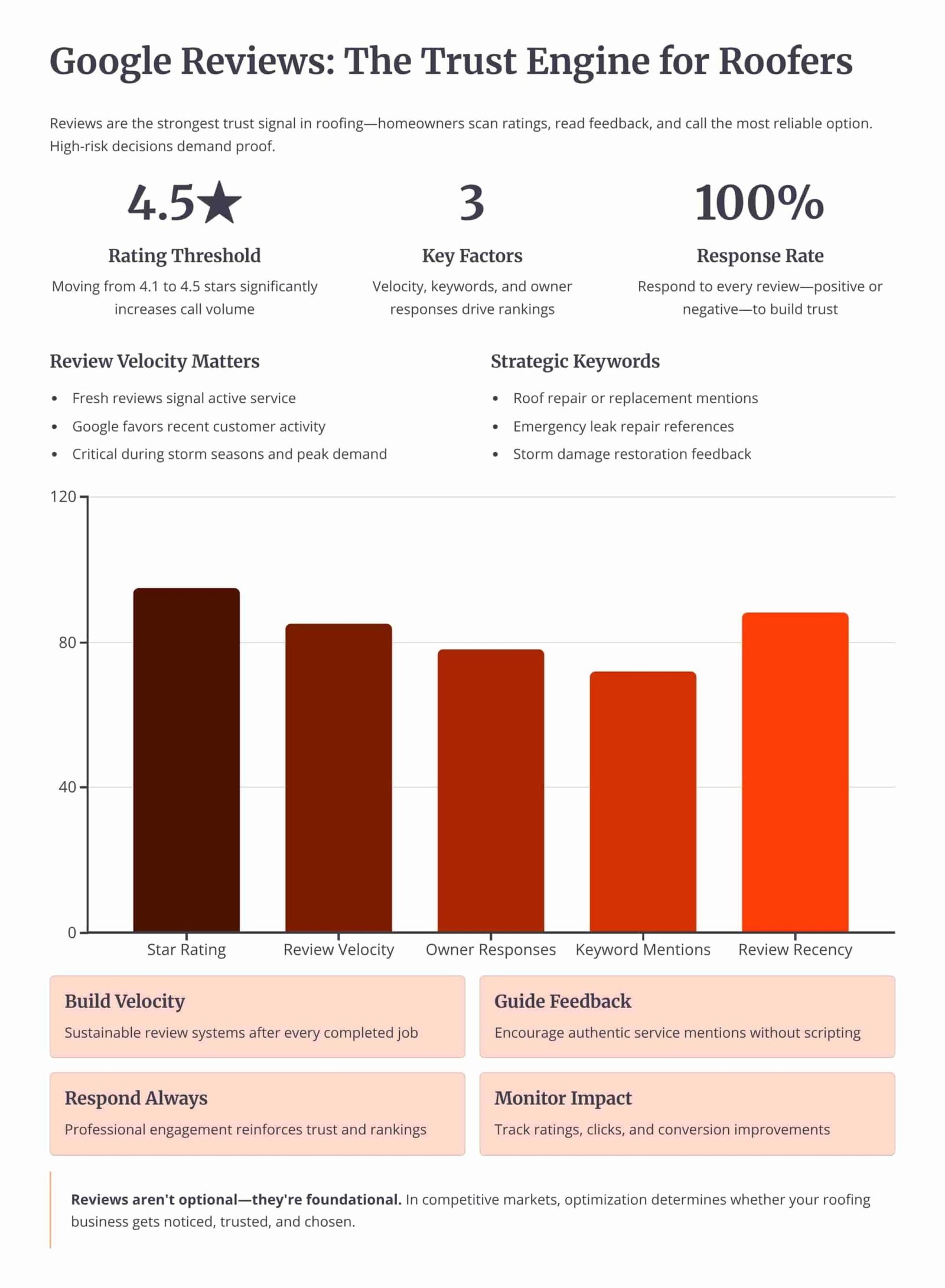
Review Velocity
150+ 5-Star Reviews Generated
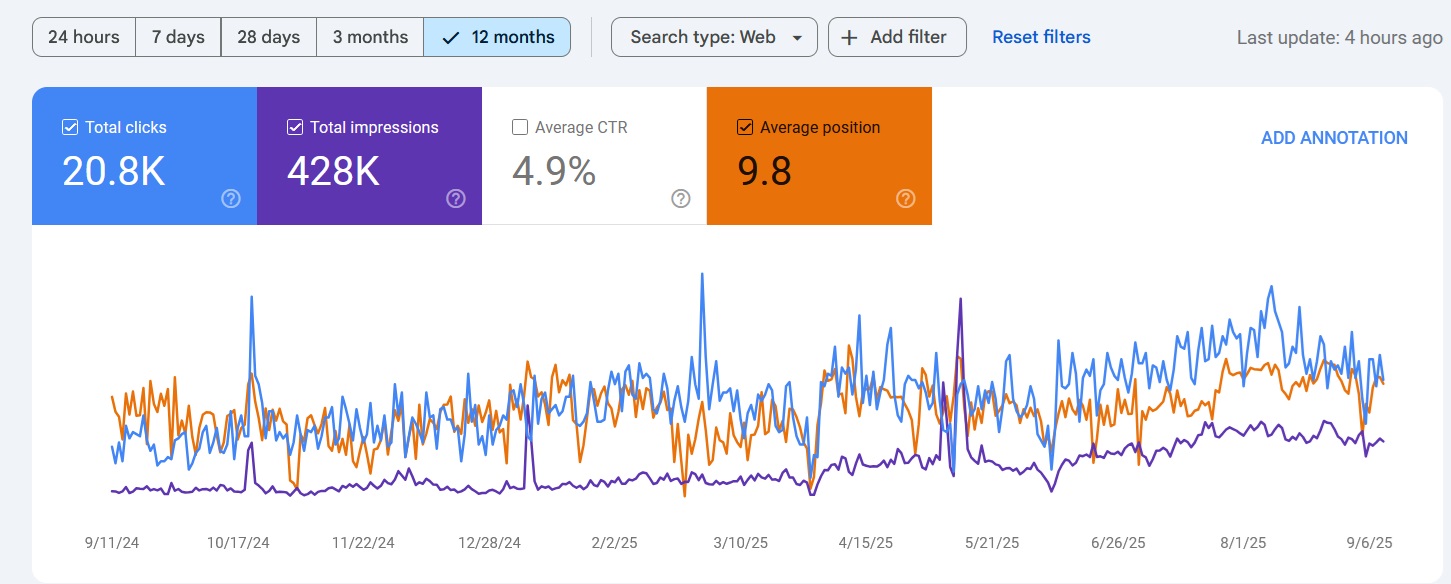
Organic Traffic
300% Increase in Qualified Traffic
What Roofers Say
The 180-Day Roofing Content Roadmap
See how we plan topics, write the posts, and link them to the service pages over a 6-month engagement.
Month 1: Topic and Intent Map
- Question Research: Mapping the informational searches homeowners run before they hire a roofer.
- Page Pairing: Assigning each topic to the service page it will support.
Month 2: First Cluster of Posts
- Pillar and Support: Publishing a pillar topic with the supporting posts that surround it.
- Internal Linking: Linking each post to its service page with intent-based anchor text.
Month 4: Seasonal and Local Posts
- Season Mapping: Adding posts tied to storm season, replacement timing, and winter preparation.
- Local Framing: Writing city and neighborhood posts that name codes, weather, and roof styles.
Month 6: Rankings and Lead Attribution
- Ranking Growth: Tracking positions for the informational keywords the posts target.
- Lead Tracking: Attributing leads to the posts that earned or assisted them.
Owning Search Demand vs Renting It From Lead Platforms
If you pay Angi or Google Ads, you are renting visibility. The moment you stop paying, your pipeline dries up. Ranking blog posts and the website for high-intent local searches builds permanent digital equity.
Shared Lead Platforms (Angi, HomeAdvisor)
- The Race to the Bottom: Shared leads force you to slash prices to win against 5 other roofers.
- Low Intent: Half the time they aren't ready to buy, they were just clicking around online.
Local Search SEO (Our Approach)
- 100% exclusive, direct-to-you inbound calls.
- Highest closing rate. They chose YOU from the local pack.
- Compounding ROI. You don't pay per click.
We Identify Search Intent Using Industry-Leading Data Tools




Expertise Built on Data.
Not Guesswork.
I'm Nizam Ud Deen, and I don't build generic websites. I build search intent engines specifically for the roofing industry.
For years, I've watched roofers burn money on agencies that brag about "traffic" while the phones stay silent. Traffic without intent is worthless. My system maps exactly how homeowners search during storms, when comparing prices, and when they're ready to buy, and intercepts them at every stage.
The No-Brainer Roofing SEO Guarantee
We don't guarantee "traffic" or "rankings." We guarantee high-intent leads.
"We guarantee to generate 15 exclusive, inbound replacement or repair leads per month within the first 180 days, driven entirely by high-intent organic search. If we don't hit that metric, we work for free until we do."
Measuring Success: Leads and Revenue
We don't report on vanity metrics. If traffic goes up but revenue stays flat, the strategy failed. We track the pipeline.
Call Tracking
Every keyword mapped to the exact phone call it generated.
Form Fills
Tracking estimate requests from high-intent local landing pages.
Booked Jobs
Connecting CRM data to SEO efforts to prove actual revenue return.
Cost per Lead
Monitoring organic CPL to ensure it beats shared platform costs.
The Roofing Blog Content Checklist
Run each post through this checklist to confirm it answers a real question, supports a page, and earns a place in the cluster.
Frequently Asked Questions
Clear answers about blog content for roofing companies.
What is blog content for roofers?
How is a blog post different from a roofing guide?
How often should a roofer publish blog posts?
How long should a roofing blog post be?
What topics should a roofing blog cover?
How does blog content support service pages?
What is keyword cannibalization on a roofing blog?
What is content strategy versus content marketing?
Why does local context matter in roofing posts?
Does blog content help pre-qualify roofing leads?
How long before blog content starts generating leads?
How do I measure whether blog content works?
How often should roofing blog posts be refreshed?
Should a roofer write the blog or use done-for-you content?
Get Your Free Roofing Blog Content Audit
We'll review your current blog and your top 3 local competitors to show you exactly where the posts miss the topics and links that win the work.
What You Get:
- Topic Gap ReviewA map of the homeowner questions your blog has not yet answered.
- Internal Link AuditA check of whether posts link to the service pages that close the work.
More Deliverables
- Intent MapA plan that pairs each topic with the search intent and the page it serves.
- Topic Cluster PlanA pillar-and-support layout for the next set of posts.
Claim your free roofing blog content audit today. No commitment required.