
Author Schema for Roofing Content
Add Person schema to every roofing article so Google reads who wrote it, what they know, and where that author is verified across the web.

Free Roofing Author Schema Audit
Most roofing blogs publish under "admin" or no author at all. Get a free audit that checks which articles carry Person schema and which need it added.
What Is Author Schema?
Author schema is a block of JSON-LD structured data, typed as Person, that names the individual who wrote a page and links that person to their credentials and profiles. You place it in the page code so Google can attribute the content to a real, verifiable author.
The Person Type
Author schema uses the schema.org Person type. It declares the author as an entity rather than a line of plain byline text.
Written in JSON-LD
The markup is a JSON-LD script in the page. It sits in the code without changing how the article looks to a homeowner.
Markup, Not Concept
This page covers the markup itself. For the idea of authors as entities, see entity SEO for roofers.
Why Add Author Schema to Roofing Content?
Author schema matters because roofing advice sits in a Your Money or Your Life category, where Google weighs experience, expertise, authoritativeness, and trust before it ranks the page.
It Supports E-E-A-T Signals
- The markup names a real author and ties the article to a credentialed person.
- jobTitle and worksFor state that a licensed contractor stands behind the content.
- sameAs links the author to profiles Google can crawl and verify.
It Feeds the Entity Graph
- The author, the roofing company, and the topics connect into one recognizable entity.
- An audit cited on the source found a large share of roofing sites carry no author schema at all.
- For the concept behind that graph, see entity SEO for roofers.
Which Properties Belong in Author Schema?
Include six core properties on the Person type: name, jobTitle, worksFor, url, image, and sameAs. Each one tells Google a specific fact about the author of the roofing page.
name and jobTitle
name holds the author's full name, such as James Harmon. jobTitle names the credential, such as Licensed Roofing Contractor.
worksFor and url
worksFor links the author to the roofing company as an Organization. url points to the author's own page on the site.
image and sameAs
image holds a real headshot URL. sameAs lists the author's external profiles, such as LinkedIn and the Google Business Profile.
Put a Real Expert Behind Every Article
Anonymous roofing content reads as one more page. We attach Person schema to each article so Google can connect your contractor's name, license, and profiles to the advice on the page.
Call Now For PricingOr call +1 272-207-3231
A Roofing Author Schema Example
Here is a complete Person block for a roofing author, ready to adapt with your own name, company, and profile links. Replace the sample values, then place the script in the page.
<script type="application/ld+json">
{
  "@context": "https://schema.org",
  "@type": "Person",
  "name": "James Harmon",
  "jobTitle": "Licensed Roofing Contractor",
  "url": "https://yourroofingsite.com/about/james-harmon",
  "image": "https://yourroofingsite.com/images/james-harmon.jpg",
  "description": "James Harmon is a licensed roofing contractor with 18 years of experience in residential and commercial roofing across Texas.",
  "worksFor": {
    "@type": "Organization",
    "name": "Harmon Roofing Co.",
    "url": "https://yourroofingsite.com"
  },
  "knowsAbout": [
    "Asphalt Shingle Roofing",
    "Storm Damage Roof Repair",
    "Metal Roofing Installation",
    "Roof Inspections"
  ],
  "sameAs": [
    "https://www.linkedin.com/in/jamesharmon-roofing",
    "https://www.facebook.com/harmonroofing",
    "https://g.co/kgs/yourGBPlink"
  ]
}
</script>
The worksFor object links to the company. For that side of the markup, see organization schema.
How to Add Author Schema to a Roofing Page
Add the markup in four steps: build the Person object, fill the real values, place the script in the page, then test it. The script can sit in the head or the body without changing the design.
Build and Fill the Block
- Start with @type set to Person inside a JSON-LD script.
- Set name to the author's real full name, not "admin" or "team".
- Add jobTitle, url, image, worksFor, and the sameAs profile list.
Place It on Each Article
- Insert the script tag in the head or the body of the article.
- On WordPress, an SEO plugin or a per-author field can output the block.
- Apply the same author to every page that person wrote, not the home page only.
How Does sameAs Verify a Roofing Author?
The sameAs property lists external URLs that confirm the author is the same person across the web, which is how the markup earns trust. At minimum include a LinkedIn URL and a Google Business Profile link.
Profiles Worth Listing
- A LinkedIn profile that names the same person and the same company.
- The roofing company's Google Business Profile link.
- A Facebook business page or a local directory profile.
Keep the Name Consistent
The author name must match exactly across the website, LinkedIn, the Google Business Profile, and any directories. For the property in depth, see sameAs entity links.
What Does knowsAbout Add to Author Schema?
knowsAbout is an optional array that names the roofing topics the author is qualified to write about, such as storm damage or metal roofing. It states the author's subject expertise in the markup.
Name Specific Roofing Topics
- List concrete areas, such as Asphalt Shingle Roofing and Roof Inspections.
- Match the topics to the articles the author actually writes.
- Avoid padding the array with topics outside the author's work.
A Property With Its Own Page
knowsAbout has more detail than fits here. See the knowsAbout property for how to scope the values to a roofing site.
Trust Signals Compound Over Time
Author markup is not a one-time switch. As Google crawls the linked profiles and reads consistent topical signals across articles, the author entity strengthens. Early implementation gives that recognition more time to build.
Call Now For PricingOr call +1 272-207-3231
How Does Author Schema Connect to Article Schema?
Author schema rarely stands alone: the Person block usually sits inside the author property of an Article block, so the page declares both what it is and who wrote it.
The Author Property of Article
On a roofing blog post, the Article block carries an author property. You set that property to the Person object so the byline becomes a verifiable entity.
It Links to the Organization
The Person's worksFor points to the roofing company. For that side of the markup, see organization schema.
How to Test Author Schema in the Rich Results Test
Validate the markup with Google's Rich Results Test, which parses the JSON-LD and reports errors before the page goes live. Paste the URL or the code, then read the detected items.
Run the URL or Code
Open the Rich Results Test, paste the page URL or the raw JSON-LD, and run it to see the parsed structured data.
Read the Detected Items
Confirm the tool reads a Person with the name, jobTitle, and sameAs values you set, and fix any parsing errors it flags.
Check Eligibility Limits
Person markup is not its own rich result. For what the tool can and cannot surface, see rich results eligibility.
Common Author Schema Mistakes Roofers Make
Author markup goes wrong through four recurring mistakes, each one fixable in the JSON-LD before the page ships.
Identity Errors
- Fake author personas with no real person behind the name.
- Missing sameAs links, so Google cannot verify the author anywhere.
- A name that differs across the site, LinkedIn, and the Google Business Profile.
Markup Errors
- Conflicting schema blocks on one page that contradict each other.
- A worksFor that does not match the Organization block on the site.
- An image URL that points to a stock photo instead of a real headshot.
Proof of Performance
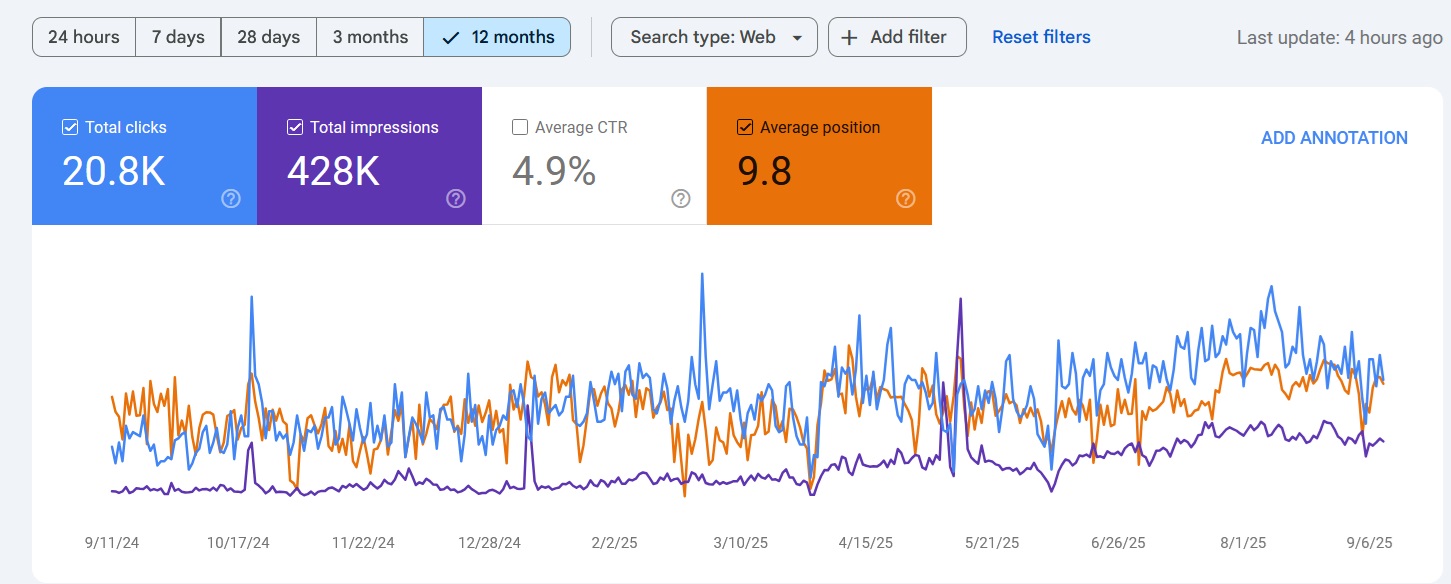
Results from roofing campaigns that rank in local search.
Map Pack Rankings
Ranked in Local Search Within 90 Days
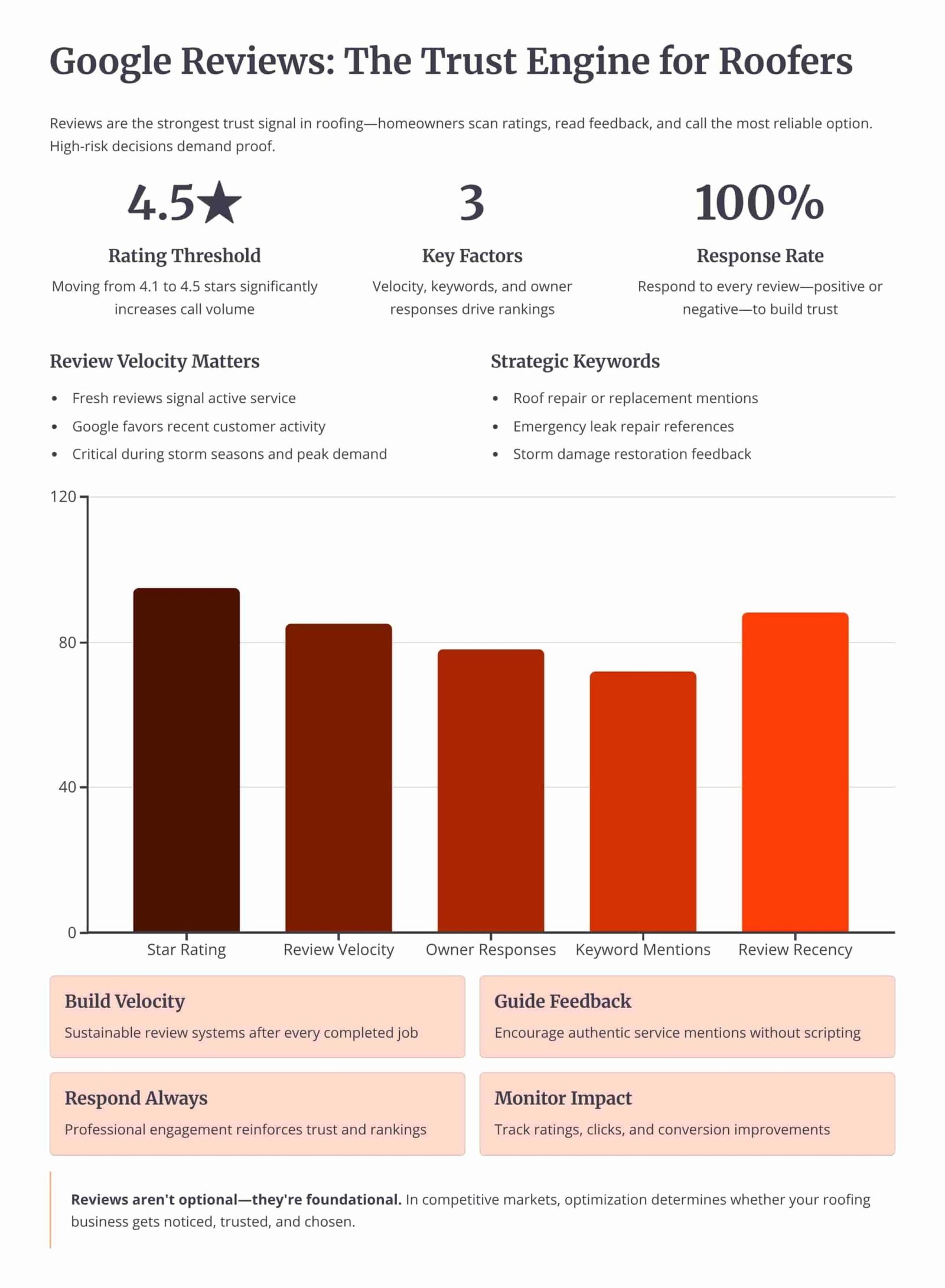
Review Velocity
150+ 5-Star Reviews Generated
Organic Traffic
300% Increase in Qualified Traffic
What Roofers Say
The 180-Day Roofing SEO Roadmap
See how we optimize the profile, build the website, and earn local-pack rankings over a 6-month engagement.
Month 1: Profile Audit and Setup
- Category and Field Fixes: Setting the primary category, secondary categories, description, services, and service areas.
- NAP Cleanup: Correcting the name, address, and phone number across the profile, the website, and the directory citations.
Month 2: Reviews and Media
- Review System: Setting up a steady request flow and replying to every review, positive and negative.
- Photo and Post Cadence: Uploading job photos from each completed roof and publishing profile posts twice a month.
Month 4: Citations and Site Support
- Citation Building: Adding consistent listings on the directories that feed prominence for a service area.
- Service-Area Pages: Building city pages on the website that reinforce the profile's service areas.
Month 6: Local-Pack Rankings and Leads
- Map-Pack Position: Reaching the top 3 of the local pack for core roofing queries in the served cities.
- Lead Tracking: Measuring calls and direction requests from the profile against the cost of paid leads.
Owning Search Demand vs Renting It From Lead Platforms
If you pay Angi or Google Ads, you are renting visibility. The moment you stop paying, your pipeline dries up. Ranking the profile and the website for high-intent local searches builds permanent digital equity.
Shared Lead Platforms (Angi, HomeAdvisor)
- The Race to the Bottom: Shared leads force you to slash prices to win against 5 other roofers.
- Low Intent: Half the time they aren't ready to buy, they were just clicking around online.
Local Search SEO (Our Approach)
- 100% exclusive, direct-to-you inbound calls.
- Highest closing rate. They chose YOU from the local pack.
- Compounding ROI. You don't pay per click.
We Identify Search Intent Using Industry-Leading Data Tools




Expertise Built on Data.
Not Guesswork.
I'm Nizam Ud Deen, and I don't build generic websites. I build search intent engines specifically for the roofing industry.
For years, I've watched roofers burn money on agencies that brag about "traffic" while the phones stay silent. Traffic without intent is worthless. My system maps exactly how homeowners search during storms, when comparing prices, and when they're ready to buy, and intercepts them at every stage.
The No-Brainer Roofing SEO Guarantee
We don't guarantee "traffic" or "rankings." We guarantee high-intent leads.
"We guarantee to generate 15 exclusive, inbound replacement or repair leads per month within the first 180 days, driven entirely by high-intent organic search. If we don't hit that metric, we work for free until we do."
Measuring Success: Leads and Revenue
We don't report on vanity metrics. If traffic goes up but revenue stays flat, the strategy failed. We track the pipeline.
Call Tracking
Every keyword mapped to the exact phone call it generated.
Form Fills
Tracking estimate requests from high-intent local landing pages.
Booked Jobs
Connecting CRM data to SEO efforts to prove actual revenue return.
Cost per Lead
Monitoring organic CPL to ensure it beats shared platform costs.
The Roofing Author Schema Checklist
Run each author block through this checklist to confirm the markup attributes the roofing content to a verifiable person.
Frequently Asked Questions
Clear answers about author schema for roofing content.
What is author schema?
Which schema type do I use for an author?
What properties does author schema need?
Where do I place the author schema code?
What does the sameAs property do?
Does author schema help E-E-A-T?
What does knowsAbout do in author schema?
Can I use a fake author name?
How do I link the author to my roofing company?
How do I test author schema?
Does author schema produce a rich result?
Should every roofing blog post have an author?
Why must the author name match across profiles?
How long until author schema shows an effect?
Get Your Free Roofing Author Schema Audit
We'll review which roofing articles carry Person schema, check the sameAs links and the worksFor connection, and show where author markup is missing.
What You Get:
- Author Markup ReviewA check of which articles carry Person schema and which need it added.
- sameAs Link CheckA look at whether LinkedIn and the Google Business Profile are present and consistent.
More Deliverables
- Name Consistency ScanWhere the author name differs between the site, profiles, and directories.
- Ready-to-Paste BlockA Person JSON-LD block filled with your author's real details.
Claim your free roofing author schema audit today. No commitment required.