
Spam Link Avoidance for Roofers
Spot the risky link sources and link schemes that trigger a penalty, then build a clean backlink profile that Google trusts instead of devalues.
Free Roofing Backlink Risk Check
Many roofing sites carry toxic links from a past agency or a cheap link package. Get a free audit that flags the risky domains and shows what to keep, remove, or disavow.
What Is a Spam Link?
A spam link is a manipulative or low-quality backlink built to inflate a site's authority artificially, rather than earned from a relevant source. Google can ignore or devalue these links, and a cluster of them can drag a roofing site down.
Manipulative Intent
A spam link exists to game the algorithm, not to point a reader to a useful roofing resource. The intent is what separates it from a real citation.
Common Roofing Examples
Casino sites, foreign-language blogs, bulk directory dumps, and cheap link packages from a freelance marketplace are the patterns roofers see most.
Spam vs Low Quality
A spam link is deceptive by design. A natural low-quality link is just irrelevant. Both add little value, but spam links carry the penalty risk.
Why Are Spam Links Dangerous for a Roofing Site?
Spam links are dangerous because Google detects the unnatural pattern and devalues the pages they point to, instead of rewarding them. The damage is gradual and erodes the trust signals a roofing site spends months earning.
What a Roofer Stands to Lose
- Local pack visibility for core roofing queries in the service area.
- Service page rankings for high-value repair and replacement searches.
- Topical authority that the site has built over time.
- Indexing priority and the conversion trust that turns clicks into calls.
The Damage Is Gradual
- A penalty rarely arrives as one sudden drop, so the cause is easy to miss.
- Trust signals erode link by link as the bad profile grows.
- Earned authority lives in the trust signals for roofers silo, where credibility is the asset spam links put at risk.
What Spam Link Patterns Show Up in Roofing SEO?
Four patterns account for most of the spam links a roofing site picks up: paid links, comment and forum spam, link farms, and competitor attacks. Knowing the shape of each one makes it easier to spot in an audit.
Paid and PBN Links
Backlinks bought from irrelevant sites or a private blog network. Cheap packages from a freelance marketplace fall in this group and read as paid placements.
Comment and Forum Spam
Links dropped in blog comments and forum posts with over-optimized anchors. The host page has no editorial review, so the link carries no real endorsement.
Link Farms and Bulk Dumps
Mass directory submissions and link farms that exist only to pass links. A sudden spike of these from a competitor attack is a fourth pattern to watch.
Protect the Rankings You Built
A few months of clean ranking work can be undone by a bad link package bought to take a shortcut. We audit the profile and earn links the white-hat way so the rankings hold.
Call Now For PricingOr call +1 272-207-3231
What Spam Signals Does Google Detect?
Google reads the pattern across the whole profile, not just one link, and flags irrelevant domains, over-optimized anchors, and unnatural velocity. These signals are the ones an audit should screen for first.
Signals on the Source
- Irrelevant domains with no roofing, construction, or home-services connection.
- Site-wide footer or sidebar links that repeat across every page of a site.
- Low-content host pages that exist only to hold outbound links.
Signals on the Pattern
- Over-optimized anchor text, where exact-match roofing keywords repeat far too often.
- Unnatural link velocity, such as a sudden spike of new domains in a short window.
- A profile that grows from one link type only, instead of a natural mix.
How Spam Links Hurt Roofing SEO Specifically
For a roofing site the harm lands on the local pack, the service pages, and the conversion trust that turns a click into a call. The local nature of roofing makes these the exact assets a spam profile undermines.
Local Pack Devaluation
Maps and local pack rankings can slip when the link profile reads as manipulated. Citation work and the local angle live in local SEO for roofers.
Service Page Devaluation
High-value repair and replacement pages lose ground for their core queries when the links pointing to them stop carrying trust.
Lost Conversion Trust
Reduced authority weakens the credibility a homeowner senses before calling. A clean profile supports the conversion pages instead of dragging on them.
How Do I Identify Spam Links in My Profile?
Identify spam links through four checks: a manual domain review, an SEO tool audit, Search Console signals, and an anchor text analysis. Run them together so one method confirms the next.
Manual and Tool Review
- Review referring domains by hand for gambling, pharmaceutical, or foreign-language sites with no roofing tie.
- Run a tool audit in Ahrefs or Semrush and read the toxicity scoring as a starting filter, not a verdict.
- Open the flagged host pages and judge whether a real reader would ever land there.
Search Console and Anchors
- Watch Google Search Console for unexpected spikes in new referring domains.
- Analyze anchor text for over-optimization, where exact-match keywords dominate the mix.
- A profile audit is its own discipline. See link profile audits for roofers.
How Do I Avoid Spam Links in the First Place?
Avoid spam links by building relevance-first, where every source is vetted before outreach and no link is bought or automated. Relevance to roofing is the rule that keeps the profile clean.
Earn From Relevant Sources
- Focus on roofing blogs, contractor associations, suppliers, and reputable local directories.
- Avoid automation and mass submissions, which produce the velocity Google flags.
- Vet every source before outreach, the same way you would screen a subcontractor.
Build From Real Roofing Links
- Trade and industry links are covered in industry backlinks for roofers.
- Supplier and manufacturer links are detailed in supplier backlinks.
- The full set of safe sources sits in the roofing link building hub.
What Anchor Text Mix Keeps a Profile Safe?
A safe profile leans on branded and URL anchors, with generic and keyword anchors as the smaller share. The exact split varies, but the principle is that exact-match keyword anchors stay the minority.
A Workable Anchor Split
- Branded anchors, around 40 percent, using the company name and its variations.
- URL anchors, around 30 percent, using the bare domain.
- Generic anchors, around 20 percent, such as "learn more" or "visit the site".
- Keyword anchors, around 10 percent, using exact or partial-match roofing terms.
Why the Mix Matters
A profile loaded with exact-match keyword anchors reads as manipulated, since natural links rarely all use the same commercial phrase. Branded and URL anchors look the way real citations look, so they keep the profile believable.
One Relevant Link Beats a Hundred Spam Links
A single backlink from a trusted roofing source carries more weight than a hundred links from irrelevant sites. We earn the relevant links and leave the volume game to the sites that get penalized.
Call Now For PricingOr call +1 272-207-3231
What Do I Do If I Already Have Spam Links?
Start with a full backlink audit, attempt manual removal first, document every attempt, and treat the disavow tool as the last resort. The order matters, because disavow is a blunt instrument.
Audit and Remove
- Run a full backlink audit in Ahrefs or Semrush and export the toxic domains.
- Attempt manual removal by contacting the site owner or webmaster first.
- Document every removal request, since proof of effort matters in a recovery.
Disavow as a Last Resort
- Use the Google Disavow Tool only after manual removal fails.
- Disavow at the domain level for clear toxic clusters, not single URLs.
- Monitor the recovery over roughly 60 to 90 days before judging the result.
When Should a Roofer Use the Disavow Tool?
Use the disavow tool only in narrow cases: after manual removal fails, after a negative SEO attack, or after a manual action notice from Google. Most clean roofing sites never need it.
When It Is Justified
- Manual removal attempts on toxic links have failed or gone unanswered.
- A clear cluster of links from a PBN or link farm points at the site.
- A negative SEO attack added foreign or adult-site links you never built.
- Google sent a manual action notice tied to unnatural links.
How to Use It Safely
Export the link list, attempt manual removal first, and document those attempts. Disavow at the domain level rather than by single URL, then monitor for 60 to 90 days. A clean site usually does not need the tool at all, so reach for it only when the evidence is clear.
How Do I Vet a Backlink Source Before Outreach?
Vet every source against four questions: is it relevant, does it have real traffic, does it hold editorial standards, and is its own backlink profile clean. A source that fails any one is not worth the link.
Relevance and Traffic
- Confirm the domain relates to roofing, construction, or home improvement.
- Verify it pulls real organic traffic, not just an inflated authority score.
- A site with no traffic and a high score is a common dressed-up spam source.
Editorial Quality and Profile
- Assess editorial standards and the quality of the content already published.
- Review the source domain's own backlink profile for spam it has accepted.
- Confirm there is no undisclosed payment behind the placement.
How Do I Recognize a Negative SEO Attack?
A negative SEO attack shows up as a sudden spike of toxic links you never built, often foreign-language, adult, or gambling sites with exact-match anchors. The response is to document, monitor, and prepare a disavow file.
Red Flags to Watch
- A sudden spike in referring domains inside Google Search Console.
- A wave of foreign-language links with no relation to the service area.
- Links from adult or gambling sites you would never have pursued.
- A sharp rise in exact-match commercial anchors.
The Immediate Response
- Document the spike and export the new referring domains.
- Set monitoring alerts so further additions surface quickly.
- Prepare a disavow file and keep building a strong positive profile alongside it.
What Does an Ongoing Prevention Routine Look Like?
Prevention runs on a cadence: monthly audits, link velocity monitoring, competitor comparison, and strict outreach guidelines. A standing routine catches problems while they are small.
Monthly and Ongoing
- Run a monthly backlink audit in Ahrefs or Semrush and update the disavow file.
- Monitor link velocity so a sudden acquisition rate is caught early.
- Track new referring domains weekly during an active campaign.
Quarterly Review
- Compare the profile against local competitors for unusual gaps or spikes.
- Reassess overall profile health and the anchor text mix.
- Update outreach guidelines and check for any manual actions.
Proof of Performance
Results from roofing campaigns that rank in local search.
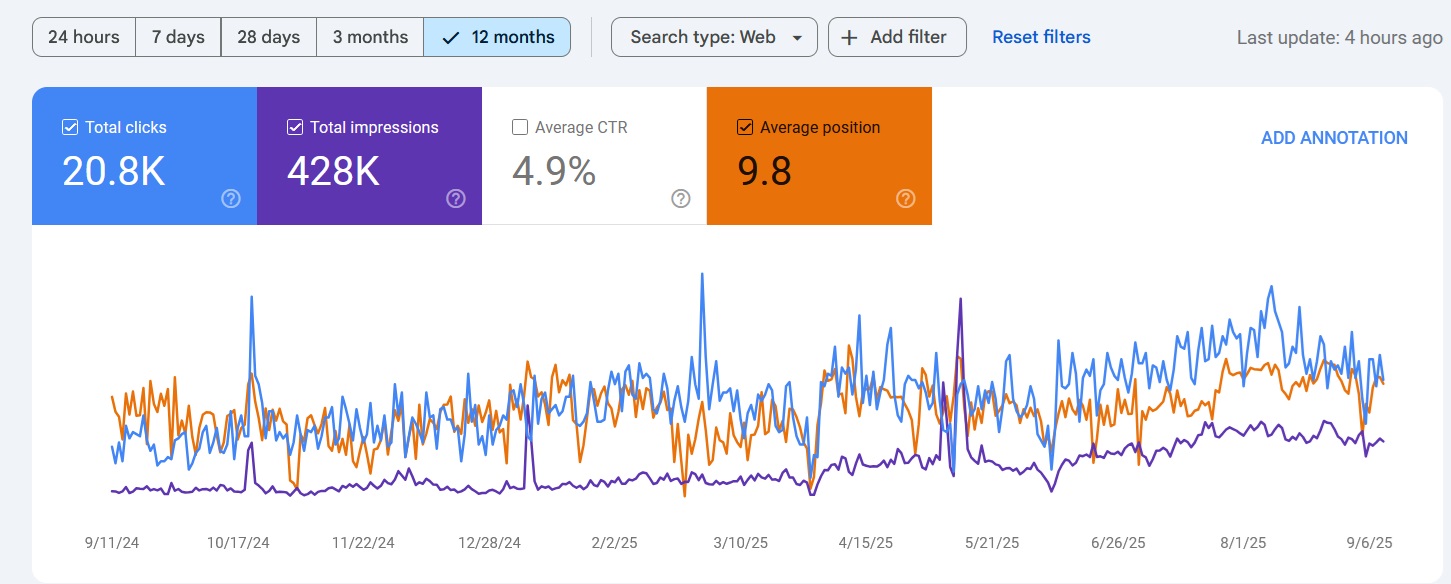
Map Pack Rankings
Ranked in Local Search Within 90 Days
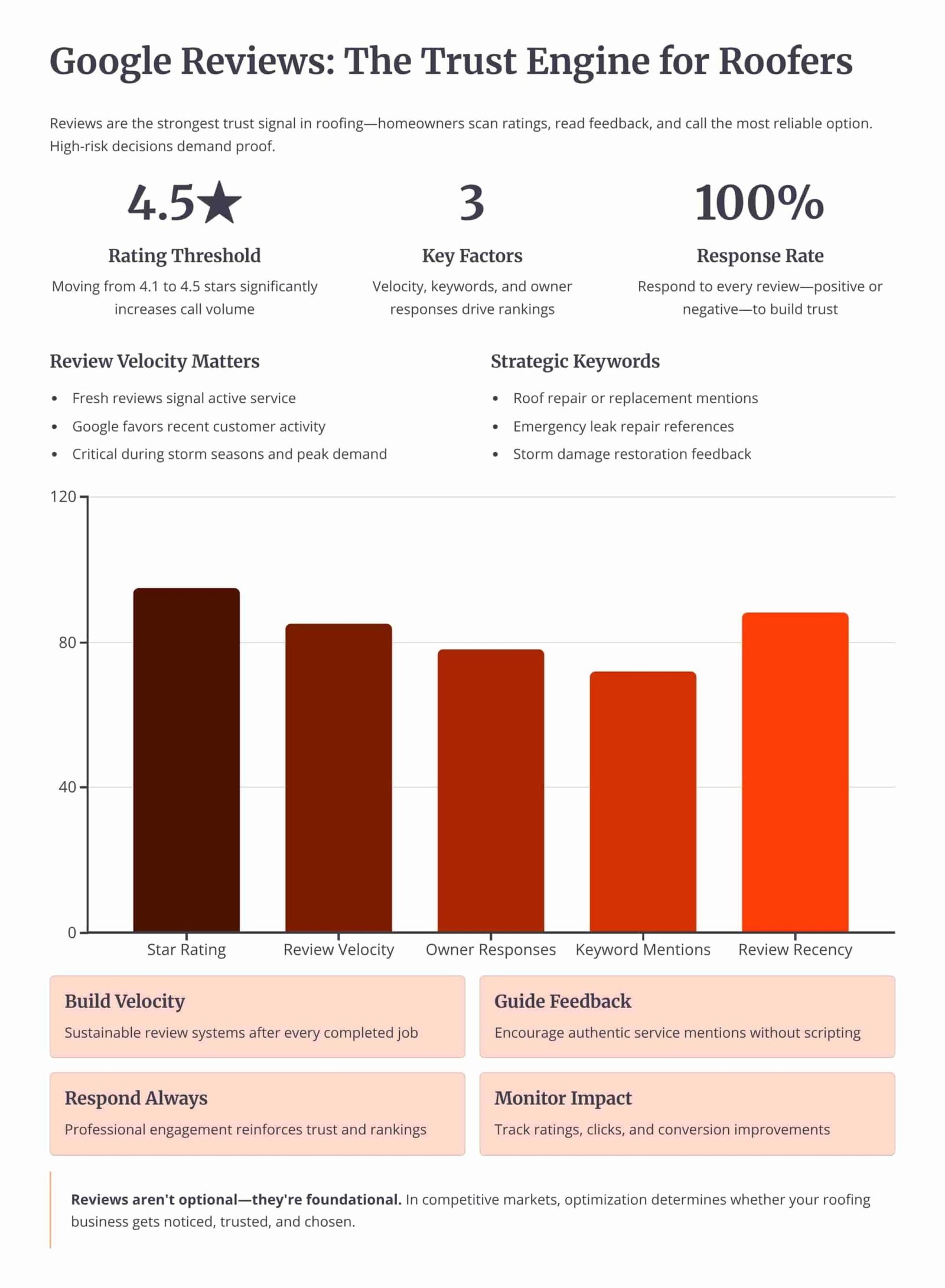
Review Velocity
150+ 5-Star Reviews Generated
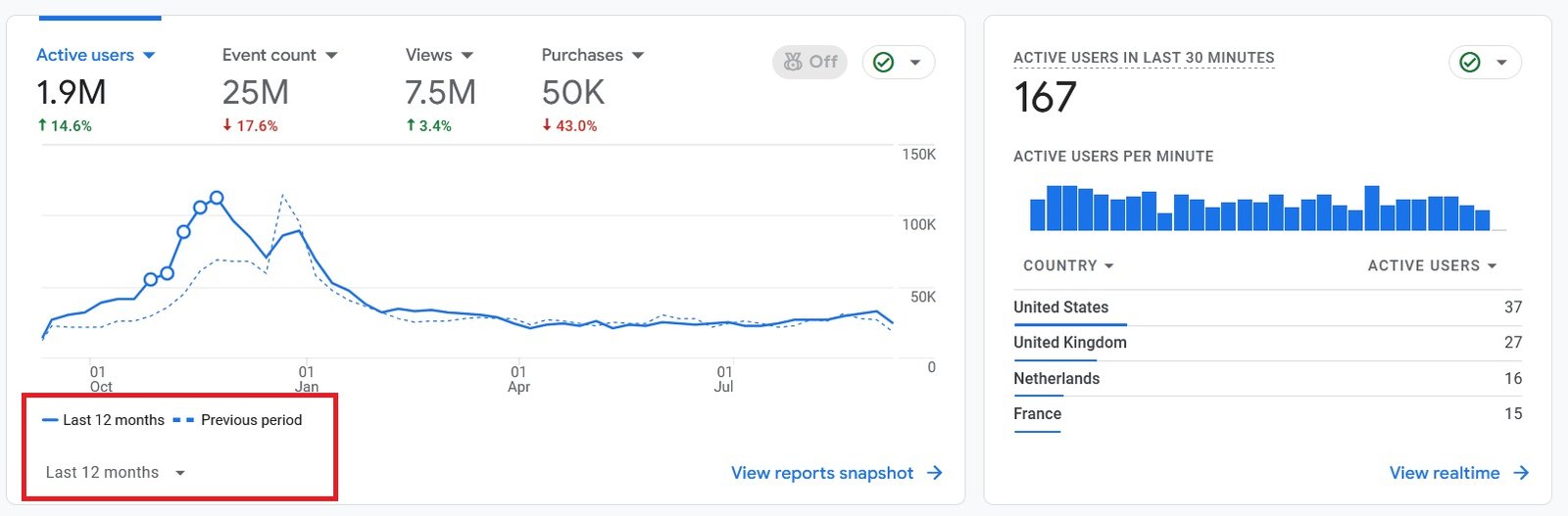
Organic Traffic
300% Increase in Qualified Traffic
What Roofers Say
The 180-Day Roofing SEO Roadmap
See how we audit the link profile, earn relevant links, and protect the rankings over a 6-month engagement.
Month 1: Profile Audit and Cleanup
- Backlink Audit: Exporting the full profile and flagging toxic domains, over-optimized anchors, and unnatural velocity.
- Removal and Disavow: Attempting manual removal first, documenting attempts, then disavowing clear toxic clusters at the domain level.
Month 2: Relevant Link Foundations
- Source Vetting: Screening every prospect for relevance, real traffic, editorial standards, and a clean backlink profile.
- Anchor Planning: Setting an anchor mix that keeps branded and URL anchors dominant and exact-match keywords the minority.
Month 4: Earning and Monitoring
- Resource Content: Publishing maintenance checklists and material guides that earn links from blogs, news, and insurance pages.
- Velocity Monitoring: Tracking new referring domains weekly so any spike or competitor attack surfaces fast.
Month 6: A Profile Google Trusts
- Clean Profile Health: A backlink profile built on relevant sources, with toxic clusters removed and anchors balanced.
- Standing Routine: A monthly audit and quarterly review that keep the profile safe as it grows.
Earning Links vs Buying Them
A bought link package looks like a shortcut until the penalty arrives. Earning relevant links from real roofing sources builds authority that holds, with no toxic cluster waiting to drag the site down.
Bought Links and Cheap Packages
- Penalty Risk: Paid and PBN links form the exact pattern Google devalues, putting the rankings at risk.
- Cleanup Cost: Removing and disavowing a bad profile takes months, often longer than earning clean links would have.
Earned Relevant Links (Our Approach)
- Links from roofing-relevant sources Google trusts.
- No toxic cluster to clean up later.
- Authority that compounds instead of decaying.
We Identify Search Intent Using Industry-Leading Data Tools




Expertise Built on Data.
Not Guesswork.
I'm Nizam Ud Deen, and I don't build generic websites. I build search intent engines specifically for the roofing industry.
For years, I've watched roofers burn money on agencies that brag about "traffic" while the phones stay silent. Traffic without intent is worthless. My system maps exactly how homeowners search during storms, when comparing prices, and when they're ready to buy, and intercepts them at every stage.
The No-Brainer Roofing SEO Guarantee
We don't guarantee "traffic" or "rankings." We guarantee high-intent leads.
"We guarantee to generate 15 exclusive, inbound replacement or repair leads per month within the first 180 days, driven entirely by high-intent organic search. If we don't hit that metric, we work for free until we do."
Measuring Success: Leads and Revenue
We don't report on vanity metrics. If traffic goes up but revenue stays flat, the strategy failed. We track the pipeline.
Call Tracking
Every keyword mapped to the exact phone call it generated.
Form Fills
Tracking estimate requests from high-intent local landing pages.
Booked Jobs
Connecting CRM data to SEO efforts to prove actual revenue return.
Cost per Lead
Monitoring organic CPL to ensure it beats shared platform costs.
The Roofing Spam Link Avoidance Checklist
Run every link opportunity and the whole profile through this checklist before and after a campaign.
Frequently Asked Questions
Clear answers about spam link avoidance for roofing sites.
What is a spam link in roofing SEO?
Can spam links get a roofing site penalized?
How do I know if my roofing backlinks are spam?
What anchor text signals spam to Google?
Are cheap link packages safe for roofers?
What do I do if I already have spam links?
When should I use the Google Disavow Tool?
Should I disavow links right away?
What is a negative SEO attack on a roofing site?
How do I vet a backlink source before outreach?
What anchor text mix is safe for roofers?
How often should I audit my roofing backlink profile?
What content earns clean links for a roofing site?
Is a low-quality link the same as a spam link?
Get Your Free Roofing Backlink Risk Check
We'll audit the backlink profile across your roofing site, flag the toxic domains and over-optimized anchors, and show what to keep, remove, or disavow.
What You Get:
- Toxic Link FlagA list of irrelevant and risky referring domains in your current profile.
- Anchor Text ReviewA read on your anchor mix and whether exact-match keywords run too high.
More Deliverables
- Removal and Disavow PlanA clear order for manual removal first and disavow only where it is justified.
- Clean Link TargetsRelevant roofing sources to earn links from once the profile is cleaned.
Claim your free roofing backlink risk check today. No commitment required.