
Semantic Density for Roofing Content
Cover a roofing topic with the full set of related terms and entities, so a search engine reads the page as a complete answer rather than a thin keyword match.

Free Roofing Topic Coverage Audit
Most roofing pages mention a service once and stop. Get a free audit that maps the entities and related terms your top pages are missing, with a competitor comparison.
What Is Semantic Density?
Semantic density is how thoroughly a page covers a topic through the related terms, entities, and concepts that belong to it, not how many times a keyword repeats. A roof replacement page reaches it by covering tear-off, underlayment, ventilation, flashing, shingle types, warranties, permits, and cost factors.
Depth of Meaning
The page explores the topic in full rather than naming it in passing. Each related concept is explained where a homeowner would expect to read it.
Entity Coverage
Materials, services, and problems appear together and connect logically. Asphalt shingles, ice dams, and attic ventilation belong on the same roofing page.
Contextual Completeness
The related questions a reader carries are answered within the page, so the topic does not leave open gaps. This is the basis of entity SEO for roofers.
Semantic Density vs Keyword Density
The two measure different things: keyword density counts how often a phrase repeats, while semantic density measures how completely the topic is covered. Search engines moved toward the second a long time ago.
Keyword Density Repeats a Phrase
- It counts how many times "roof replacement" appears in the copy.
- Repeating the phrase past a natural rate reads as stuffing and can lower trust in the page.
- A high count tells a search engine nothing about whether the topic was answered.
Semantic Density Covers the Topic
- It looks for the related terms a complete answer would contain.
- A roof replacement page covers decking, underlayment, drip edge, and ventilation, not the phrase alone.
- Breadth of coverage signals depth, which supports the page in search. See on-page SEO for roofers.
The Three Parts of Semantic Density
Semantic density rests on three parts working together: depth of meaning, entity coverage, and contextual completeness. A page that is missing any one of them reads as thin to a search engine.
Depth of Meaning
A complete exploration of the subject, not a surface mention. A leak repair page explains causes, diagnosis, and the fix, not just the service name.
Entity Coverage
The materials, services, and problems of the topic, named and connected. Metal panels, snow load, and fastener corrosion belong on the same page.
Contextual Completeness
Every related concept handled inside its context. A warranty section sits next to the materials it covers, so the reader does not leave with an open question.
Why Semantic Density Matters for Roofing Sites
Covering a topic in full matters because it builds topical authority, earns crawl attention, and gives a homeowner the confidence to call. A page that answers the whole question outperforms one that names the service and stops.
Search Engine Signals
- Complete coverage supports topical authority across the roofing site.
- Content-rich pages tend to draw more crawl attention than thin ones.
- Coverage builds toward authority over the whole roofing subject. See the entity SEO hub.
Reader Confidence and Conversion
- A thorough page answers a homeowner's open questions before they leave.
- Roofer Quest data on engaged roofing pages shows longer reading time and higher lead quality than thin pages, qualified as a range across projects.
- The reader who finds every answer on one page is readier to call than one who must search again.
Cover the Topic, Earn the Call
A roofing page that answers the whole question keeps the reader on the page and moves them toward a call. We build pages that cover the topic in full so the search engine and the homeowner both read depth.
Call Now For PricingOr call +1 272-207-3231
How to Build Semantic Density on a Roofing Service Page
Build coverage in a fixed order of six sections: problem triggers, root causes, material options, process steps, risk factors, and cost considerations. Each section adds the entities a complete answer needs.
The Six-Section Coverage Frame
- Problem triggers: what creates the need, such as a storm or an aging roof.
- Root causes: why the problem occurs, such as failed flashing or worn underlayment.
- Material options: the products that solve it, named by type.
- Process steps: how the work is performed, in order.
- Risk factors: the complications that can arise.
- Cost considerations: what moves the price for the homeowner.
A Worked Example
A roof leak repair page that names ceiling stains and missing shingles as triggers, failed flashing as a cause, sealant and replacement shingles as options, the inspection and repair steps, hidden decking rot as a risk, and access and extent as cost factors covers the topic in full.
How Semantic Density Fixes Duplicate Location Pages
Duplicate city pages happen when only the city name changes and the rest of the copy stays identical. Semantic density solves it by weaving local entities into each page so the coverage is genuinely different.
The Duplicate-Page Problem
- Swapping the city into a template leaves near-identical pages.
- Search engines struggle to tell which thin page answers which local query.
- The pages compete with each other instead of ranking on their own.
Local Entities Make Each Page Distinct
- A Dallas page covers heat impact on shingles, hail frequency, and local building codes.
- A northern page covers ice dams, snow load, and freeze-thaw cycles instead.
- The local entities make the coverage real, not a name swap. See local SEO for roofers.
How Semantic Density Supports E-E-A-T
Covering a topic in full supports experience, expertise, authoritativeness, and trust, because the detail only a working roofer would include shows on the page. Thin copy cannot signal the same depth.
Detail That Signals Expertise
- Specifics a professional knows, such as proper underlayment overlap or fastener spacing.
- Entity coverage that connects materials, problems, and fixes.
- Accurate, complete information across the page, not a generic summary.
Authority Across Many Pages
When several roofing pages each cover their topic in full, the site reads as authoritative on roofing as a whole. The depth compounds across the silo rather than sitting on one page.
How to Match Semantic Density to Search Intent
Coverage must follow the intent behind the query: informational, commercial, or transactional. The same topic needs different entities on a guide page than on a service page.
Informational Intent
A homeowner researching a problem wants explanation. The page covers causes, signs, and options in depth, fitting a guide or a cost page.
Commercial Intent
A homeowner comparing options wants the differences spelled out. The page covers material types, warranties, and trade-offs side by side.
Transactional Intent
A homeowner ready to hire wants the hiring concerns answered. The page covers process, timeline, licensing, and what happens on the day.
Depth Costs Less Than Ads
A page that covers the topic in full keeps ranking and earning calls without a per-click charge, against 50 to 150 dollars for paid roofing leads. Build the coverage once and keep the visit.
Call Now For PricingOr call +1 272-207-3231
Common Semantic Density Mistakes Roofers Make
Roofing pages lose coverage through six recurring mistakes, each one fixable by adding the entities the topic needs.
Coverage and Entity Gaps
- Generic service descriptions with no roofing-specific entities.
- Chasing keyword count instead of topic coverage.
- Missing the relationships that connect materials, problems, and fixes.
Thin and Duplicate Content
- Location pages that change only the city name.
- Blog posts that stay on the surface of a roofing topic.
- Skipping the common questions a homeowner actually asks.
How Schema and Voice Search Reinforce Semantic Density
Two channels extend the coverage on the page: structured data names the entities for a search engine, and natural-language questions reach voice and snippet results.
Structured Data Names the Entities
Schema markup identifies the services, materials, and locations on the page in a form a search engine reads directly. It reinforces the entities the copy already covers rather than replacing them.
Natural Questions Reach Voice Search
A page that answers full questions in plain language matches how people speak to a voice assistant. The same depth that ranks the page can also earn a featured snippet.
Proof of Performance
Results from roofing campaigns that rank in local search.
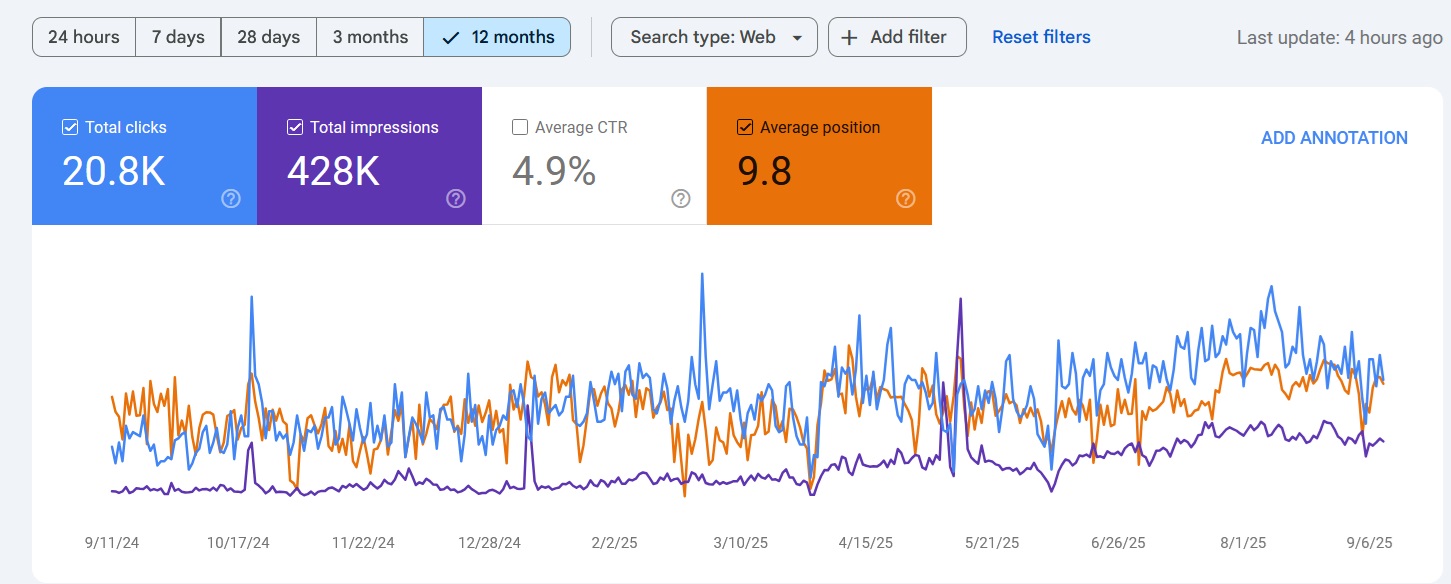
Map Pack Rankings
Ranked in Local Search Within 90 Days
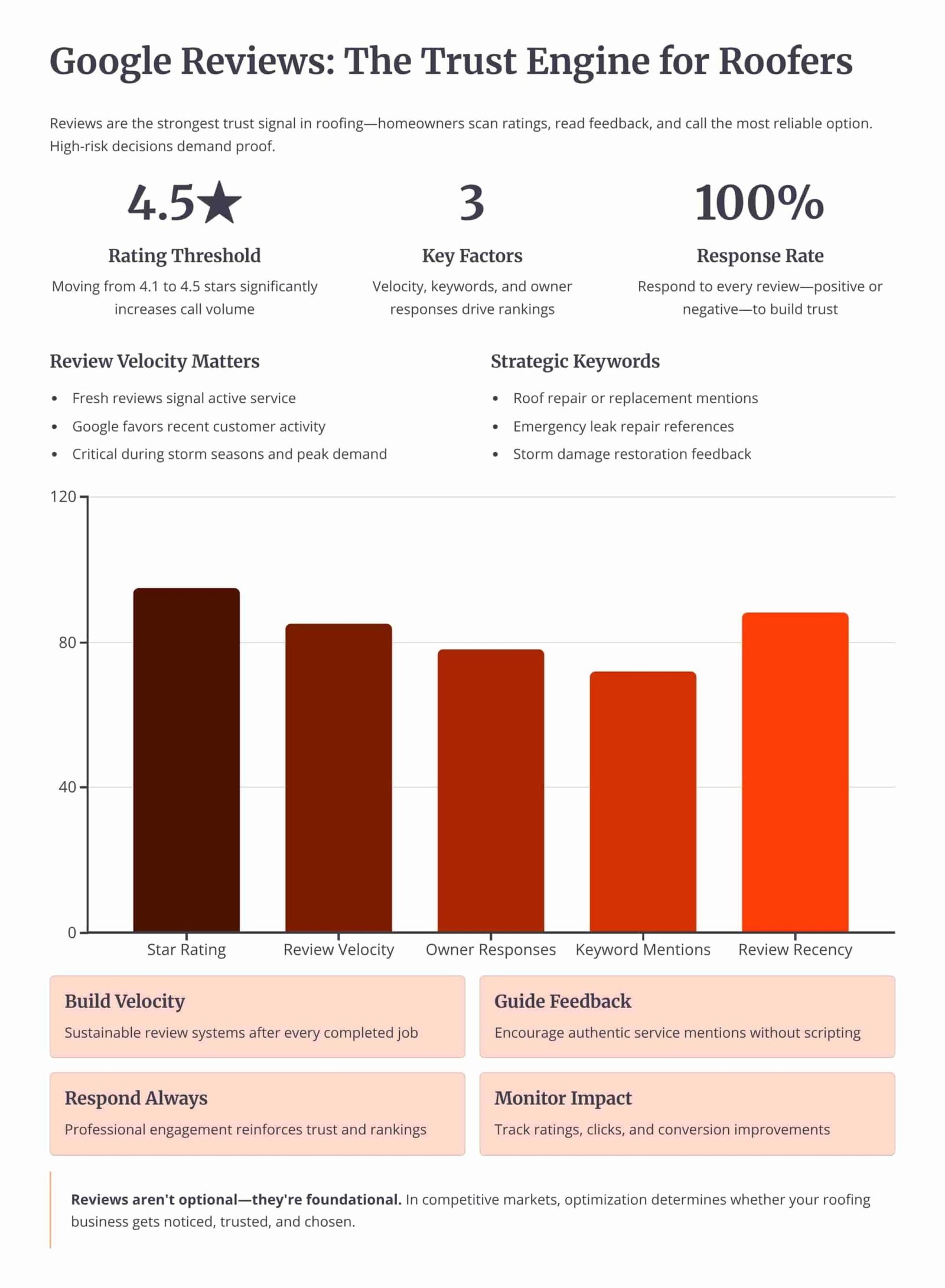
Review Velocity
150+ 5-Star Reviews Generated
Organic Traffic
300% Increase in Qualified Traffic
What Roofers Say
The 180-Day Roofing SEO Roadmap
See how we optimize the profile, build the website, and earn local-pack rankings over a 6-month engagement.
Month 1: Profile Audit and Setup
- Category and Field Fixes: Setting the primary category, secondary categories, description, services, and service areas.
- NAP Cleanup: Correcting the name, address, and phone number across the profile, the website, and the directory citations.
Month 2: Reviews and Media
- Review System: Setting up a steady request flow and replying to every review, positive and negative.
- Photo and Post Cadence: Uploading job photos from each completed roof and publishing profile posts twice a month.
Month 4: Citations and Site Support
- Citation Building: Adding consistent listings on the directories that feed prominence for a service area.
- Service-Area Pages: Building city pages on the website that reinforce the profile's service areas.
Month 6: Local-Pack Rankings and Leads
- Map-Pack Position: Reaching the top 3 of the local pack for core roofing queries in the served cities.
- Lead Tracking: Measuring calls and direction requests from the profile against the cost of paid leads.
Owning Search Demand vs Renting It From Lead Platforms
If you pay Angi or Google Ads, you are renting visibility. The moment you stop paying, your pipeline dries up. Ranking the profile and the website for high-intent local searches builds permanent digital equity.
Shared Lead Platforms (Angi, HomeAdvisor)
- The Race to the Bottom: Shared leads force you to slash prices to win against 5 other roofers.
- Low Intent: Half the time they aren't ready to buy, they were just clicking around online.
Local Search SEO (Our Approach)
- 100% exclusive, direct-to-you inbound calls.
- Highest closing rate. They chose YOU from the local pack.
- Compounding ROI. You don't pay per click.
We Identify Search Intent Using Industry-Leading Data Tools




Expertise Built on Data.
Not Guesswork.
I'm Nizam Ud Deen, and I don't build generic websites. I build search intent engines specifically for the roofing industry.
For years, I've watched roofers burn money on agencies that brag about "traffic" while the phones stay silent. Traffic without intent is worthless. My system maps exactly how homeowners search during storms, when comparing prices, and when they're ready to buy, and intercepts them at every stage.
The No-Brainer Roofing SEO Guarantee
We don't guarantee "traffic" or "rankings." We guarantee high-intent leads.
"We guarantee to generate 15 exclusive, inbound replacement or repair leads per month within the first 180 days, driven entirely by high-intent organic search. If we don't hit that metric, we work for free until we do."
Measuring Success: Leads and Revenue
We don't report on vanity metrics. If traffic goes up but revenue stays flat, the strategy failed. We track the pipeline.
Call Tracking
Every keyword mapped to the exact phone call it generated.
Form Fills
Tracking estimate requests from high-intent local landing pages.
Booked Jobs
Connecting CRM data to SEO efforts to prove actual revenue return.
Cost per Lead
Monitoring organic CPL to ensure it beats shared platform costs.
The Roofing Semantic Density Checklist
Run each roofing page through this checklist to confirm it covers the topic in full rather than naming the service once.
Frequently Asked Questions
Clear answers about semantic density on roofing pages.
What is semantic density in SEO?
How is semantic density different from keyword density?
How do I increase semantic density on a roofing page?
Is keyword stuffing the same as high semantic density?
What entities belong on a roof replacement page?
Does semantic density help my page rank?
How does semantic density fix duplicate location pages?
How does semantic density relate to entities and topical maps?
Can a roofing page be too dense?
How does semantic density support E-E-A-T?
Does semantic density help with voice search?
Does schema markup affect semantic density?
How do I find the entities I am missing?
Does longer content always mean higher semantic density?
Get Your Free Roofing Topic Coverage Audit
We'll review the entities and related terms on your roofing pages and compare them to your top 3 local competitors to show where the coverage falls short.
What You Get:
- Entity Coverage ReviewA check of which materials, problems, and process steps each key page covers.
- Coverage Gap ListThe related terms your top competitors cover that your pages do not.
More Deliverables
- Duplicate Page ScanA list of city pages that change only the name and share the same copy.
- Section Outline SamplesDrafted section frames that add the missing entities to your highest-value pages.
Claim your free roofing topic coverage audit today. No commitment required.