
How Google Business Profile Optimization Boosts Local SEO for Roofers

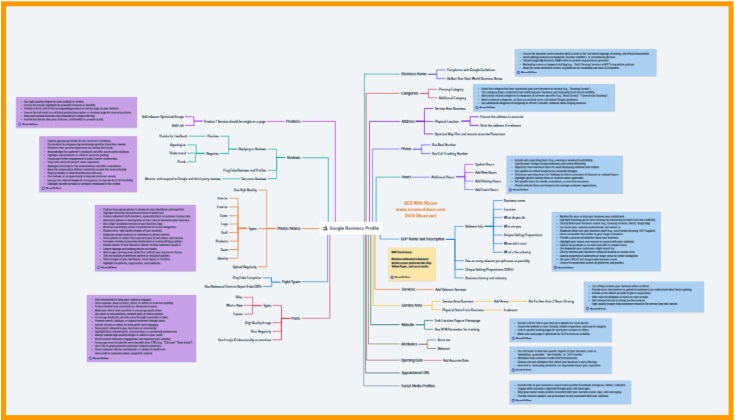
Google Business Profile optimization boosts local SEO for roofers because the profile is the main input Google reads for map pack rankings. This article explains the 3 inputs Google ranks local businesses on, the 7 profile elements that feed those inputs, and the order a roofing company fixes them in. Every section applies to a roofing business with one location or several.
What this article covers
What Is Google Business Profile Optimization?
Google Business Profile optimization is the process of completing and maintaining a Google Business Profile so Google ranks the profile higher in the map pack and local results. The map pack is the block of 3 local businesses Google shows above the organic results. A roofing company that enters the map pack for a service query receives calls directly from the profile, before any website visit happens.
Google Business Profile optimization differs from website SEO. Website SEO improves pages. Profile optimization improves the listing Google itself hosts. The 2 systems feed each other: the profile links to the website, and the website confirms the profile’s information.
Which 3 Inputs Does Google Rank Local Businesses On?
Google ranks local businesses on relevance, distance, and prominence. According to Google’s own local ranking documentation, these 3 inputs decide every map pack position.
The 3 inputs work as follows.
- Relevance measures how well the profile matches the search. Categories, services, and the business description feed relevance.
- Distance measures how far the business sits from the searcher or the searched area. A roofer cannot change distance, only declare the service area honestly.
- Prominence measures how well known the business is. Reviews, citations, links, and mentions across the web feed prominence.
Optimization moves relevance and prominence. Distance stays fixed. A roofing company that accepts this focuses effort where effort changes the outcome.
What Are the 7 Profile Elements That Move Rankings?
The 7 profile elements that move local rankings for a roofing company are listed below in priority order.
- Primary category. The single strongest relevance signal on the profile.
- Business name. The registered name, with no added keywords. Added keywords risk suspension.
- Services list. Each service a searcher types: roof repair, roof replacement, storm damage repair, roof inspection.
- Review count and velocity. Steady new reviews signal an active business.
- Photos. Job-site photos uploaded on a schedule, not stock images.
- Business description. 750 characters that state services and service area in plain words.
- Hours, phone, and website link. Exact agreement with the website footer, character for character.
Not sure which of the 7 elements your profile is missing? The free audit covers your profile against this exact list, on a 5 minute video or a Zoom session.
How Do Categories and Services Affect Roofing Rankings?
Categories and services affect roofing rankings by deciding which searches the profile can appear for at all. A profile with the primary category Roofing Contractor competes for roofing queries. A profile left on General Contractor competes against a larger pool for less relevant searches.
The correct setup for a roofing company uses Roofing Contractor as the primary category. Secondary categories cover real offerings only: Roof Repair Service where Google offers it, Gutter Service when gutters are a real service line. Every added category must describe work the company sells. Categories added for reach dilute relevance.
Should a Roofer List Services Under Each Category?
A roofer lists services under each category because the services list matches the profile to long service queries. A searcher who types hail damage roof repair matches a profile that lists hail damage repair as a service. The services list accepts short descriptions. Each description states the service and the material or situation it covers.
How Do Reviews Raise a Roofing Profile’s Rankings?
Reviews raise a roofing profile’s rankings by feeding prominence, the input that separates profiles with equal relevance. Review signals include the count, the rating, the steadiness of new reviews, the keywords inside review text, and the owner’s replies.
Review text carries relevance information. A review that states the crew replaced an asphalt shingle roof in 2 days connects the profile to roof replacement queries. A reply from the owner that names the city and the service reinforces the same connection. Replies belong on every review, positive and negative.
How Should a Roofer Reply to Reviews?
A roofer replies to reviews within 48 hours, naming the service and the town, in 2 to 4 sentences. The reply pattern for a positive review: thank the customer by name, restate the job in service terms, and name the area. The pattern for a negative review: acknowledge the specific complaint, state the correction offered, and move the resolution to a phone number. A calm, specific reply to a negative review persuades the next 50 readers more than the review itself, and the reply text feeds the same relevance signals as the review text.
How Do the Profile and the Website Work Together?
The profile and the website work together through the website link, the landing page behind the link, and the content Google reads from the site to justify rankings. The profile’s website button should point to the page that matches the profile’s primary category, and each service in the services list performs best with a matching service page on the website. A homeowner who taps the button after reading about roof replacement converts better on a roof replacement page than on a generic homepage.
Google also pulls website text into map pack justifications, the small lines under a result such as: their website mentions hail damage repair. A roofing website that states services in plain text feeds those justifications. The website footer must repeat the profile’s name, address, and phone exactly, because citation agreement validates the profile. The full discipline behind that agreement sits in our NAP consistency guide for roofers.
Which Profile Attributes Should a Roofer Set?
A roofer sets the attributes that answer a homeowner’s screening questions before the call: licensed, insured, veteran-owned or family-owned where true, free estimates where offered, and emergency service where staffed. Attributes appear as labels on the profile and filter searches that use those terms. An attribute claimed falsely invites removal reports from competitors, so each attribute mirrors reality.
In What Order Should a Roofer Fix the Profile?
To fix a roofing profile, work in the following order.
- Verify ownership of the profile and remove keyword stuffing from the business name.
- Set the primary category to Roofing Contractor and prune categories that describe nothing the company sells.
- Complete the services list for every service line.
- Match hours, phone, address, and website link to the website footer exactly.
- Write the 750 character description around services and service area.
- Upload 10 to 20 job-site photos, then add new photos weekly.
- Start a review request routine after every completed job.
Steps 1 to 5 complete in one afternoon. Steps 6 and 7 continue every week. The split matters: the one-time fixes raise relevance, the weekly routine raises prominence.
How Does a Roofer Measure the Ranking Result?
A roofer measures the ranking result with the profile’s own performance report and a map pack position check from the service area. The performance report inside the profile shows calls, direction requests, and website clicks per month. Position checks run from the towns the company serves, because map pack positions change with the searcher’s location.
The numbers that matter are calls and booked inspections, not impressions. A profile that gains 30 percent more calls after optimization produced a business result. Our guide on why a Google Business Profile outranks the website explains where the profile beats the site and where the site still decides the outcome.
Want the profile audit done for you? Book a free Zoom or Meet session and we walk through your profile against all 7 elements live.
Key takeaways
- Google ranks local businesses on relevance, distance, and prominence. Optimization moves 2 of the 3.
- The primary category is the strongest single relevance signal on the profile.
- Keywords added to the business name risk suspension instead of rankings.
- Reviews feed prominence. Steady velocity beats a one-time batch.
- One afternoon fixes the structural elements. Photos and reviews continue weekly.
Frequently Asked Questions
Is Google Business Profile optimization free?
Yes. Google charges nothing for the profile or any profile feature. The cost is the time to complete and maintain the listing, or the fee of the company that maintains the listing.
How long until rankings move after optimization?
Profile edits register within days. Ranking movement usually shows within 4 to 8 weeks, because prominence signals such as reviews accumulate over time.
Does posting on the profile raise rankings?
Posting signals an active business and supports engagement. Posting alone does not outrank a profile with stronger categories, reviews, and citations.
Can a roofer rank in towns outside the office location?
Yes, within limits. The service area setting declares covered towns, but distance still weights results toward businesses physically closer to the searcher.
What suspends a roofing profile most often?
Keyword stuffing in the business name, address violations for service area businesses, and sudden bursts of reviews are the 3 most common suspension triggers for roofing profiles.
Last Thoughts on Google Business Profile Optimization for Roofers
Google Business Profile optimization is the highest leverage local SEO work a roofing company controls directly. The profile feeds 2 of the 3 ranking inputs Google documents, the structural fixes complete in one afternoon, and the weekly routine compounds from there. A roofing company that completes the 7 elements and holds the weekly routine competes for the map pack in its service area with the strongest asset Google offers a local business.
Related Roofing SEO Guides
The guides below extend the topics covered in this article.
- Google Business Profile optimization service for roofers
- Local SEO for roofing companies, the full hub
- Why a Google Business Profile outranks the roofing website
- Google Business Profile update routine for roofers
Founder, Roofer Quest Consultancy
Nizam Ud Deen Usman runs Roofer Quest, a roofing-only SEO consultancy that works with one roofer per service area. Nizam wrote The Roofing Lead Gen Blueprint and The Local SEO Cosmos, and builds every campaign on tracked calls and signed jobs rather than ranking reports.




3 Comments