
Business Transparency for Roofing Companies
Publish the license number, insurance proof, physical address, and direct contact details on a roofing site so a homeowner can verify the company before requesting an estimate.
Free Roofing Transparency Audit
Many roofing sites hide the license number, the insurance proof, and the real address. Get a free audit that finds the missing trust details and shows where to publish them.
What Is Business Transparency for a Roofing Company?
Business transparency is the practice of publishing the verifiable facts about a roofing company, the license number, the insurance proof, the physical address, the ownership, and the direct contact details, in plain view on the website. It lets a homeowner confirm who they are hiring before any money changes hands.
Verifiable, Not Decorative
Each detail is a fact a homeowner can check against a state board or an insurer, not a badge image with no number behind it.
A Trust Signal You Display
Transparency is one of the trust signals that sit under E-E-A-T. See the trustworthiness signal.
Distinct From Reviews
Reviews are what others say. Transparency is what the company states about itself, with proof a visitor can verify. See online reviews.
Why Does Transparency Build Trust in Roofing?
Transparency builds trust because a roof is a high-cost job, often 10,000 to 50,000 dollars, that a homeowner approves on the strength of who the company appears to be. Verifiable details lower the risk a homeowner feels before the first call.
The Stakes Are High
- Roofing fraud and storm-chaser scams make homeowners cautious before they pick a contractor.
- A missing license number or hidden address reads as something to hide.
- Published, checkable facts reduce the perceived risk of a large, irreversible purchase.
Trust Decides the Call
- BrightLocal consumer surveys report that most homeowners read a business listing closely before contacting a local company.
- A homeowner comparing two roofers will favor the one whose credentials are easy to confirm.
- Transparency supports the wider trustworthiness signal across the site. See the trust hub.
Which Transparency Details Belong on a Roofing Site?
Publish five core facts: the state license number, the insurance proof, the physical address, the ownership and team, and the direct contact details. Each one answers a question a cautious homeowner asks before calling.
License and Insurance
The state contractor license number and the proof of general liability and workers compensation, stated as numbers a homeowner can verify.
Address and Contact
A real physical address, a local phone number, and an email, all matching the Google Business Profile and the directory citations.
Ownership and Team
Named owners and crew on an about page show real people stand behind the work. See team bios.
Turn Verified Credentials Into Booked Jobs
A homeowner who can confirm your license, insurance, and address calls with fewer doubts. We publish the trust details across the site so the credentials do the convincing before the phone rings.
Call Now For PricingOr call +1 272-207-3231
How to Display the License Number on a Roofing Site
Show the full state license number as text, in the footer and on the about page, with the issuing state named. Text is verifiable; an image of a badge is not.
Where to Place It
- In the site footer, so it appears on every page.
- On the about page, next to the company name and the founding year.
- On each service page where a homeowner is close to requesting work.
How to Word It
Write it as plain text, such as "Licensed in [State], License No. 0000000". The number lets a homeowner check the standing on the state board site. For how a license functions as an entity, see certification entities.
How to Show Insurance Proof Without Oversharing
State that the company carries general liability and workers compensation, name the coverage type, and offer to provide a certificate of insurance on request. Confirm the protection without posting policy numbers in public.
What to State Publicly
- That general liability coverage is in force, which protects the property during the work.
- That workers compensation is carried, which protects the homeowner if a crew member is hurt on site.
- That a certificate of insurance is available on request before any contract.
What to Keep Private
Keep full policy numbers and coverage limits out of the public page, and share the certificate directly with a serious prospect. The public statement confirms the protection exists; the document confirms the detail.
How to Publish a Physical Address and Service Area
List a real physical address and the cities served, matching the Google Business Profile and every directory citation exactly. A consistent address tells a homeowner the company is rooted in the area.
Make the NAP Consistent
- Use the same name, address, and phone number on the site, the profile, and the citations.
- Match the wording character for character, since small differences weaken local relevance.
- Place the address in the footer so it appears site-wide.
If You Hide the Address
A service-area company that works from home can mark the address as hidden on the profile and list the cities served instead. State the service area plainly so a homeowner still knows the company is local, and link to local SEO for roofers for the profile setup.
How to Present Contact Details and Ownership
Give a direct local phone number, an email, and named owners or crew, so a homeowner reaches a person rather than a form alone. Faces and names make the company concrete.
Contact Details That Reassure
- A local number, clickable on mobile, in the header and footer.
- An email address on a company domain, not a free webmail account.
- Stated business hours and a response time for after-hours messages.
Ownership That Builds Confidence
Name the owner and the lead crew, with photos and a short history. A homeowner who can see who runs the company feels safer about the people on the roof. For author and bio depth, see author credibility.
How Does Transparency Help Roofing Rankings?
Transparency helps rankings because Google reads the same verifiable details to confirm the business is real, local, and trustworthy. The signals that reassure a homeowner also feed the search engine's view of the entity.
Consistent NAP Strengthens Local
A matching name, address, and phone number across the site and citations reinforces local relevance for the served cities.
Credentials Feed E-E-A-T
Published license, insurance, and ownership add to the trustworthiness Google's quality guidelines weigh for a high-stakes service.
Entity Signals Connect
Named credentials help Google tie the company to the licenses and associations it belongs to. See entity SEO for roofers.
Verifiable Trust Costs Less Than Paid Leads
A homeowner who confirms your credentials on the site calls you directly, with no per-lead fee against the 50 to 150 dollars a shared platform charges. Publish the trust details and earn the call instead of buying it.
Call Now For PricingOr call +1 272-207-3231
Transparency Mistakes Roofers Make
Roofing sites lose trust through six recurring transparency mistakes, each one fixable inside the page settings.
Missing or Hidden Details
- No license number on the site, which forces a homeowner to guess at the standing.
- No physical address, or a PO box, which reads as a fly-by-night operation.
- A contact form as the only way to reach the company, with no phone number shown.
Unverifiable or Inconsistent Claims
- A badge image with no license number behind it, which cannot be checked.
- An address on the site that does not match the Google Business Profile.
- A vague "fully insured" line with no coverage type and no certificate offered.
How Does Transparency Connect to Other Trust Signals?
Transparency is the base layer that the other trust signals sit on, since reviews, certifications, and case studies all assume the company is who it claims to be. The verifiable facts make every other proof point credible.
It Anchors Reviews and Proof
A five-star review carries weight only when a homeowner can confirm the company behind it is real. The license, address, and ownership give the reviews and the before-and-after galleries a verified source.
It Supports Certifications
A manufacturer certification means more when the company that holds it is transparent about its license and address. For the entity side of associations, see industry association entities.
Proof of Performance
Results from roofing campaigns that rank in local search.
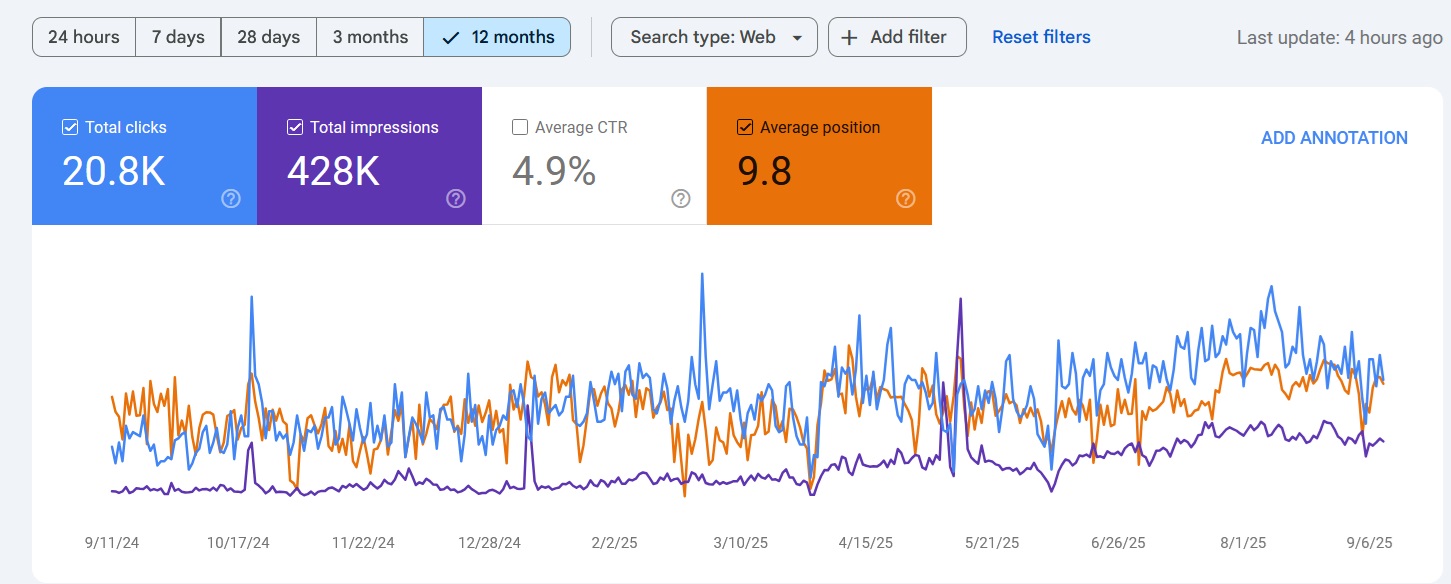
Map Pack Rankings
Ranked in Local Search Within 90 Days
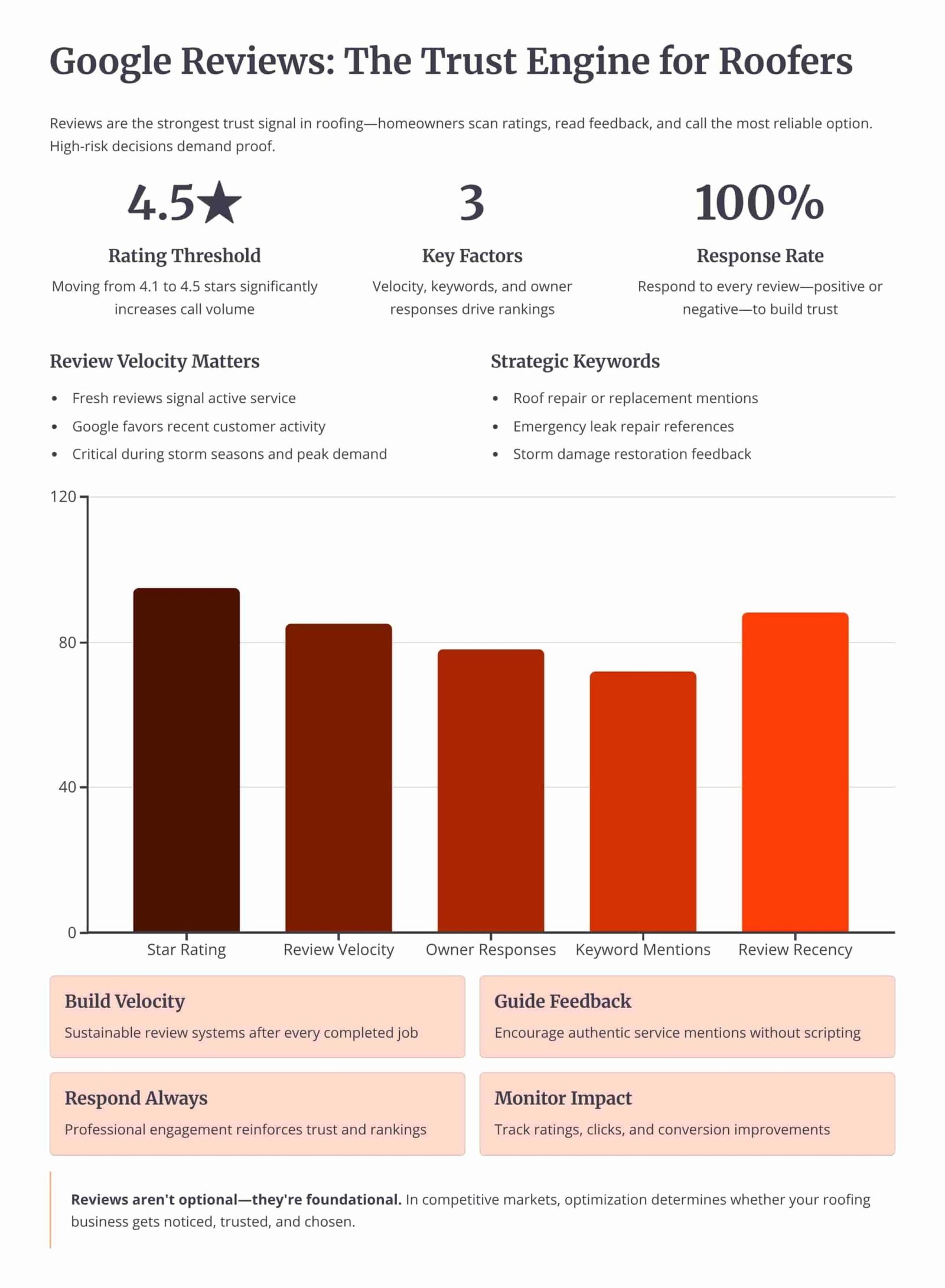
Review Velocity
150+ 5-Star Reviews Generated
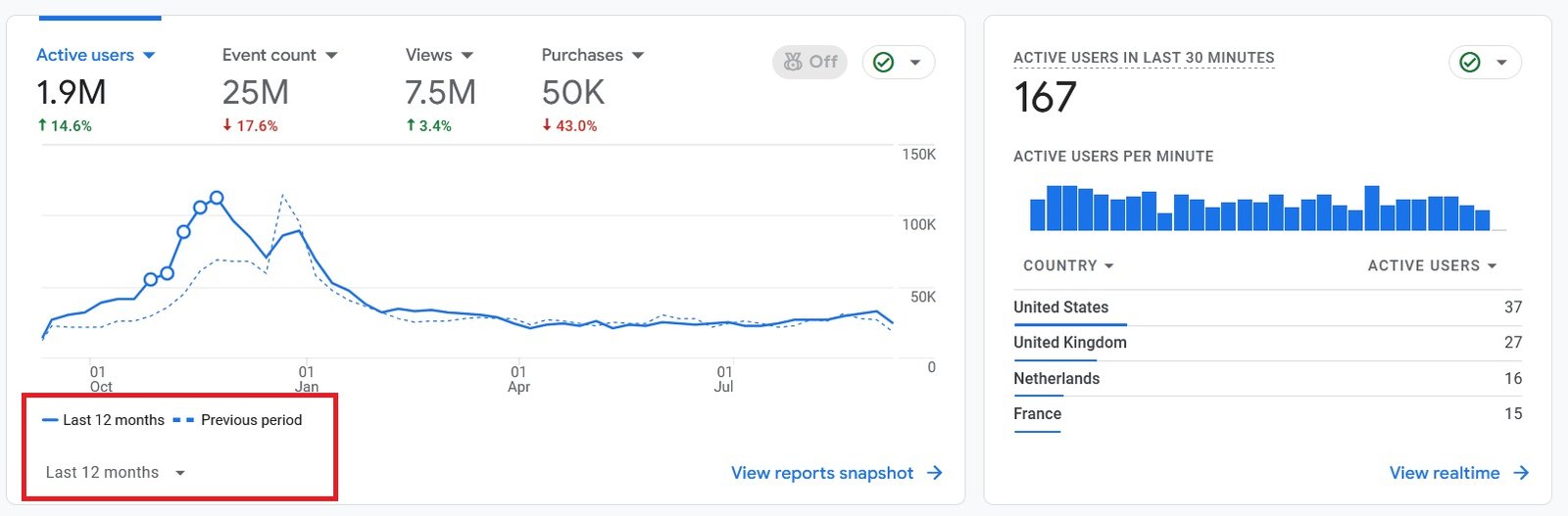
Organic Traffic
300% Increase in Qualified Traffic
What Roofers Say
The 180-Day Roofing SEO Roadmap
See how we optimize the profile, build the website, and earn local-pack rankings over a 6-month engagement.
Month 1: Profile Audit and Setup
- Category and Field Fixes: Setting the primary category, secondary categories, description, services, and service areas.
- NAP Cleanup: Correcting the name, address, and phone number across the profile, the website, and the directory citations.
Month 2: Reviews and Media
- Review System: Setting up a steady request flow and replying to every review, positive and negative.
- Photo and Post Cadence: Uploading job photos from each completed roof and publishing profile posts twice a month.
Month 4: Citations and Site Support
- Citation Building: Adding consistent listings on the directories that feed prominence for a service area.
- Service-Area Pages: Building city pages on the website that reinforce the profile's service areas.
Month 6: Local-Pack Rankings and Leads
- Map-Pack Position: Reaching the top 3 of the local pack for core roofing queries in the served cities.
- Lead Tracking: Measuring calls and direction requests from the profile against the cost of paid leads.
Owning Search Demand vs Renting It From Lead Platforms
If you pay Angi or Google Ads, you are renting visibility. The moment you stop paying, your pipeline dries up. Ranking the profile and the website for high-intent local searches builds permanent digital equity.
Shared Lead Platforms (Angi, HomeAdvisor)
- The Race to the Bottom: Shared leads force you to slash prices to win against 5 other roofers.
- Low Intent: Half the time they aren't ready to buy, they were just clicking around online.
Local Search SEO (Our Approach)
- 100% exclusive, direct-to-you inbound calls.
- Highest closing rate. They chose YOU from the local pack.
- Compounding ROI. You don't pay per click.
We Identify Search Intent Using Industry-Leading Data Tools



Expertise Built on Data.
Not Guesswork.
I'm Nizam Ud Deen, and I don't build generic websites. I build search intent engines specifically for the roofing industry.
For years, I've watched roofers burn money on agencies that brag about "traffic" while the phones stay silent. Traffic without intent is worthless. My system maps exactly how homeowners search during storms, when comparing prices, and when they're ready to buy, and intercepts them at every stage.
The No-Brainer Roofing SEO Guarantee
We don't guarantee "traffic" or "rankings." We guarantee high-intent leads.
"We guarantee to generate 15 exclusive, inbound replacement or repair leads per month within the first 180 days, driven entirely by high-intent organic search. If we don't hit that metric, we work for free until we do."
Measuring Success: Leads and Revenue
We don't report on vanity metrics. If traffic goes up but revenue stays flat, the strategy failed. We track the pipeline.
Call Tracking
Every keyword mapped to the exact phone call it generated.
Form Fills
Tracking estimate requests from high-intent local landing pages.
Booked Jobs
Connecting CRM data to SEO efforts to prove actual revenue return.
Cost per Lead
Monitoring organic CPL to ensure it beats shared platform costs.
The Roofing Transparency Checklist
Run each roofing page through this checklist to confirm the trust details are present, consistent, and verifiable.
Frequently Asked Questions
Clear answers about business transparency on roofing sites.
What is business transparency for a roofing company?
Why does transparency build trust with homeowners?
Where should a roofing license number appear on the site?
Should I post my insurance policy numbers online?
Do I need a physical address if I work from home?
What is NAP consistency and why does it matter?
Does transparency help roofing search rankings?
Is a trust badge image enough to show I am licensed?
Should I show the owner and crew on the site?
How is transparency different from reviews?
What contact details should a roofing site show?
How does transparency connect to certifications?
What are the most common transparency mistakes?
Where does transparency fit in roofing E-E-A-T?
Get Your Free Roofing Transparency Audit
We'll review the trust details across your roofing pages and compare them to your top 3 local competitors to show where a cautious homeowner loses confidence.
What You Get:
- Credential ReviewA check of the license number, insurance statement, and ownership details on each key page.
- NAP Consistency ScanA list of pages and citations where the name, address, or phone number does not match.
More Deliverables
- Missing Detail CheckWhich trust details are absent from the footer, the about page, or the service pages.
- Placement RecommendationsWhere to publish each trust detail so a homeowner finds it before requesting an estimate.
Claim your free roofing transparency audit today. No commitment required.