Google Knowledge Graph for Roofers
Earn a place in the database Google uses to recognize your roofing company as a real-world business, so search treats it as a known entity and not just a set of pages.
Free Roofing Entity Audit
Most roofing sites send Google mixed signals about who the business is. Get a free audit of your NAP, schema, and brand mentions with a check on whether Google recognizes you as an entity.
What Is the Google Knowledge Graph?
The Google Knowledge Graph is a database of real-world things and the connections between them, where each thing, including a roofing company, is stored as an entity rather than as a web page.
An Entity, Not a Page
An entity is a thing Google understands as real, such as a roofing company, a city, or a service. The Knowledge Graph stores it and its attributes separately from any single page.
Things, Not Strings
Google shifted from matching text strings to recognizing things. A roofing business that registers as a thing is read as one identity, not as scattered keywords.
Part of Entity SEO
Earning a place in the graph is the goal of entity work. See entity SEO for roofers.
Why Does the Knowledge Graph Matter for Roofing Companies?
The Knowledge Graph matters because a recognized entity earns trust-based authority that holds across the whole site, while a page-only roofing business depends on each ranking and shifts with every algorithm update.
Authority That Compounds
- A recognized roofing entity carries trust that applies across every page, not page by page.
- The signals that define the entity, such as reviews and mentions, accumulate over time.
- That accumulation is hard for a newer competitor to copy in a short window.
Stability Through Updates
- A keyword-only page can lose position when an update changes how rankings are weighed.
- An entity backed by diversified trust signals tends to hold position and recover faster.
- Entity recognition supports the rest of the framework. See the roofing SEO framework.
How Does Google Recognize a Roofing Company as an Entity?
Google recognizes a roofing company through three confirming signals: consistent NAP across platforms, structured data that names the business type and services, and brand mentions on sources Google already trusts.
Consistent NAP
The same name, address, and phone number on the website, the profile, and every directory tells Google one business exists, not several with similar details.
Structured Data
Schema markup states the business type, the services, and the location in a form Google reads directly, which removes guesswork from how the entity is defined.
Brand Mentions
Mentions of the business name on trusted sources confirm the entity. An unlinked mention still counts as a trust signal that the company is real and active.
Turn Recognition Into Phone Calls
A roofing company Google reads as a known entity holds local rankings that a page-only site keeps losing. We build the signals that put your business in the Knowledge Graph and keep the calls coming.
Call Now For PricingOr call +1 272-207-3231
What Are the Three Stages of Entity Recognition?
Entity recognition moves through three stages: definition of the core identity, validation across platforms, and reinforcement through mentions and authority. Each stage builds on the one before it.
1. Definition
Set the core identity: the exact business name, a consistent NAP, and the services and service areas. This is the version of the entity every other source must match.
2. Validation
Confirm the identity across the Google Business Profile, directory citations, and structured data, so Google reads the same business from several independent sources.
3. Reinforcement
Strengthen the entity over time with brand mentions, industry associations, and topical authority built through ongoing content about roofing services.
How Does Structured Data Feed the Knowledge Graph?
Structured data feeds the graph by stating the business type, services, location, and industry relationships in a format Google reads without interpretation. It removes ambiguity from how the entity is defined.
What Schema Communicates
- The business type, named as a roofing contractor rather than left for Google to infer.
- The services offered, such as repair, replacement, and inspection.
- The location and service area, tied to the same address the profile uses.
- Relationships to the industry, which place the entity among roofing businesses.
Why It Helps Recognition
Schema gives Google a direct statement of identity instead of a guess drawn from page text. It can also support rich results in search, where extra detail shows under the listing.
How Do Brand Mentions Reinforce a Roofing Entity?
Brand mentions reinforce the entity because each mention of the business name on a trusted source confirms the company is real, even when the mention carries no link.
Local Media Coverage
A mention in a local news story or community outlet ties the roofing business to its service area and to a source Google already reads.
Industry Publications
A reference in a roofing or construction publication places the entity inside its industry, which strengthens how Google reads its expertise.
Review Platforms
Presence on review platforms adds repeated mentions of the name and service area, and the reviews themselves describe what the business does.
How Does the Knowledge Graph Support E-E-A-T?
Entity recognition supports E-E-A-T because verified business information, structured data, brand mentions, and consistent NAP are the same signals that establish experience, expertise, authoritativeness, and trustworthiness.
Signals the Entity Provides
- Verified business information that Google can confirm across sources.
- Structured data that validates the business type and services.
- Brand mention frequency that shows the company is active and known.
- Authority associations through industry and local references.
Why the Overlap Matters
The work that earns a place in the graph also answers the questions E-E-A-T asks. A roofing entity that Google can verify reads as trustworthy, so the two efforts reinforce each other instead of competing.
How Does the Knowledge Graph Tell Similar Roofers Apart?
The graph tells similar companies apart through clear geographic boundaries and service specializations attached to each entity, which solves disambiguation when two roofing businesses share a similar name.
Geographic Boundaries
A defined service area and a verified address separate one roofing entity from another with a similar name in a different city, so Google shows the right one for each local query.
Service Specialization
Distinct services attached to the entity, paired with a consistent profile, help Google match the business to the query. See local SEO for roofers for the service-area side.
Build Equity Google Cannot Reset
Reviews, mentions, and Knowledge Graph inclusion accumulate over months and years. A competitor cannot buy that history overnight. We build the entity signals that compound while you keep working.
Call Now For PricingOr call +1 272-207-3231
How Does the Google Business Profile Anchor the Entity?
The Google Business Profile anchors the entity because it is the primary verification point Google uses, where the name, address, service area, and category all confirm the same business.
Elements That Confirm the Entity
- An exact name match to the website and the citations.
- A verified address Google has confirmed.
- A defined service area that matches the city pages.
- A primary category that names the business as a roofing contractor.
Engagement Keeps It Active
Regular posts, photos, and review replies signal an active business, which supports the entity over time. A profile left untouched gives Google less to confirm the company is operating.
How Does Content Build Topical Authority for the Entity?
Content builds authority by covering the full set of roofing services, mapping the relationships between them with internal links, and publishing on a regular cadence that signals an active business.
Show Connected Expertise
- Cover the chain of services: inspection, repair, replacement, and maintenance.
- Link related pages so Google reads them as one body of work under one brand.
- Hold a consistent brand voice across the pages so the entity reads as one source.
Publish on a Cadence
Regular publishing signals the business is operating, and each page adds to the topical coverage that supports the entity. The pages reinforce the profile, and the profile reinforces the pages.
Proof of Performance
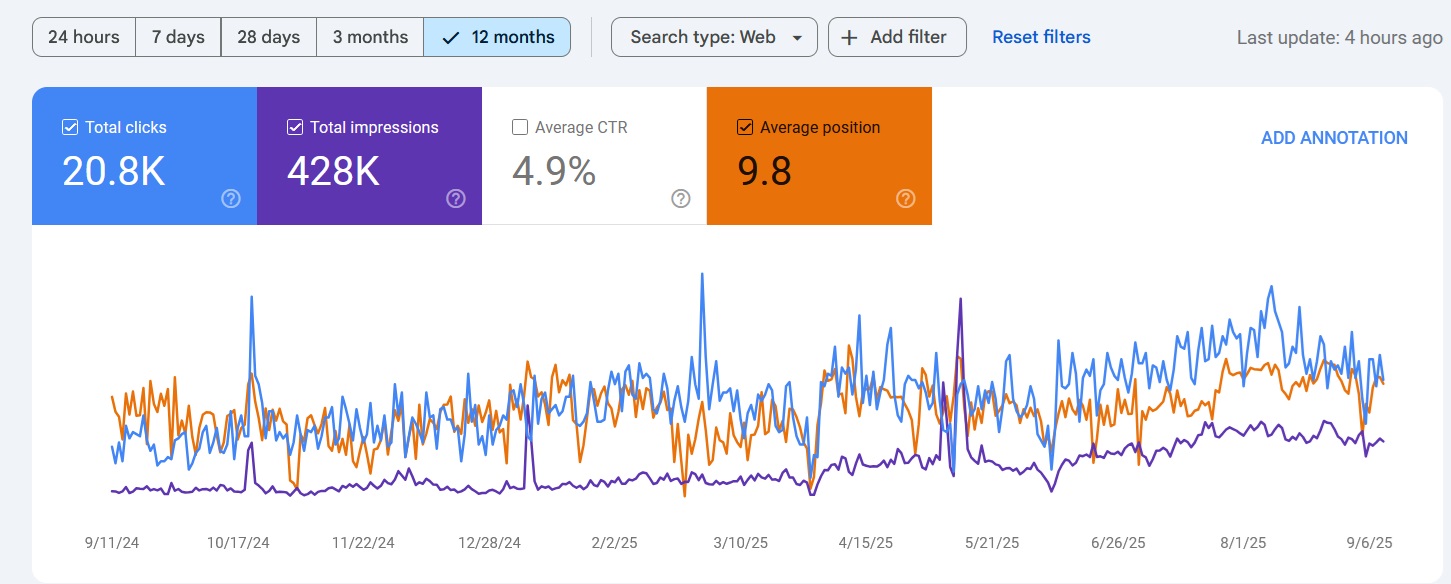
Results from roofing campaigns that rank in local search.
Map Pack Rankings
Ranked in Local Search Within 90 Days
Review Velocity
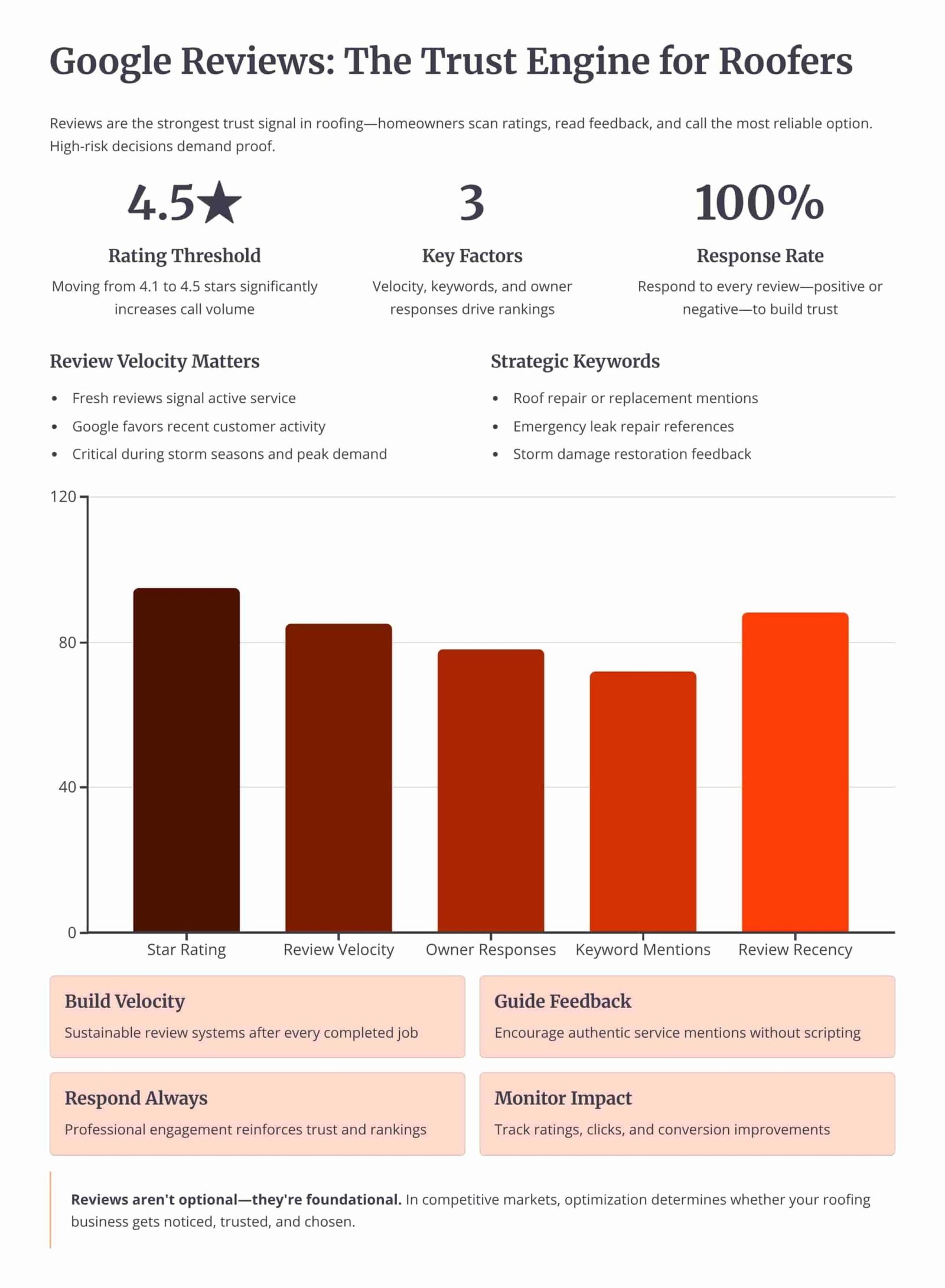
150+ 5-Star Reviews Generated
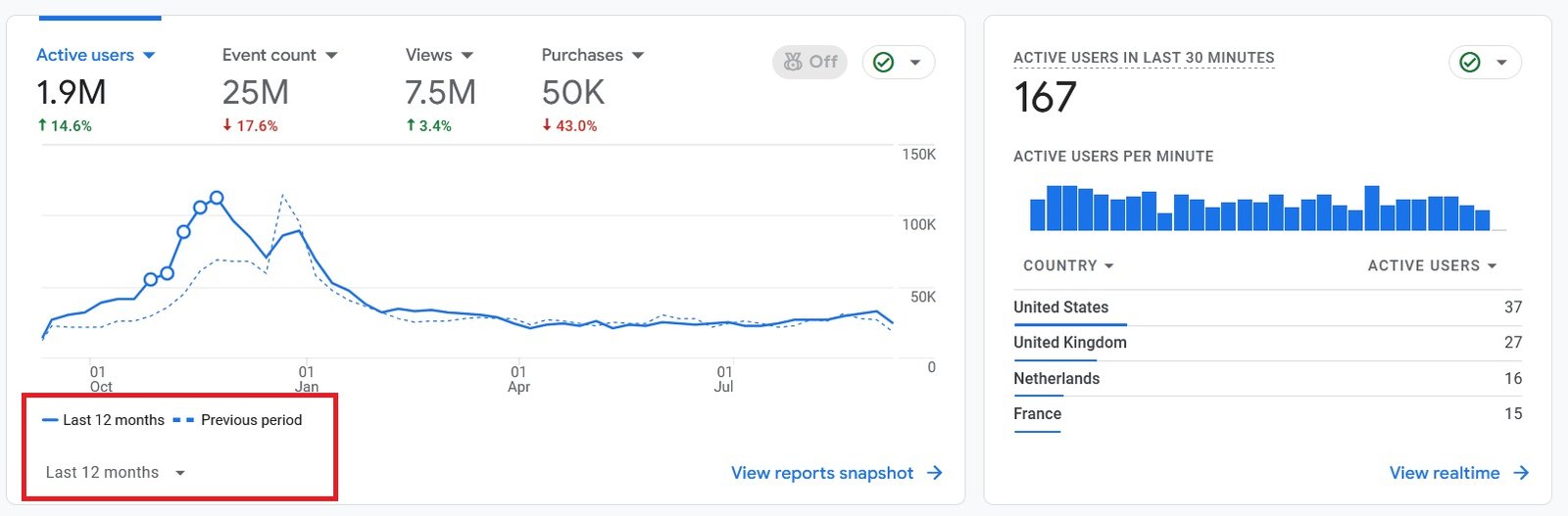
Organic Traffic
300% Increase in Qualified Traffic
What Roofers Say
The 180-Day Roofing Entity Roadmap
See how we define the entity, validate it across platforms, and reinforce it toward Knowledge Graph recognition over a 6-month engagement.
Month 1: Define the Entity
- NAP Standardization: Setting one exact name, address, and phone number to use on the website, the profile, and every citation.
- Schema Markup: Adding structured data that names the business type, the services, and the service area.
Month 2: Validate Across Platforms
- Profile Verification: Confirming the Google Business Profile and matching its name, category, and service area to the defined entity.
- Citation Cleanup: Correcting directory listings so every source repeats the same business details.
Month 4: Reinforce With Mentions
- Brand Mention Outreach: Earning references on local media and industry sources that name the business.
- Topical Content: Publishing pages across the service chain so the entity reads as a connected body of work.
Month 6: Recognition and Leads
- Knowledge Panel Watch: Tracking whether the business surfaces with a knowledge panel for its brand name.
- Lead Tracking: Measuring calls and direction requests from the profile against the cost of paid leads.
Owning Search Demand vs Renting It From Lead Platforms
If you pay Angi or Google Ads, you are renting visibility. The moment you stop paying, your pipeline dries up. Becoming a recognized entity builds permanent digital equity that holds across the whole site.
Shared Lead Platforms (Angi, HomeAdvisor)
- The Race to the Bottom: Shared leads force you to slash prices to win against 5 other roofers.
- Low Intent: Half the time they aren't ready to buy, they were just clicking around online.
Entity-Based SEO (Our Approach)
- 100% exclusive, direct-to-you inbound calls.
- Stable rankings that hold through algorithm updates.
- Compounding trust. The signals accumulate over time.
We Identify Search Intent Using Industry-Leading Data Tools


Expertise Built on Data.
Not Guesswork.
I'm Nizam Ud Deen, and I don't build generic websites. I build search intent engines specifically for the roofing industry.
For years, I've watched roofers burn money on agencies that brag about "traffic" while the phones stay silent. Traffic without intent is worthless. My system maps exactly how homeowners search during storms, when comparing prices, and when they're ready to buy, and intercepts them at every stage.
The No-Brainer Roofing SEO Guarantee
We don't guarantee "traffic" or "rankings." We guarantee high-intent leads.
"We guarantee to generate 15 exclusive, inbound replacement or repair leads per month within the first 180 days, driven entirely by high-intent organic search. If we don't hit that metric, we work for free until we do."
Measuring Success: Leads and Revenue
We don't report on vanity metrics. If traffic goes up but revenue stays flat, the strategy failed. We track the pipeline.
Call Tracking
Every keyword mapped to the exact phone call it generated.
Form Fills
Tracking estimate requests from high-intent local landing pages.
Booked Jobs
Connecting CRM data to SEO efforts to prove actual revenue return.
Cost per Lead
Monitoring organic CPL to ensure it beats shared platform costs.
The Roofing Entity Recognition Checklist
Run the business through this checklist to confirm Google has the signals it needs to recognize the roofing company as an entity.
Frequently Asked Questions
Clear answers about the Google Knowledge Graph and entity recognition for roofing companies.
What is the Google Knowledge Graph?
What is an entity in SEO?
How does a roofing company get into the Knowledge Graph?
Why does entity recognition protect against algorithm updates?
What is NAP consistency and why does it matter?
Do brand mentions help if they have no link?
What role does structured data play?
How does the Google Business Profile fit in?
How long does Knowledge Graph recognition take?
Will a knowledge panel appear for my roofing company?
How does the graph tell two similar roofers apart?
Does entity SEO replace keyword work?
Can a small roofing company become an entity?
How does entity recognition support E-E-A-T?
Get Your Free Roofing Entity Audit
We'll review the NAP, schema, profile, and brand mentions for your roofing business and compare them to your top 3 local competitors to show where Google is unsure who you are.
What You Get:
- NAP Consistency ReviewA check of the name, address, and phone number across the site, the profile, and the citations.
- Schema AuditA check of whether structured data names the business type, services, and location.
More Deliverables
- Mention ScanWhere the business name appears on local and industry sources, and where it is missing.
- Recognition RoadmapThe steps to define, validate, and reinforce the entity toward Knowledge Graph recognition.
Claim your free roofing entity audit today. No commitment required.