
Roofing SEO FundamentalsStop Sharing Leads. Own Your Market.
The complete playbook for roofing contractors who want page-one dominance, Map Pack visibility, and exclusive leads that convert into signed contracts.
Ready to Master Roofing SEO Fundamentals?
Stop losing leads to competitors who already understand this. Capture your market share today.
The Fundamental Difference in Roofing SEO vs General SEO!
Fundamentally, generic SEO strategies fail roofing companies because they ignore a fundamental reality of the roofing business. You operate within a defined geographic service radius, compete in a local-first market, and serve customers who make decisions based on proximity, trust signals, and emergency availability. Rankings are not driven by abstract keywords or broad traffic volume. They are driven by local relevance, Google Maps visibility, reputation strength, and real-world accessibility.
This fundamental difference is why roofing SEO must be built around local intent, service-area authority, and conversion-focused visibility rather than traditional, one-size-fits-all SEO tactics.
Local Radius Dependency
Google Business Profile is Your Storefront
Short Funnel, High Intent
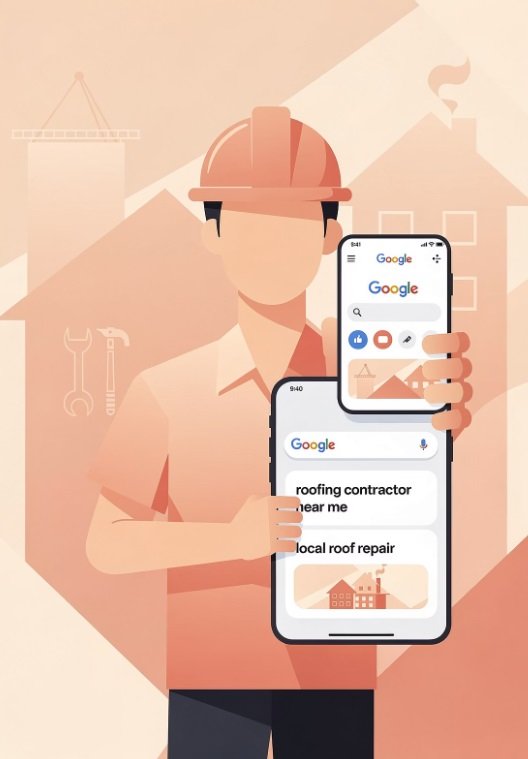
Why Traffic Volume Is a Useless Metric for Roofing SEO
This is why traffic volume is a useless metric for roofing SEO. A generic SEO agency might celebrate “10,000 monthly visitors,” but if those visitors are from the wrong cities, searching for DIY advice instead of contractor services, or bouncing because your site is slow, you haven’t gained anything. What matters is qualified local traffic that converts into booked inspections and signed contracts.
The dominance of “near me” searches and the critical importance of review quantity and recency make roofing SEO fundamentally different from e-commerce SEO, SaaS SEO, or even other home services. A plumber might get called for a $200 drain cleaning. A roofer is being evaluated for a $15,000-$50,000 project. The trust threshold is exponentially higher.
Many roofers assume SEO works the same in every industry, but the reality is very different. This is why understanding roofing SEO vs general SEO is essential. Roofing search is driven by proximity, urgency, and trust, not broad informational keywords or national traffic.
To rank consistently and generate leads, roofers must understand why roofing SEO is different from traditional SEO models. Local radius dependency, emergency intent, and trust-based decision-making fundamentally change how roofing websites should be optimized.
The "No-Brainer" Guarantee for Roofer SEO
The 180-Day ROI Promise:
If we don't drastically increase your ranking & organic lead flow in 180 days based on these exact Fundamentals, you don't pay us a dime.
If we don't hit that target, you get an additional 6 months of our full service for FREE.
We take 100% of the risk; you take 100% of the profit.
The Fundamental Metrics That Matter in Roofing SEO for Contractors!
Fundamentally, roofing contractors do not measure success by abstract SEO metrics like domain authority or backlink volume. The fundamental objective is simple and business-driven. Does the phone ring with qualified local leads. Do those leads schedule inspections. Do those inspections convert into signed contracts for profitable work.
Roofing SEO for contractors must be evaluated through real outcomes, not vanity indicators. Retail roof replacements secured, insurance supplements approved, and commercial maintenance contracts won are the metrics that define success. When SEO aligns with these fundamentals, it stops being a marketing expense and becomes a predictable revenue engine.
Optimized Google Business Profile
Complete profile with accurate categories, service areas, business hours, photos of completed projects, and consistent NAP (Name, Address, Phone). This is your digital storefront.
Service Pages That Convert
Dedicated pages for each service you offer: roof replacement, repair, inspection, emergency leak repair, storm damage, commercial roofing, TPO, EPDM, metal roofing. Each page must answer: what it is, why customers need it, what it costs (ranges), and how to get started.
Location Pages for Every City
Unique pages targeting each city or neighborhood you serve. Not thin duplicate content—real pages with local information, local projects, local testimonials, and local service details.
Review Generation System
Consistent flow of fresh Google reviews. Aim for 2-4 new reviews per month minimum. Reviews impact both rankings and conversion rates. A company with 200+ reviews and 4.8 stars will outperform a competitor with 20 reviews every time.
Fast, Mobile-Optimized Website
Your site must load in under 3 seconds on mobile. Most roofing searches happen on phones. Slow sites lose leads before they even see your content. Optimize images, enable caching, use a quality host.
Call Tracking and Form Tracking
You can’t optimize what you don’t measure. Implement call tracking to know which keywords, pages, and campaigns drive actual phone calls. Track form submissions. Connect leads to closed contracts.
SEO strategies must align with how contractors actually generate revenue. Roofing SEO for contractors focuses on call tracking, service pages, Google Business Profile optimization, and measurable lead performance rather than vanity rankings.
A Fundamental Service-Area Focus on Roofing SEO for Local Roofing Businesses!
At a fundamental level, most roofing companies operate as service-area businesses, not walk-in storefronts. You go to the customer’s property, whether for inspections, repairs, or replacements. This creates a fundamentally different SEO framework compared to retail businesses that rely on foot traffic and a fixed location.
Your Google Business Profile must reflect this fundamental structure. It should be configured as a service-area business rather than a storefront. That means hiding your street address and defining the specific cities, ZIP codes, or service radius you actively cover. Google allows up to 20 service areas, and choosing them strategically is fundamental to targeting the locations where your crews operate efficiently and profitably.
NAP consistency represents another fundamental ranking signal in local roofing SEO. Your business name, phone number, and address must match exactly across your website, Google Business Profile, Yelp, BBB, Angi, HomeAdvisor, and all other citation sources. Even minor variations, such as “ABC Roofing” versus “ABC Roofing Company” or “Street” versus “St.”, can create data conflicts that weaken Google’s confidence in your listing and dilute local map rankings.
This fundamental alignment between your service-area setup, location signals, and citation accuracy is what allows roofing SEO to produce reliable, location-driven leads.

Localized landing pages are essential for service-area businesses. If you serve 10 cities, you need 10 unique city pages, not one generic “Service Areas” page with a list. Each page should include: city-specific content, local landmarks or neighborhoods, testimonials from customers in that city, photos of projects in that area, and clear calls-to-action for that specific location.
The mistake many roofers make is creating thin, duplicate city pages that Google sees as spam. “We serve [City Name]” repeated 20 times with only the city name changed won’t work. Each page needs unique value: local roofing consideration.
Local roofers rely heavily on proximity-based searches and map visibility. This is why roofing SEO for local businesses prioritizes service-area targeting, local citations, reviews, and Google Maps rankings over broad national SEO tactics.
The Fundamental Buyer Reality with Roofing SEO for Residential Roofers!
Residential roofing customers are homeowners making a fundamentally high-stakes, emotional decision about protecting their largest financial asset. Their search behavior is shaped by three core drivers. Fear from active leaks, storm damage, or failed inspections. Budget pressure around affordability and financing. Trust concerns about workmanship, warranties, and long-term reliability.
A fundamentally effective residential roofing SEO strategy addresses all three drivers at once. It positions your business as locally available, visibly credible, and proven through reviews, proximity signals, and clear service messaging. When your SEO aligns with this fundamental buyer psychology, your website and Google Maps presence convert urgency-driven searches into booked inspections and signed contracts.
Residential & Commercial Frameworks
Fear and Urgency
Content that addresses emergency situations: “Signs You Need a New Roof Now,” “How to Handle a Roof Leak Emergency,” “Storm Damage Assessment Guide.” These pages capture high-intent traffic.
Budget and Financing
Trust and Proof
Service-specific content for residential roofers should cover: asphalt shingle replacement (the most common residential service), architectural vs 3-tab shingles, roof repair vs replacement decision framework, roof inspections (pre-purchase, insurance, maintenance), leak detection and repair, ventilation and attic insulation, gutter installation and repair, and storm damage restoration.
Educational content that ranks well and converts includes: “How Long Does a Roof Last?” (with breakdowns by material), “Roof Replacement Cost in [City]” (with real price ranges and factors), “How to Choose a Roofing Contractor” (position yourself as the obvious choice), “Roof Financing Options” (remove the affordability objection), and “What to Expect During a Roof Replacement” (reduce anxiety about the process).
Homeowners also search for material-specific information: metal roofing pros and cons, tile roofing in [climate], slate roof repair, flat roof solutions for additions, and energy-efficient roofing options. If you install it, you need a page for it.
Residential roofing customers search differently than commercial buyers. Roofing SEO for residential roofers focuses on fear, urgency, budget sensitivity, and trust signals that influence homeowners when choosing a roofer.
The Fundamental Shift in Buyer Intent with Roofing SEO for Commercial Roofing Companies!
Fundamentally, commercial roofing SEO targets a basically different buyer than residential roofing. Facility managers, property managers, building owners, and general contractors approach roofing decisions through an operational and financial lens. They evaluate lifecycle costs, maintenance strategies, energy efficiency, warranty coverage, code compliance, and contractor qualifications rather than emotional triggers or short-term pricing.
The commercial roofing sales cycle is fundamentally longer and involves multiple stakeholders. A facility manager may research solutions for months, gather multiple bids, assess technical documentation, and secure executive or board approval before committing. Your SEO must support this extended decision-making process with authoritative technical content, clear proof of expertise, and differentiation across systems, materials, and service capabilities.

Commercial roofing search intent reflects this complexity and specialization. Queries such as “TPO roofing contractor [city],” “EPDM roof repair,” “commercial roof maintenance program,” “flat roof replacement cost per square foot,” “roof coating vs replacement,” “commercial roof inspection,” and “emergency commercial roof repair” each signal a different stage of evaluation and a distinct service line. Fundamentally, each intent requires dedicated, system-specific content to capture visibility, build trust, and move decision-makers closer to contract readiness.
Technical Service Pages
TPO roofing, EPDM roofing, modified bitumen, built-up roofing (BUR), metal roofing systems, roof coatings, green roofs, and solar-ready roofing. Include technical specs, applications, and lifecycle costs.
Maintenance Programs
Commercial buyers want preventive maintenance contracts. Create content around inspection schedules, maintenance plans, and how proactive care extends roof life and reduces total cost of ownership.
Case Studies and Proof
Detailed project case studies showing: building type, roof system selected, square footage, challenges overcome, timeline, and results. Include photos, specs, and client testimonials.
Compliance and Certifications
Manufacturer certifications, safety training (OSHA), insurance coverage, bonding, and code compliance. Commercial buyers need to verify you’re qualified before they’ll even consider your bid.
Commercial roofing content should address: lifecycle cost analysis (not just upfront cost), energy efficiency and utility savings, warranty options and what they actually cover, maintenance requirements and costs, and emergency response capabilities. Property managers need to know you’ll show up at 2 AM when a roof is leaking onto expensive equipment.
Commercial roofing buyers evaluate contractors based on proof, compliance, and technical capability. Roofing SEO for commercial roofers addresses longer sales cycles, maintenance programs, and authority-driven content that influences decision-makers.
A Fundamental Advantage in Roofing SEO for Storm Restoration & Insurance Work!
Fundamentally, storm restoration SEO operates on a different timeline than standard roofing marketing. When hail, hurricanes, or severe wind events hit a service area, search demand for phrases like “storm damage roof repair,” “hail damage roof inspection,” and “insurance roof claim” spikes sharply, then fades just as fast. This creates a fundamental advantage for roofing companies that already have local SEO infrastructure in place before the storm arrives.
Effective storm restoration SEO requires preparation well ahead of impact. You need emergency-focused landing pages ready for immediate deployment, content that addresses insurance claims and storm damage assessments, and a technical SEO foundation that allows fast indexing and rapid map visibility. Roofers who treat storm SEO as an afterthought face a fundamental delay. By the time their content goes live, the highest-intent searches have already been captured by prepared competitors.
Pre-Storm Preparation
Build storm damage content library, create emergency landing page templates, establish relationships with insurance adjusters, and ensure GBP is optimized for emergency keywords.
Immediate Response (0-48 hours)
Publish storm-specific landing pages, update GBP with storm response messaging, activate emergency phone lines, and launch targeted ads to capture immediate demand.
Peak Period (Week 1-4)
Maximize visibility in Map Pack and organic results, respond to all leads within 2 hours, document damage with photos/drones, and help customers navigate insurance claims.
Extended Period (Month 2-6)
Continue capturing delayed claims, focus on review generation from completed projects, and build authority for next storm season.
Storm restoration content must address the insurance claims process: how to file a claim, what insurance covers (and doesn’t), how to work with adjusters, what documentation is needed, and how to handle claim denials or underpayments. Homeowners are anxious about navigating insurance bureaucracy, your content should reduce that anxiety and position you as their advocate.
Review velocity becomes critical after storms. Insurance companies and homeowners check recent reviews to verify you’re actively working in the area and delivering quality storm repairs. A company that generates 20-30 reviews in the month after a storm will dominate competitors with stale review profiles.
Geographic targeting for storm work often extends beyond your normal service area. A major hail event might justify temporary expansion into adjacent markets. Your SEO must be flexible enough to quickly target new cities with storm-specific landing pages and localized content.
Storm restoration companies operate on compressed timelines and high urgency. Roofing SEO for storm restoration companies focuses on pre-storm preparation, peak response periods, and insurance-driven search behavior to capture leads when demand spikes.
A Fundamental Scaling Strategy in Roofing SEO for Multi-Location Roofing Companies!
Multi-location roofing companies face a fundamental scaling challenge. How do you maintain strong local SEO visibility across 5, 10, or 20+ service areas without duplicating content, diluting authority, or confusing Google’s local signals? The solution requires a fundamental shift from generic SEO expansion to a structured hub-and-spoke architecture paired with precise, location-specific optimization.
Each market must operate as its own local entity in Google’s ecosystem. That means every location requires a dedicated Google Business Profile with unique NAP data, clearly defined service areas, localized content signals, and its own review velocity. You cannot rely on a single GBP to rank across multiple cities. Google’s local algorithm fundamentally requires separate profiles for each physical location or service-area hub to establish relevance, proximity, and prominence at scale.
This fundamental approach allows multi-location roofing brands to grow market by market while protecting rankings, authority, and lead flow in every territory they serve.

Multi-location roofing companies face a scaling challenge: how do you maintain strong local SEO presence in 5, 10, or 20+ markets without creating duplicate content or spreading your authority too thin? The answer lies in a hub-and-spoke content architecture combined with location-specific optimization.
Each location needs its own Google Business Profile with unique NAP information, service area definition, and review profile. You cannot share a single GBP across multiple locations—Google requires separate profiles for each physical location or service area hub.
Corporate Hub
Location Spokes
Internal Linking
Multi-location companies should consider whether to use subdirectories (domain.com/city-name/) or subdomains (city.domain.com) for location pages. Subdirectories are generally preferred because they consolidate authority under a single domain, but subdomains can work if each location operates semi-independently with unique branding.
Review management becomes more complex with multiple locations. Each location needs its own review generation system, and you must monitor review velocity across all locations to identify underperforming markets. A location with 150 reviews will outrank a location with 30 reviews, even if they’re part of the same company.
Tracking and reporting must be location-specific. You need to know which locations are generating leads, which keywords drive traffic to each location, and which locations have the best conversion rates. Aggregate reporting hides problems, one strong location can mask three weak locations in company-wide metrics.
Ranking multiple branches requires careful structure to avoid internal competition. Roofing SEO for multi-location roofers explains how corporate hubs, location spokes, and internal linking work together to scale visibility without keyword cannibalization.
Still reading? That means you're serious about growth.
Call Now For PricingThe Fundamental Factors That Determine Roofing SEO Costs!
Fundamentally, roofing SEO pricing reflects the fundamental competitive realities of your market. Costs vary based on local competition intensity, service-area size, number of locations, content depth requirements, and the level of technical SEO debt on your existing website. A single-location residential roofer in a smaller market may invest between $1,500 and $3,000 per month. A multi-location commercial roofing company competing in a major metro against 50 or more established contractors often requires $5,000 to $10,000 per month to achieve meaningful, sustained growth.
Understanding these fundamental cost drivers allows you to evaluate SEO proposals with clarity. It protects you from overpaying for bloated retainers and from underinvesting in low-cost services that lack the resources, strategy, and execution needed to deliver real ranking and lead-generation results.

Service Area Size
Map Pack Evaluation
Number of Locations
Content Volume
Technical Debt
Tracking Infrastructure
Pricing models vary by agency: Monthly retainers ($1,500-$10,000/month) provide ongoing optimization, content creation, and reporting. Project-based pricing ($5,000-$25,000) works for one-time website overhauls or technical audits. Hybrid models combine upfront project work with ongoing monthly optimization.
Red flags that indicate you’re dealing with a low-quality provider: “$99 SEO” or other suspiciously cheap pricing (quality SEO requires skilled labor and can’t be delivered profitably at bargain prices), no call tracking or conversion tracking (they’re optimizing for rankings, not revenue), guaranteed rankings (no legitimate agency can guarantee specific rankings), and no reporting or vague reporting (you should see exactly what work was done and what results were achieved).
SEO pricing varies widely depending on competition, service area, and technical requirements. Understanding roofing SEO cost helps roofers evaluate budgets realistically based on market difficulty, content needs, and tracking infrastructure.
A Fundamental View of When Results Appear in Roofing SEO Timeline!
Fundamentally, the timeline for roofing SEO results depends on three core factors. Your starting visibility, the competitiveness of your local market, and the consistency of your optimization efforts. Roofing contractors often ask how quickly rankings and calls will increase, but the fundamental reality is that roofing SEO follows structured phases rather than instant outcomes.
When foundational elements like Google Maps visibility, on-page relevance, local authority, and reputation signals are strengthened in the right order, results compound over time. Most successful roofing SEO campaigns progress through predictable stages, each building on the last to produce sustainable rankings, inbound calls, and long-term local dominance.
Month 1: Foundation and Audit
Months 2-3: Content and Citations
Months 4-6: Traction Phase
Months 6-12: Market Dominance
These timelines assume consistent optimization with no major algorithm updates or competitive disruptions. Markets with lower competition see results faster—you might hit the traction phase in month 2-3. Highly competitive markets take longer—you might need 9-12 months to break into top rankings.
One critical note about storm-driven demand: storms can dramatically accelerate lead volume, but they don’t accelerate rankings. If a hailstorm hits your market in month 3 of your SEO campaign, you’ll capture more of the surge than you would have without SEO, but you won’t suddenly jump to position #1. The companies that dominate storm leads are those who built their SEO infrastructure before the storm hit.
Patience is essential, but so is accountability. Your SEO provider should show measurable progress every month: ranking improvements, traffic growth, GBP insights, and lead attribution. If you’re not seeing any movement after 4-6 months, something is wrong with the strategy or execution.
Roofing SEO does not produce overnight results. This is why understanding the roofing SEO timeline is critical. From foundational audits to compounding growth, results follow a predictable progression when done correctly.
The Fundamental Drivers That Move the Needle in Roofing SEO Success Factors!
After analyzing hundreds of roofing SEO campaigns, a set of fundamental success factors consistently separates the companies that dominate local search from those that struggle to gain traction. These are not theoretical best practices. They are proven, repeatable drivers based on what actually works in competitive roofing markets.
Roofing companies that win in local search share the same fundamental strengths. They generate reviews at a steady pace to build trust and prominence. They maintain comprehensive service and location coverage to capture every relevant search. Their websites load quickly on mobile to support emergency-driven users. They establish topical authority through high-quality roofing content. They build locally relevant link profiles. And they optimize every touchpoint to convert visitors into calls, form submissions, and booked estimates.
These fundamental drivers are what transform roofing SEO from simple visibility into consistent, revenue-generating lead flow.
Review Consistency
Comprehensive Service Pages
Location Page Strategy
Site Speed and Core Web Vitals
Topical Authority
Local Link Profile
The conversion experience matters as much as rankings. A website that ranks #1 but has a confusing navigation, no clear calls-to-action, slow load times, or poor mobile experience will lose leads to a competitor ranking #3 with a better user experience. Optimize for both visibility and conversion.
Consistent rankings are driven by a small set of repeatable actions. Roofing SEO success factors include review consistency, strong service pages, local authority, site performance, and topical coverage that compounds over time.
Ready to Fix What's Holding Your Rankings Back?
Call Now For PricingRoofing SEO Myths That Fundamentally Cost Roofers Money!
The roofing industry is saturated with SEO myths that fundamentally mislead contractors into wasting budget on ineffective tactics or avoiding SEO altogether based on flawed assumptions. These misconceptions ignore the fundamental mechanics of how local search, Google Maps visibility, and customer trust actually influence roofing lead generation.
Let’s break down the most common and costly roofing SEO myths that prevent contractors from capturing consistent, high-intent local leads.
Myth: “SEO is just about keywords”
Reality: Keywords matter, but modern SEO is about comprehensive topical coverage, user experience, technical performance, local signals, and trust factors. Keyword stuffing hasn’t worked since 2012.
Myth: “Page one rankings guarantee leads”
Reality: Rankings for irrelevant keywords or in the wrong locations generate traffic but not leads. You need rankings for high-intent keywords in your service area, plus a website that converts visitors into calls.
Myth: “One blog post a month is enough”
Reality: Competitive roofing markets require comprehensive content coverage: service pages, location pages, educational content, case studies, and regular updates. One generic blog post won’t move the needle.
Unique, Substantial Content
Each city page needs 800–1,200 words of unique content. Include: city-specific intro, services offered in that city, local landmarks and neighborhoods, case studies from that city, city-specific reviews, local licensing/permit info, and service area map.
Myth: Reviews don’t affect rankings
Reviews are a confirmed ranking factor for local search and Map Pack visibility. Review quantity, recency, velocity, and ratings all impact where you appear in search results. Plus, reviews dramatically affect conversion rates even if rankings were equal.
Myth: SEO is a one-time project
SEO is an ongoing process, not a one-time fix. Competitors are optimizing continuously, Google’s algorithm updates regularly, and your content needs to stay fresh. Companies that treat SEO as a project rather than a program see results decay over time.
Myth: Social media is more important than SEO
Social media has value for brand awareness and customer engagement, but it doesn’t capture high-intent search traffic. When someone’s roof is leaking, they search Google—they don’t check Facebook. SEO captures demand; social media creates awareness.
Perhaps the most dangerous myth is that SEO is too expensive or takes too long to be worth it. The reality is that SEO has the best long-term ROI of any marketing channel for roofing companies. Yes, it requires upfront investment and patience, but the compounding returns over 12-24 months make it the most profitable lead source for established roofing companies.
Many roofers make poor decisions based on misinformation. Understanding roofing SEO myths helps contractors avoid wasted spend, unrealistic expectations, and strategies that fail to produce real leads.
Roofing SEO Mistakes Roofers Make. The Fundamental Issues Holding Growth Back!
Even roofing companies that invest in SEO often run into fundamental mistakes that limit performance or drain budget without delivering consistent leads. These issues usually stem from misaligned strategies that overlook how roofing customers actually search, compare, and decide at the local level.
The good news is that most roofing SEO problems are fundamentally correctable once they are properly identified. The challenge is that many roofers do not recognize these core mistakes until months or even years have been spent on strategies that fail to improve visibility, map rankings, or inbound calls.

Mistake: Thin or Duplicate Location Pages
Mistake: Ignoring Google Business Profile
Mistake: No Call Tracking
Mistake: Slow Website / Heavy Images
1 – Inconsistent NAP (Name, Address, Phone)
Your business name, address, and phone number must be identical across your website, GBP, and all directories. Variations confuse Google and dilute local rankings. Audit all citations and fix inconsistencies.
2 – No Proof (Photos, Case Studies, Reviews)
These companies rank in the top positions below the local pack on the organic search results. They have powerful websites with excellent Service Page SEO and Location Page SEO. They often have strong Backlink Profiles from local and industry sources.
3 – No Internal Linking Structure
Many roofing websites have orphaned pages with no internal links pointing to them. This wastes crawl budget and authority. Create a logical internal linking structure connecting related pages.
4 – Generic Service Pages
A single “Services” page listing everything you do won’t rank for specific services. Create dedicated pages for roof replacement, repair, inspection, storm damage, commercial roofing, and every material type you install.
Growth often stalls due to preventable errors. Reviewing roofing SEO mistakes helps roofers identify issues like thin location pages, ignored Google Business Profiles, weak internal linking, and missing proof that limit rankings and conversions.
How Roofing SEO Generates Leads. The Fundamental Funnel!
At a fundamental level, roofing SEO works by capturing demand at the exact moment homeowners, property managers, and builders are actively searching for help. The funnel starts with local visibility in Google Search and Maps, builds trust through strong proximity and reputation signals, and ends with direct actions like calls, form submissions, and estimate requests.
This fundamental SEO funnel moves prospects from awareness to action quickly. Roofing searches are rarely exploratory. They are urgent, location-based, and driven by immediate need. When your website and Google Business Profile are aligned with this fundamental search behavior, visibility turns into qualified leads instead of wasted traffic.
Claim and Optimize Your Google Business Profile
Verify ownership, complete every field, select accurate categories, define your service area, add high-quality photos, and write a compelling business description. This is your #1 priority.
Implement Call Tracking
Set up call tracking with keyword-level attribution so you know which marketing efforts drive phone calls. You can’t optimize what you don’t measure.
Audit Your Website Speed
Test your site on mobile using Google PageSpeed Insights. If it’s slow, compress images, enable caching, and consider upgrading your hosting. Aim for sub-3-second load times.
Create Dedicated Service Pages
Build separate pages for every service you offer: roof replacement, repair, inspection, storm damage, commercial roofing, and each material type. Make each page comprehensive and conversion-focused.
Build Unique Location Pages
Create valuable, unique pages for every city you serve. Include local information, local projects, local testimonials, and genuine local relevance. No thin duplicate content.
Start Generating Reviews
Implement a systematic review generation process. Ask every satisfied customer for a Google review. Aim for 2-4 new reviews per month minimum. Reviews impact both rankings and conversion rates.
Fix NAP Consistency
Audit your business name, address, and phone number across your website, GBP, and all directories. Fix any inconsistencies. Consistent NAP is essential for local SEO.
Add Visual Proof
Upload project photos to your website and GBP. Add customer testimonials. Create case studies. Visual proof builds trust and improves conversion rates.
Build Local Citations
Get listed in local business directories, industry associations, and review sites. Focus on quality over quantity: BBB, Angi, HomeAdvisor, Yelp, local chambers of commerce.
Create Educational Content
Write comprehensive guides answering common customer questions: cost guides, material comparisons, process explanations, and decision frameworks. Educational content builds authority and captures research-phase traffic.
This checklist represents the foundation of effective roofing SEO. Complete these 10 steps and you’ll be ahead of 80% of your local competitors. From there, you can expand into more advanced strategies: technical optimization, link building, content marketing, and conversion rate optimization.
Understanding the Fundamental Roofing Customer Journey!

Effective roofing SEO starts with understanding the fundamental roofing customer journey. Property owners and managers move from problem awareness to contractor selection in a non-linear way. Search behavior shifts rapidly between research, comparison, and decision-making stages depending on urgency, budget constraints, weather impact, and trust signals.
This fundamental journey demands an SEO strategy that supports every stage. Educational content builds early awareness, localized service pages and Google Maps visibility support comparison, and strong reputation signals with clear calls-to-action drive final conversion. When your SEO aligns with how roofing customers actually search and decide, visibility turns into booked jobs instead of missed opportunities.
Problem Awareness
Solution Research
Customer understands they need professional help and researches options: “roof repair vs replacement,” “how much does a new roof cost,” “best roofing materials for [climate].” Content needed: cost guides, material comparisons, process explanations, decision frameworks.
Contractor Search
Customer searches for local contractors: “roofer near me,” “roof replacement [city],” “best roofing company [area].” They check Map Pack, read reviews, visit websites. Optimization needed: GBP, reviews, service pages, location pages, trust signals.
Evaluation and Comparison
Customer narrows to 3-5 contractors and evaluates: reviews, website quality, credentials, responsiveness, pricing transparency. They might search “[company name] reviews” or “[company name] complaints.” Needed: strong review profile, professional website, clear credentials, responsive contact methods.
Decision and Contact
Customer calls or submits a form to schedule an inspection. Conversion optimization needed: prominent phone numbers, simple forms, clear next steps, trust reinforcement, emergency availability messaging.
Post-Contact Nurturing
Customer waits for inspection, receives estimate, makes final decision. Follow-up needed: prompt inspection scheduling, professional estimate presentation, financing options, warranty information, review requests after job completion.
Emergency situations compress this journey dramatically. A homeowner with water pouring through their ceiling might go from problem awareness to contractor contact in 30 minutes. Your SEO must support both the extended research journey and the emergency fast-track.
The Fundamental Role of Content Marketing in Roofing SEO
Fundamentally, content marketing in roofing SEO goes far beyond publishing blog posts. It is about building fundamental authority assets that answer real homeowner and property manager questions, demonstrate technical expertise, and support search intent across every stage of the buying journey. From early research to emergency decision-making, well-structured roofing content signals trust, relevance, and credibility to both Google and local customers.
For roofing companies, this fundamental approach to content marketing is what separates ranking for a few isolated keywords from dominating local search visibility, Google Maps results, and service-area demand.
Cost and Pricing Guides
Customers want to know what they’ll pay before they call. Create detailed cost guides for every service: “Roof Replacement Cost in [City],” “How Much Does Roof Repair Cost,” “Commercial Roofing Cost Per Square Foot.” Include price ranges, factors that affect cost, and financing options.
Material Comparisons
Help customers understand their options: “Asphalt Shingles vs Metal Roofing,” “TPO vs EPDM for Commercial Roofs,” “Architectural vs 3-Tab Shingles.” Include pros, cons, costs, lifespans, and ideal applications for each material.
Process Explanations
Reduce anxiety by explaining what to expect: “What to Expect During a Roof Replacement,” “The Roof Inspection Process,” “How Insurance Claims Work for Roof Damage.” Walk customers through each step with timelines and what they’ll experience.
Educational content serves multiple SEO purposes: it captures informational search traffic early in the customer journey, it establishes topical authority that helps all your pages rank better, it provides internal linking opportunities to your service and location pages, and it gives customers reasons to trust you before they call.
The key is creating content that’s genuinely useful, not thin blog posts written just for SEO. A comprehensive 2,000-word guide to “How to Choose a Roofing Contractor” that helps customers make informed decisions will outperform 10 generic 300-word blog posts about roofing tips.
Content types that work well for roofing companies include: detailed cost guides with real price ranges, material comparison guides with pros/cons/costs, process explanations that reduce customer anxiety, problem diagnosis guides (“Is My Roof Leaking or Is It Condensation?”), seasonal preparation guides (“Preparing Your Roof for Winter”), maintenance guides for different roof types, warranty and insurance guides, and local market guides addressing regional roofing considerations.
Technical SEO Fundamentals for Roofing Websites. The Fundamental Performance Layer!
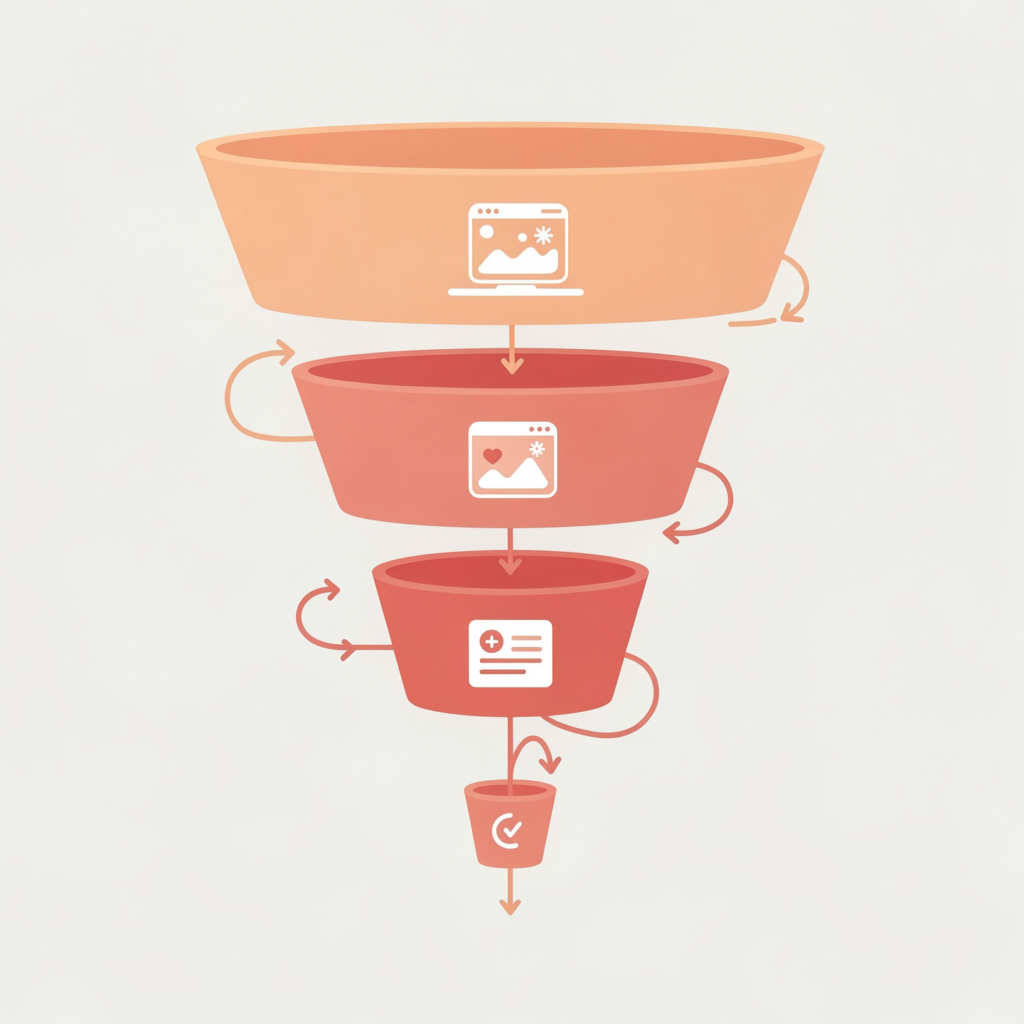
Technical SEO is the fundamental layer that allows every other SEO effort to function.
When a roofing website has technical gaps, even the strongest content and backlinks struggle to perform. Search engines must be able to crawl, interpret, and trust your site before rankings are possible.
For roofing companies, the most fundamental technical priorities are site speed, mobile usability, crawlability, index control, and structured data.
Many roofing websites suffer from fundamental technical weaknesses such as slow load times, poor mobile experiences, broken internal links, or missing schema. Addressing these issues often leads to immediate visibility gains because search engines can finally access and evaluate the site correctly.
This becomes even more critical in emergency-driven searches. A homeowner dealing with an active roof leak can move from problem awareness to contractor contact in under 30 minutes. Your technical SEO must fundamentally support both paths. The extended research journey for planned replacements and the fast-track experience for urgent, high-intent searches.
Site Speed and Core Web Vitals
Google uses Core Web Vitals as ranking factors: Largest Contentful Paint (loading speed), First Input Delay (interactivity), and Cumulative Layout Shift (visual stability). Roofing sites often fail due to massive unoptimized images. Compress all images, implement lazy loading, enable caching, minimize JavaScript, and use a quality host.
Mobile Optimization
Over 70% of roofing searches happen on mobile devices. Your site must be fully responsive, with readable text, tappable buttons, and fast load times on mobile. Test on actual phones, not just desktop browser emulators. Mobile-first indexing means Google primarily uses your mobile site for ranking.
Crawlability and Indexing
Google must be able to crawl and index your pages. Check for: proper robots.txt configuration, XML sitemap submitted to Google Search Console, no orphaned pages without internal links, proper use of canonical tags, and no accidental noindex tags on important pages.
Structured Data (Schema Markup)
Schema markup helps Google understand your content and can enable rich results. Implement: LocalBusiness schema with NAP and service area, Service schema for each service you offer, Review schema to display star ratings in search results, and BreadcrumbList schema for navigation.
Other technical factors include: HTTPS security (required for trust and rankings), proper URL structure (clean, descriptive URLs), internal linking architecture (logical hierarchy and related content links), 404 error management (fix broken links), and duplicate content prevention (canonical tags, proper redirects).
Technical SEO isn’t glamorous, but it’s essential. A technically sound website provides the foundation for all other SEO efforts to succeed. Invest in getting the technical foundation right before pouring resources into content creation or link building.
Fundamental Local Link Building Strategies for Roofers
Link building remains a fundamental ranking signal in SEO, especially for local roofing markets. At its core, Google evaluates links as trust indicators. But the fundamental mistake many roofers make is chasing volume over relevance. Roofing companies do not benefit from hundreds of generic backlinks. What drives rankings is a fundamental alignment with local authority.
High-quality links from locally relevant sources such as suppliers, chambers of commerce, builders, real estate partners, and regional directories signal trust, proximity, and credibility. These fundamental local link signals help Google associate your roofing business with a specific service area, increasing map visibility, local rankings, and lead quality.
Local Business Associations
Local Media and PR
Supplier and Manufacturer Partnerships
Community Involvement
Local Business Partnerships
Educational Content and Resources
What doesn’t work: buying links from link farms, participating in link schemes, getting links from irrelevant websites, or using automated link building tools. These tactics can result in Google penalties that tank your rankings.
Focus on earning links naturally through quality content, community involvement, and genuine business relationships. A few high-quality local links are worth more than hundreds of low-quality links from irrelevant sources.
Turning Analysis into Action. The Fundamental Advantage!
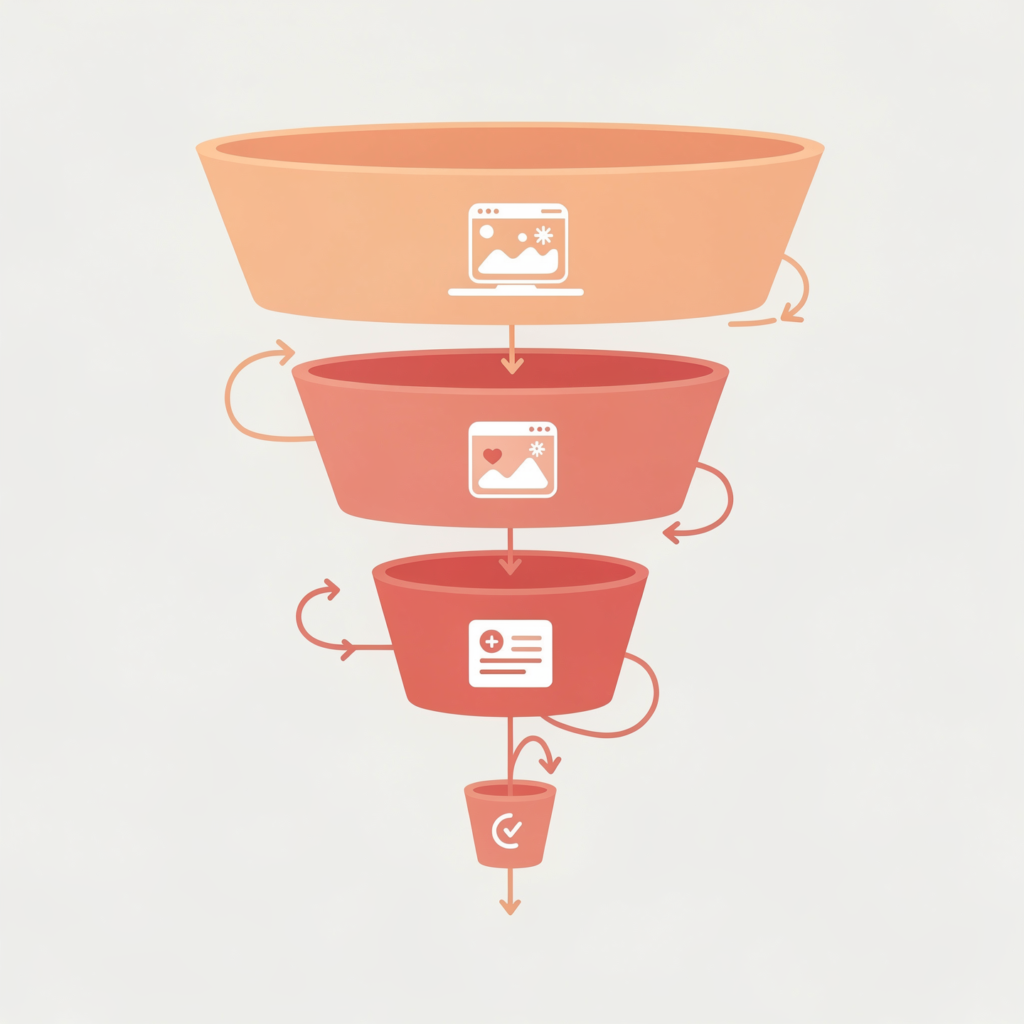
Fundamentally, rankings alone do not grow a roofing business. Appearing at the top of Google has little impact when your website fails to convert visitors into qualified leads. Conversion Rate Optimization (CRO) addresses this fundamental gap by aligning traffic acquisition with user intent, clear trust signals, and frictionless paths to action. The outcome is more phone calls, form submissions, and booked inspections from the same traffic volume.
The fundamental performance gap is clear. The average roofing website converts just 2–4 percent of visitors into leads, while top-performing roofing websites consistently convert 6–10 percent. Even modest improvements in conversion rate create a compounding effect, increasing lead volume and revenue without increasing ad spend or SEO investment.
Prominent Phone Numbers
Simple Contact Forms
Trust Signals Throughout
Fast Load Times
Clear Calls-to-Action
Live Chat or Chatbot
Other conversion optimization tactics include: emergency availability messaging for urgent situations, financing options prominently displayed to remove budget objections, before/after photo galleries that showcase your work quality, video testimonials that build trust more effectively than text, and service area maps that confirm you serve the visitor’s location.
Test everything. Small changes can have big impacts: button colors, headline wording, form placement, image selection, and CTA language. Use A/B testing to identify what works best for your specific audience and market.
Measuring and Tracking Roofing SEO Performance. A Fundamental Discipline!
You cannot improve what you do not measure. At a fundamental level, effective roofing SEO depends on tracking metrics that reflect real business impact, not surface-level vanity indicators like raw traffic or isolated keyword rankings. Roofing success is measured by revenue-connected outcomes. Leads generated, cost per lead, lead-to-inspection conversion rates, and inspection-to-contract close rates.
This fundamental focus on performance metrics ensures your SEO strategy aligns with how roofing businesses actually grow. Every optimization ties back to booked inspections, signed contracts, and predictable local revenue rather than abstract visibility alone.
Qualified Leads Per Month
Track total leads from organic search and GBP. Distinguish between qualified leads (in service area, legitimate need) and junk leads (spam, wrong area, tire kickers).
Cost Per Lead
Calculate monthly SEO investment divided by qualified leads generated. Compare to other channels (LSAs, PPC, referrals) to evaluate relative efficiency.
Lead-to-Inspection Rate
Percentage of leads that book an inspection. Low rates indicate lead quality issues or poor follow-up. Track by lead source to identify which channels produce best leads.
Inspection-to-Contract Close Rate
Percentage of inspections that result in signed contracts. This is your sales team’s performance metric, but tracking by lead source reveals which marketing channels produce customers most likely to buy.
Essential tracking tools and systems include: Google Analytics 4 for website traffic and behavior analysis, Google Search Console for keyword rankings and search performance, call tracking software with keyword-level attribution (CallRail, CallTrackingMetrics), form tracking with source attribution, CRM system to track leads through to closed contracts, and Google Business Profile Insights for GBP performance metrics.
Key metrics to monitor weekly: organic search traffic trends, keyword ranking changes for priority terms, Google Business Profile views and actions, phone calls from organic search, form submissions from organic search, and lead quality indicators (in-area vs out-of-area, service match).
Monthly reporting should include: total leads by source (organic, GBP, direct, referral), cost per lead by source, lead-to-inspection conversion rate, inspection-to-contract close rate, total revenue attributed to SEO, ROI calculation, ranking progress for target keywords, and traffic growth trends.
The ultimate metric is revenue per dollar invested. If you invest $3,000/month in SEO and generate $50,000/month in closed contracts attributable to SEO, your ROI is clear and compelling. Everything else is a supporting metric that helps you optimize toward that revenue goal.
Seasonal SEO Strategies for Roofing Companies. A Fundamental Growth Lever!
Roofing demand follows fundamental seasonal cycles driven by weather patterns, storm frequency, and homeowner behavior. These shifts directly influence how and when people search for roof repairs, replacements, and emergency services. A high-performing roofing SEO strategy must be built around this fundamental reality, aligning content, keywords, and Google Maps optimization with periods of peak demand.
Understanding these fundamental seasonal search patterns allows roofing companies to publish content ahead of demand surges, dominate visibility during storm-driven spikes, and maintain consistent presence during slower months when competition for qualified leads becomes more aggressive. When seasonal intent is mapped correctly, SEO becomes a predictable growth engine rather than a reactive tactic.

Spring (Peak Season)
Summer (High Season)
Winter (Low Season)
Fall (Moderate Season)
Storm-driven seasonal spikes require special preparation. Hail season in the Midwest (spring/summer), hurricane season in coastal areas (late summer/fall), and wind events in various regions create sudden demand surges. Have storm-specific landing pages ready to publish immediately when events occur.
Content calendar strategy: Create spring replacement content in winter (publish January-February), summer storm content in spring (publish April-May), fall maintenance content in summer (publish July-August), and winter emergency content in fall (publish October-November). Publishing 2-3 months before peak demand allows time for content to rank.
Competitive Analysis for Roofing SEO. The Fundamental Edge in Local Rankings!
Fundamentally, effective competitive analysis in roofing SEO goes beyond keyword gaps. It evaluates Google Maps dominance, review velocity, service-area coverage, citation consistency, and proximity-based authority. These are the fundamental signals that determine which roofing companies win local visibility and inbound calls.
Identify Your True Competitors
Your SEO competitors aren’t necessarily your business competitors. Identify the 5-10 roofing companies that consistently rank in the Map Pack and top organic results for your target keywords in your service area. These are the companies you need to outrank.
Analyze Their Google Business Profiles
Review their GBP listings: categories selected, service areas defined, photo quantity and quality, review count and recency, post frequency, and Q&A activity. Identify areas where you can differentiate or outperform.
Audit Their Website Content
Examine their service pages, location pages, and educational content. What topics do they cover? What’s missing? How comprehensive is their content? Where are the gaps you can fill with better, more detailed content?
Evaluate Their Technical Performance
Test their site speed, mobile optimization, and user experience. If competitors have slow sites or poor mobile experiences, you have an opportunity to win on technical performance and conversion rate.
Review Their Link Profiles
Use tools like Ahrefs or Moz to analyze their backlink profiles. Where are they getting links? What local organizations, directories, or partnerships are they leveraging? Can you pursue similar or better link opportunities?
Identify Content Gaps
What questions are customers asking that no competitor is answering comprehensively? What services are underrepresented in search results? These gaps are your opportunities to create definitive content that ranks and converts.
Competitive analysis isn’t about copying what competitors do—it’s about understanding the competitive landscape and finding opportunities to differentiate. If every competitor has thin location pages, create comprehensive location pages. If no one has detailed cost guides, create the definitive cost guide for your market. If competitors have slow websites, invest in speed optimization.
Monitor competitors quarterly to track changes: new content they publish, ranking improvements or declines, review generation velocity, and website updates. SEO is dynamic—what works today might not work next quarter if competitors improve their strategies.
The Future of Roofing SEO: Trends and Predictions

SEO is constantly evolving as Google updates its algorithms, user behavior changes, and new technologies emerge. Understanding where roofing SEO is headed helps you prepare for changes and invest in strategies that will remain effective long-term.
While specific tactics change, the fundamentals remain constant: provide value to users, build trust and authority, optimize for user experience, and focus on business outcomes rather than vanity metrics
AI and Search Generative Experience
Voice Search Optimization
Video Content Dominance
E-E-A-T and Trust Signals
Mobile-First Everything
Local Services Ads Integration
The core principle that won’t change: Google wants to show users the most relevant, trustworthy, and helpful results for their queries. Roofing companies that focus on genuinely helping customers, providing comprehensive information, building trust through reviews and credentials, and delivering excellent user experiences will continue to succeed regardless of algorithm changes.
Invest in fundamentals that have lasting value: comprehensive content, strong local presence, consistent review generation, technical excellence, and genuine expertise. Tactics change, but these fundamentals remain constant.
Ready to Dominate Local Roofing Search?

You now understand the fundamentals of roofing SEO: what it is, why it’s different from generic SEO, how it works, what it costs, how long it takes, and what success factors matter most.
You’ve learned about the common mistakes that waste money and the strategies that actually drive results.
The question is: what will you do with this knowledge?
Roofing SEO isn’t a magic bullet that produces instant results. It requires strategic planning, consistent execution, and patience to see compounding returns. But for roofing companies willing to invest in building a strong online presence, the ROI is undeniable. SEO becomes your most profitable lead source, generating qualified leads at a fraction of the cost of paid advertising while building lasting brand authority in your market.
Targeting Broad Statewide Keywords
If you have time and willingness to learn, you can implement many roofing SEO fundamentals yourself: optimize your GBP, create service and location pages, generate reviews, improve site speed, and build local citations. Use this guide as your roadmap.
Hybrid Approach
Handle some tasks in-house (review generation, photo uploads, GBP management) while outsourcing technical work and content creation to specialists. This balances cost with expertise and is often the most efficient approach for growing roofing companies.
Full-Service Agency
Partner with a roofing SEO specialist who handles strategy, technical optimization, content creation, link building, and ongoing management. This is the fastest path to results but requires the largest investment. Choose an agency with proven roofing industry experience.
Regardless of which approach you choose, the key is to start. Every month you delay is another month of lost leads going to competitors who invested in SEO earlier. The best time to start roofing SEO was 12 months ago. The second best time is today.
Your competitors are optimizing right now. Homeowners and property managers are searching for roofing services right now. The only question is whether they’ll find you or your competitors.
What Is Roofing SEO of Lead Gen Organic Growth?
Roofing SEO is the practice of optimizing your online presence so that when homeowners or property managers search for roofing services, your company appears prominently in search results. It’s not about marketing jargon or vanity metrics, it’s about being found at the exact moment someone needs a roof repair, replacement, or inspection in your service area.
When a homeowner’s ceiling starts leaking during a rainstorm, they don’t flip through the Yellow Pages. They grab their phone and search “emergency roof repair near me” or “roof leak repair [city].” If your company doesn’t show up in those critical first few results, you’ve lost that lead before you even knew it existed.
Roofing SEO ensures your business appears in three key places on Google: the Local Map Pack (those top three businesses with map pins), the organic search results below the map, and increasingly, Local Services Ads. Each of these placements requires different optimization strategies, but they all depend on a foundation of local relevance, trust signals, and technical website performance.

Example queries that drive roofing leads include “roof repair near me,” “commercial roofer [city],” “roof replacement cost,” “emergency roof leak,” and “TPO roofing contractor.” Each query represents a different stage of buyer intent and requires tailored content to convert.
Roofing SEO Results You Can Measure
We don't hide behind 'impressions' and 'brand awareness.' We track exclusive phone calls, form fills, and signed roofing contracts.

Organic Growth
312% Traffic Increase

Technical SEO
#1 Local Map Pack

Lead Generation
$1.2M Pipeline
What Roofers Say
"They completely rebuilt our online presence. Within 90 days, we were ranking #1 for 'roof replacement' in three of our target cities, completely replacing our Angi leads."

Mark R.
Owner, Residential Roofing
"The strategy sprints opened our eyes to how much money we were leaving on the table. They overhauled our commercial landing pages, and the enterprise leads started rolling in."
Sarah T.
CEO, Commercial Roofing
"When hail hit our county last month, our phones didn't stop ringing. Their emergency SEO protocols had us dominating the local pack instantly."
James W.
VP of Sales, Storm Restoration
The Real Math of Roofing SEO Fundamentals
Understanding roofing seo fundamentals isn't just theory—it's the exact framework we use to generate highly qualified, exclusive leads for roofing companies.
Shared Leads vs Exclusive Traffic
Close Rate: Typically < 10%
Close Rate: Typically 30% - 40%
Frequently Asked Questions
Clear answers about our roofing SEO growth processes.
Why is understanding roofing seo fundamentals critical?
How long until we see positive ROI from these campaigns?
Are your roofing leads exclusive?
Do I need new landing pages for every city I target?
Put Roofing SEO Fundamentals to Work For Your Company
Skip the learning curve. Let our team of roofing SEO experts implement this architecture for you immediately.